


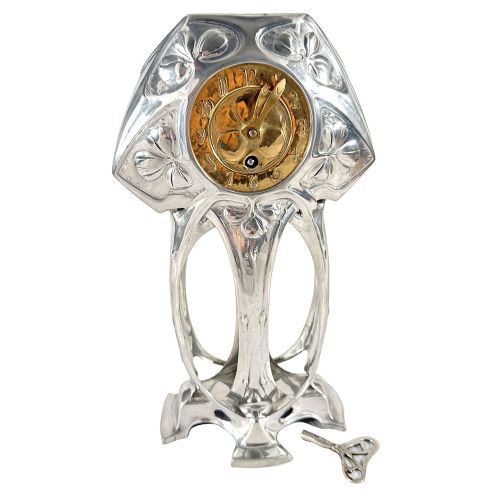
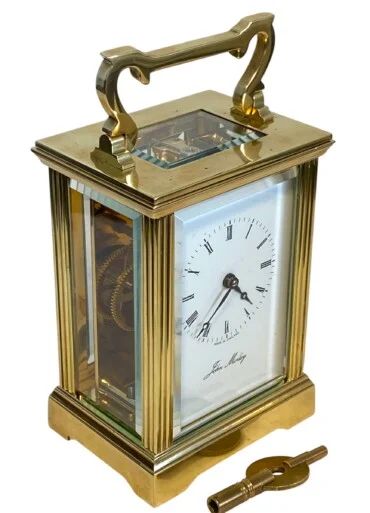


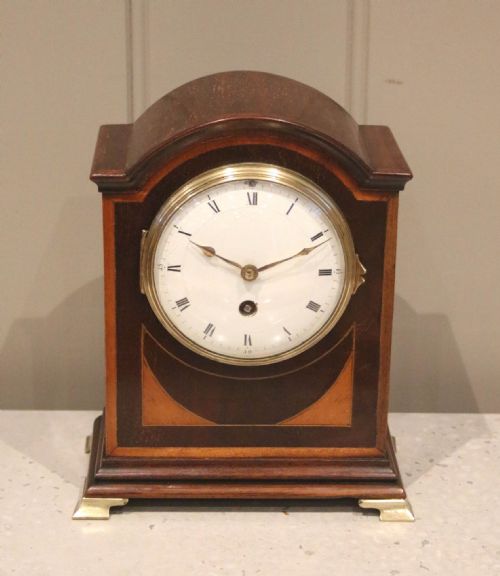


Brass Timepiece Key
These brass timepiece key items wind the clocks, pocket watches and carriage clocks found across Victorian, 1900, 1890, 19th Century and 1950 periods.
Brass Timepiece Key
A brass timepiece key is the winding tool needed for clocks, mantel clocks, pocket watches, carriage clocks and wall clocks spanning Victorian, 1900, 1890, 19th Century and 1950 periods.
The versions most commonly met on this page accompany carriage clocks and mantel clocks made of brass, gilt brass, glass and mahogany in Victorian and 1900 styles.
Objects range from simple pocket watch accessories to fitted case keys accompanying French 19th Century and English timepieces by makers such as John Morley and Drocourt.
How brass timepiece key pieces were made
Makers shaped brass, gilt brass and silver to form the functional shafts and handles required for winding mechanical movements.
Companions to these keys include cases and clock bodies built from mahogany, pewter, leather, glass and enamel, finished with satinwood inlay and engraving.
Brass Timepiece Key Retail Price Guide 2026
Typical asking prices for brass timepiece key among the pieces listed under this phrase on Sellingantiques today, from the lower quarter to the upper quarter. They describe what is for sale here now, not the wider market.
Some carriage clocks travel safely inside fitted leather boxes alongside their original winding keys, surviving intact for over a century.
What varies in quality
The standard of a brass timepiece key or its associated clock rests on the crispness of the brass casting, the depth of any hand engraving on gilt brass, and the precision of the metalwork.
Pieces featuring fitted boxes, original keys, and complex mechanisms like alarms, grand sonnerie repeater functions or 8-day movements stand apart from standard items.
Kendal and Dent·Friedrich Adler for Osiris·John Morley·Drocourt
The Brass Timepiece Key Glossary
- Timepiece
- A clock or watch that shows the time without striking hours or quarters. These objects require regular winding using a compatible key.
- Carriage clock
- A small, portable spring-driven clock designed for travel during the 19th century. They frequently feature glass panels and gilt brass cases.
- Gilt brass
- Brass coated with a thin layer of gold or gold-coloured alloy. This finish adds a bright, reflective sheen to clock cases and key mounts.
- Grand Sonnerie
- A complex striking mechanism that chimes the hours and quarters automatically on the passage of time. Such movements represent high horological achievement.
- Satinwood
- A durable, yellowish wood used for decorative veneers and inlay work on mahogany clock cases. It provides a striking visual contrast to darker timbers.
Brass Timepiece Key: Frequently Asked Questions
What is a brass timepiece key used for?
A brass timepiece key winds the mainsprings of mechanical clocks, pocket watches and carriage clocks. Without the correct fitting key, the movement cannot be tensioned to run.
These keys match specific square or rectangular winding arbors found on the back or dial plates of Victorian and 1900 timepieces.
How do I date a carriage clock key?
Dating the key requires examining the associated carriage clock through its materials, case style, and manufacturing characteristics. Pieces from the 19th Century or 1900 often display distinct hand-engraved gilt brass work.
Maker signatures on the movement backplate or original fitted presentation boxes also help establish the exact period of manufacture.
Are all carriage clock keys interchangeable?
No, winding arbors vary in size and shape across different clock movements, pocket watches and wall clocks. A key must match the precise millimeter gauge of the square winding post.
Using an incorrectly sized key can damage the delicate internal ratchet and click components of antique 8-day movements.
How should I care for brass clock components?
Keep brass and gilt brass components away from excessive moisture and abrasive cleaning products to preserve the original metal surface. Dust the glass panels and mahogany woodwork gently with a dry, soft cloth.
Professional clockmakers should handle internal mechanical servicing and any restoration of the 8-day gear trains.