



Brass Tier Shelf
A brass tier shelf brings structured multi-level display to a room, using metal supports to frame wood or glass surfaces.
Brass Tier Shelf
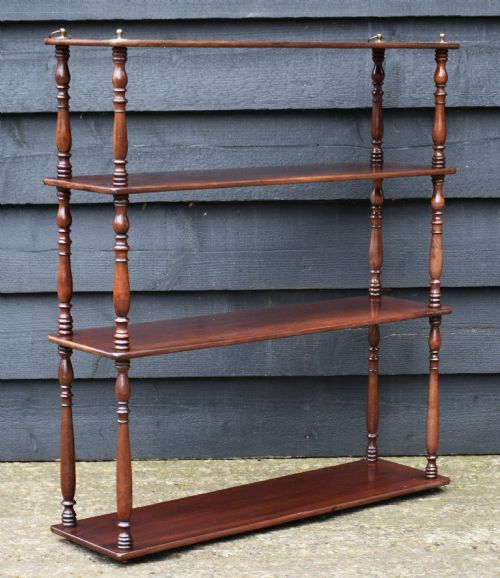
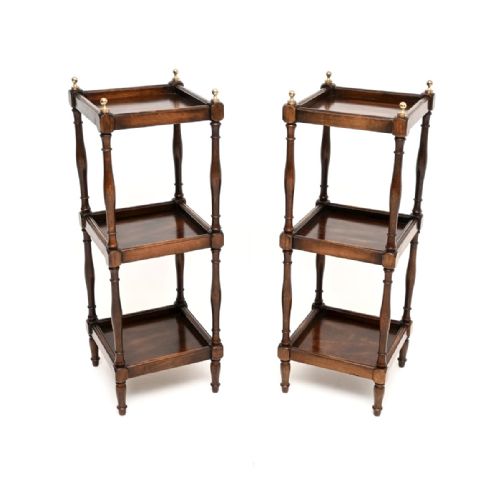
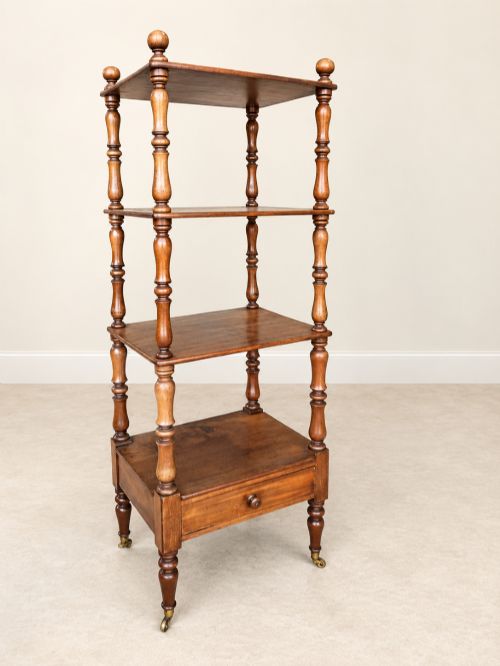
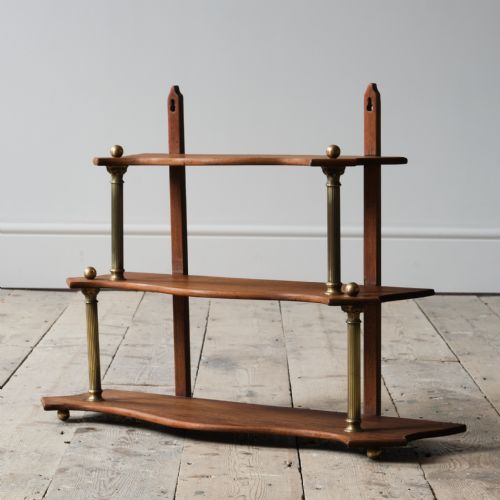
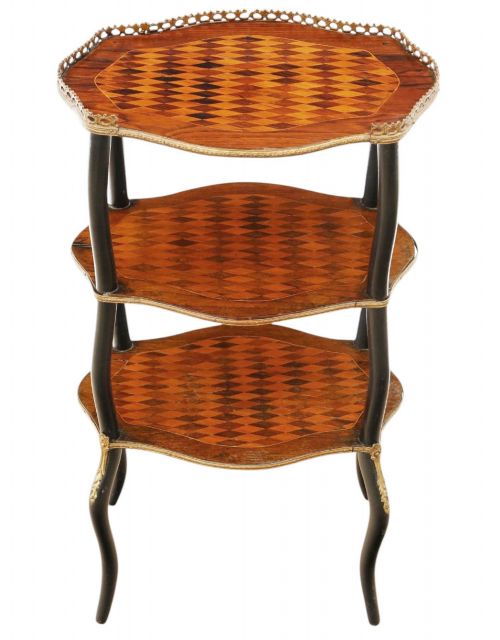
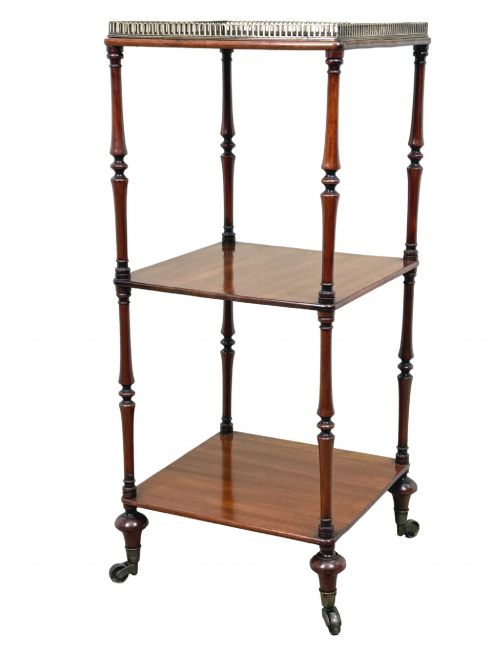
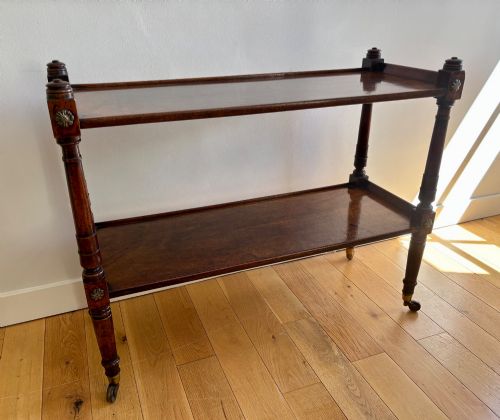
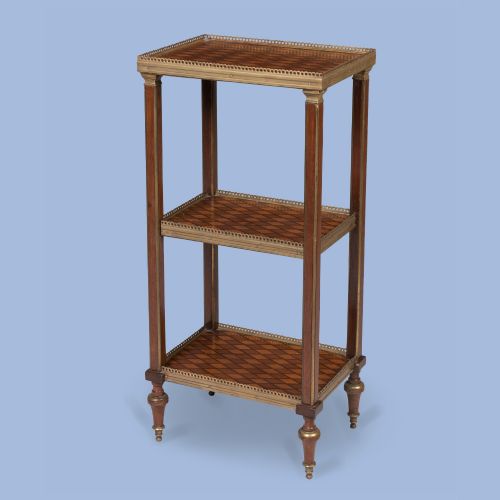
A brass tier shelf encompasses multi-level display stands, wall hanging shelves, étagères, and whatnots spanning the nineteenth and early twentieth centuries. These pieces combine tiered horizontal surfaces with metal structural elements to organise books, ornaments, and display items.
Buyers meet variations ranging from compact Regency mahogany hanging shelves to elaborate French rosewood and ormolu étagères. The selection includes campaign washstands, waterfall bookcases, and marble-topped side tables incorporating brass mounts and galleries.
The form developed across several decades, shifting from early nineteenth-century mahogany and rosewood library furniture to lighter Edwardian and later tiered display stands.
How they were made
Construction relies on a combination of dense timbers and structural metalwork, utilising mahogany, rosewood, walnut, and birdseye maple alongside brass rods, galleries, and mounts. Cabinetmakers formed tiered platforms supported by brass columns or uprights, often integrating marble tops or glass inserts.
Surface decoration involved parquetry, marquetry, and brass inlay set into polished wood carcasses. Campaign pieces integrated folding or demountable brass fittings for transport, while French examples incorporated cast ormolu mounts to accent the wood grains.
Nineteenth-century travellers occasionally requested washstands with hidden brass tiers so they could groom properly while conquering the British Empire.
What varies in quality
Quality rests on the selection of timber veneers, the weight and finish of the brass mounts, and the stability of the tiered framework. Fine examples display carefully matched grain patterns in rosewood or mahogany, alongside substantial cast brass galleries rather than stamped sheet metal.
Construction methods determine durability, with superior pieces showing tight joinery in the uprights and secure fixing points for the tier supports. The integration of inset marble tops and precise inlay work further separate standard utility furniture from pieces commissioned for high-status interiors.
The Brass Tier Shelf Glossary
- Whatnot
- A multi-shelf standing cabinet or open stand used for storage and display. The form became particularly popular during the nineteenth century in various wood types.
- Ormolu
- Gilt bronze mountings applied to furniture and decorative objects. This technique was widely utilised in French nineteenth-century cabinetmaking.
- Gallery
- A raised ornamental border running along the edge of a shelf or tabletop. It often consists of pierced brass or turned spindles to prevent items from sliding off.
- Campaign style
- Portable furniture designed for military officers, typically constructed with brass corners, inset handles, and knock-down frames. This design prioritises mobility and robust assembly.
Brass Tier Shelf: Frequently Asked Questions
Where should I place a tiered shelf?
These pieces suit living rooms, hallways, or studies where vertical display space is needed without blocking light.
Wall-hung versions mount above sideboards or desks, while standing étagères function as freestanding room dividers or corner display units.
How do I clean brass and wood surfaces?
Wood surfaces require simple dusting with a dry cloth and occasional application of appropriate wax polish to maintain the finish.
Brass components can be wiped with a soft cloth, avoiding harsh chemical cleaners that might strip the aged patina or damage adjacent timber.
Are these shelves sturdy enough for books?
Sturdiness depends on the specific construction and era, with campaign styles and solid mahogany frameworks offering considerable load-bearing capacity.
Lighter étagères and glass-tiered stands suit lighter decorative objects, porcelain, and small volumes rather than heavy reference libraries.
How do I identify Regency pieces?
Regency items often feature dark mahogany or rosewood, architectural lines, and restrained brass inlay or brass stringing.
They lack the heavier carving seen in later Victorian examples, relying instead on proportion and clean geometric profiles.