

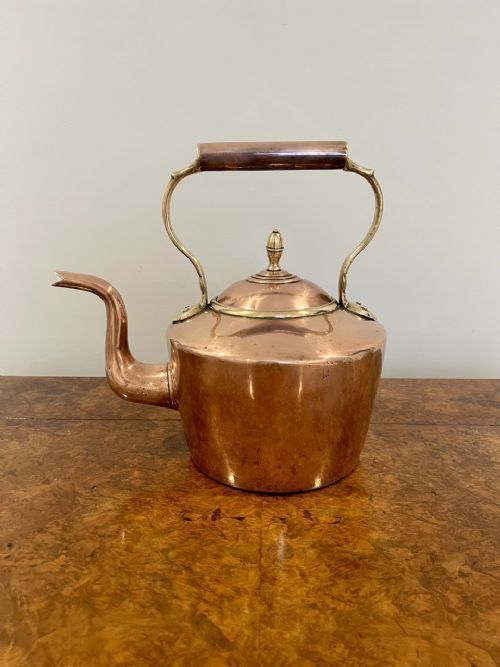
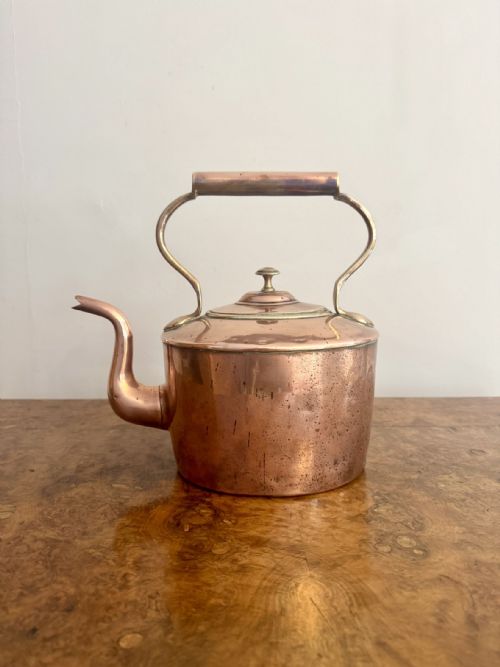
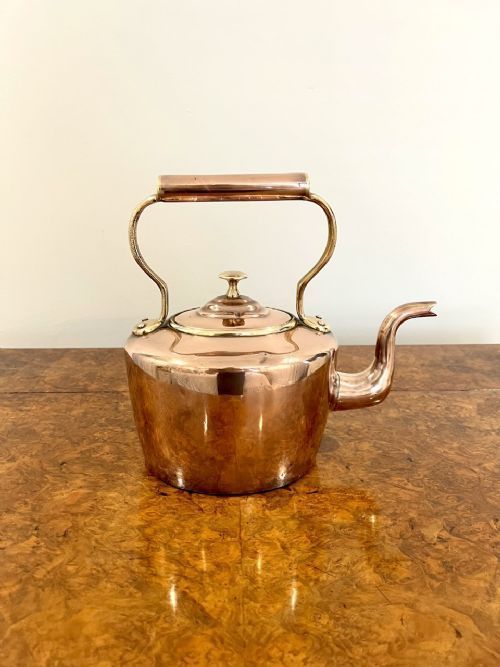


Brass Tea Kettle
A brass tea kettle brings warmth and traditional utility to a room, offering both sculptural presence and a tangible link to historical domestic life.
Brass Tea Kettle
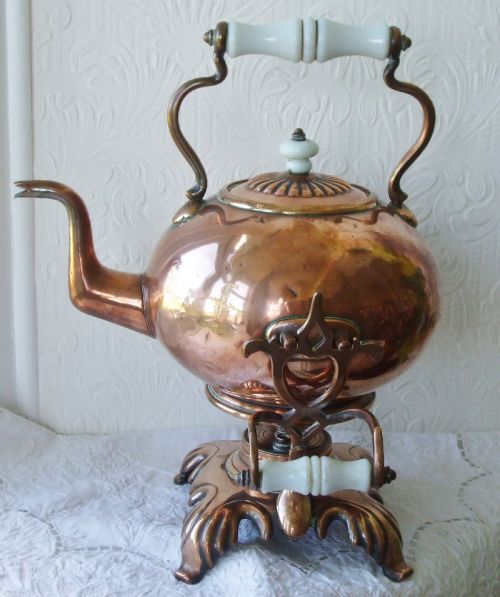
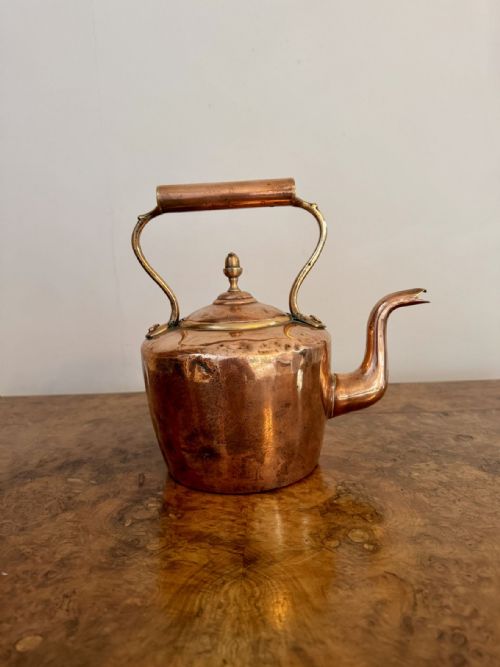
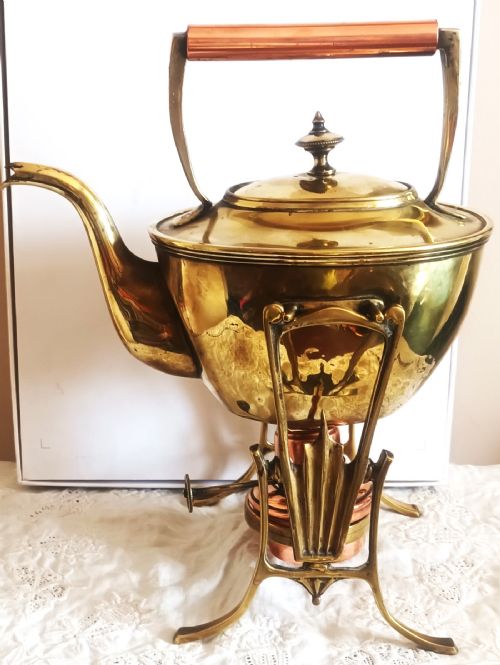
When you search for a brass tea kettle, you find vessels designed to heat water, spanning periods from the Georgian era through the Victorian period and into the early twentieth century. These pieces encompass standard kettles, spirit kettles mounted on stands, and large samovars or water urns used for hospitality.
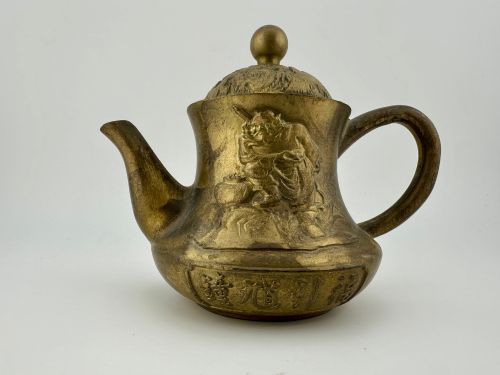
The most common examples on this page date from the nineteenth century and the Georgian period, often forged in copper with brass fittings or cast entirely in brass. Alongside English and continental forms, the selection includes Chinese and Japanese vessels featuring bronze, cloisonné enamel, and distinct decorative motifs.
How they were made
Metalworkers constructed these kettles using combinations of brass, copper, and bronze, frequently pairing hammered or polished sheet metal with cast handles and spouts. Handles often incorporate insulating materials such as wood, ebonised wood, bone, cane, or iron to allow safe handling while the metal body held boiling water.
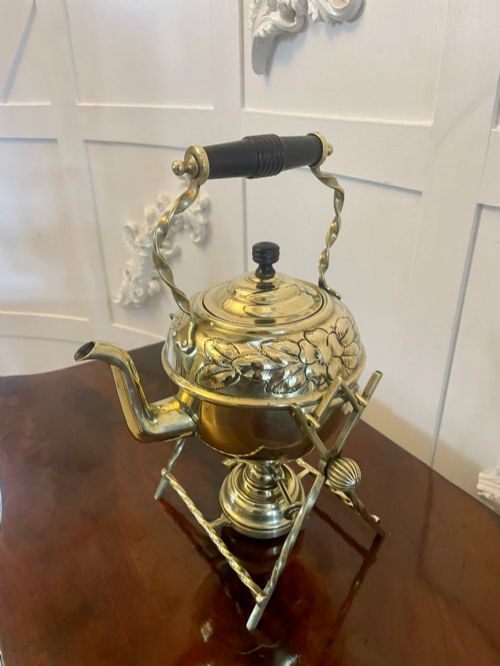
Many Victorian spirit kettles required complex metalworking techniques to unite the kettle, burner stand, and base into a single cohesive ensemble. Joinery typically involved dovetailing, brazing, and riveting plates of metal together before finishing the exterior with a polished surface.
Brass Tea Kettle Retail Price Guide 2026
Typical asking prices for brass tea kettle among the pieces listed under this phrase on Sellingantiques today, from the lower quarter to the upper quarter. They describe what is for sale here now, not the wider market.
Some dragons and phoenixes guard the tea.
What varies in quality
The distinction between ordinary utility items and finer examples rests on the crispness of the casting, the balance of the proportions, and the integrity of the original construction. Superior pieces display carefully shaped spouts and handles that integrate harmoniously with the main body of the vessel.
Makers who supplied high-end establishments invested greater attention in decorative details, such as finely turned wooden insulators, cast brass mounts, and complete, matching stands for spirit kettles. Retaining original components like burners and covers significantly elevates the character of an individual piece.
William Soutter And Sons
The Brass Tea Kettle Glossary
- Spirit kettle
- A tea kettle mounted upon a metal stand above a small spirit burner designed to keep the water hot at the table. These assemblies are characteristic of formal nineteenth-century tea service.
- Samovar
- A large heated metal urn traditionally used to boil and heat water for tea. Victorian examples often feature a central internal metal tube for fuel.
- Cloisonné
- An ancient technique for decorating metal object surfaces using enamel compartments enclosed in raised metal strips. Pieces utilising this method show intricate coloured patterns across the body.
- Ebonised wood
- Timber treated with a dark finish to imitate expensive ebony. Makers used this material for handles and knobs to provide a secure grip and a contrasting dark accent against bright brass or copper.
Brass Tea Kettle: Frequently Asked Questions
What is a spirit kettle?
A spirit kettle is a tea kettle suspended on a metal frame above a small fuel burner. This setup allowed Victorians to keep water at a rolling boil during extended tea gatherings without returning to the kitchen.
Most surviving examples retain their original matching stands and burners, though the internal burners are often missing or decorative. They represent a more formal, stationary approach to domestic hospitality.
How do I clean brass and copper?
Maintaining these metals depends entirely on whether you prefer a bright, polished finish or a dark historical patina. Gentle washing with warm soapy water removes dust and grime without disturbing the aged surface.
Avoid harsh abrasive compounds that can strip away centuries of accumulated character or damage delicate joins. Light dusting and occasional drying are usually sufficient for pieces kept on display.
How do I date a brass kettle?
Dating a kettle relies on observing manufacturing techniques, material combinations, and stylistic clues from periods like the Georgian era or the Victorian age. Earlier eighteenth-century and George III pieces often feature hand-hammered seams and simple, utilitarian iron or brass handles.
Later Victorian and Edwardian examples tend to display more complex cast mounts, machine-finished components, and decorative stands. Comparing the handle insulation, such as cane, bone, or ebonised wood, also helps narrow down the decade of production.
Were these kettles meant for daily use?
Many of these pieces began as functional kitchen and parlour equipment designed to boil water over an open hearth or a spirit burner. Over time, manufacturing shifts turned them into decorative items displayed on dressers or sideboards.
While some robust copper bodies remain structurally capable of heating water, many collectors prefer to exhibit them as decorative metalware. Inspecting the interior lining helps determine if a kettle was intended for culinary service or decorative display.