




Brass Table Globe
A brass table globe brings geography to the desk, combining spun metal with printed cartography from the nineteenth and twentieth centuries.
Brass Table Globe
A brass table globe sits on a desk or sideboard, serving both as a scientific instrument and an ornamental object for the study. When you search for a brass table globe, you encounter pieces that span the Victorian and Edwardian eras, alongside interwar examples.
The objects take several forms, ranging from compact desktop spheres to larger terrestrial models supported by metal mountings. Many pieces pair brass with wooden feet, ceramic bases, or paper gores.
Origins vary across British, French, and German workshops, reflecting international cartographic traditions of the period. These globes chart the changing political boundaries of the nineteenth and twentieth centuries.
How they were made
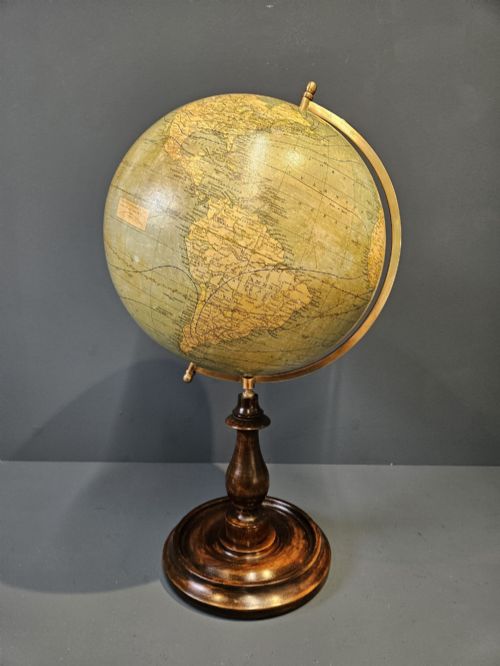
Manufacturers formed the spheres from plaster or paper-mâché, applying printed paper gores by hand to map the surface of the earth. These delicate spheres were then mounted on cast or turned brass stands.
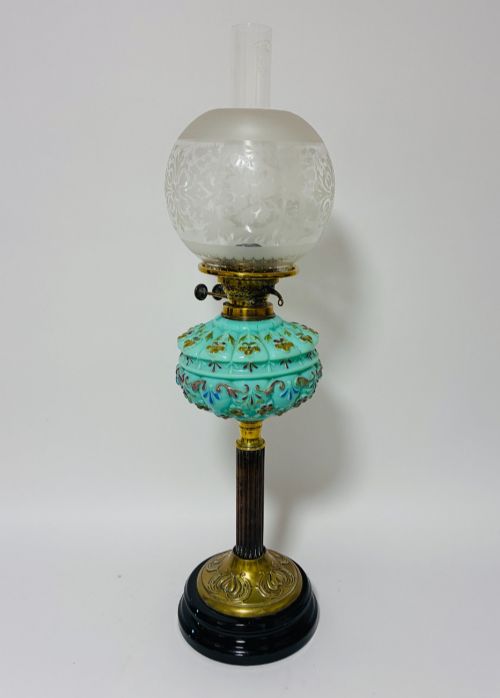
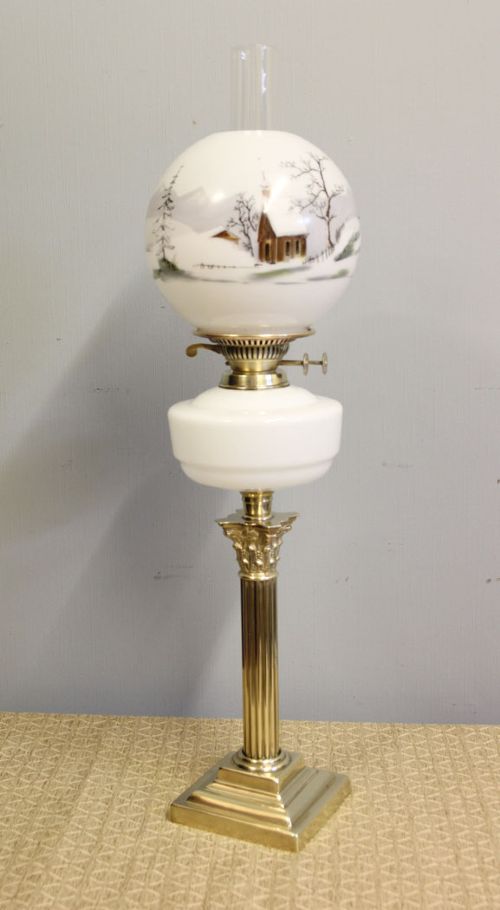
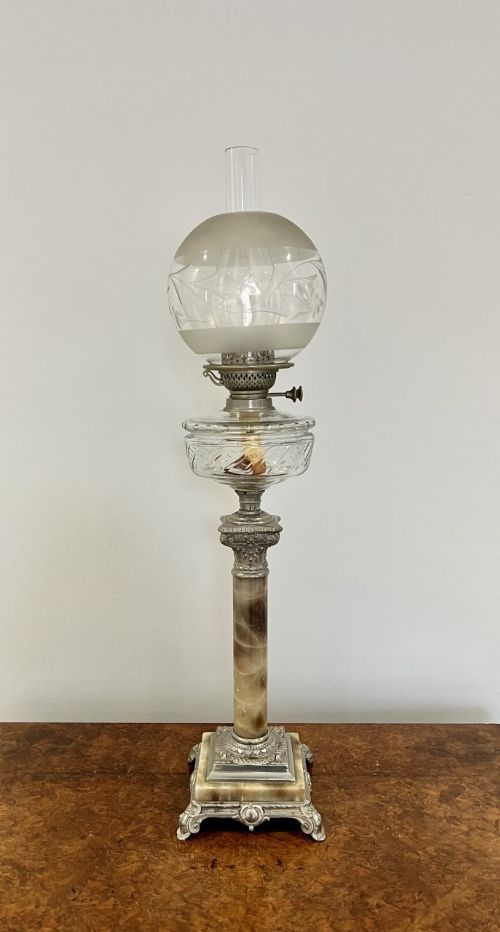
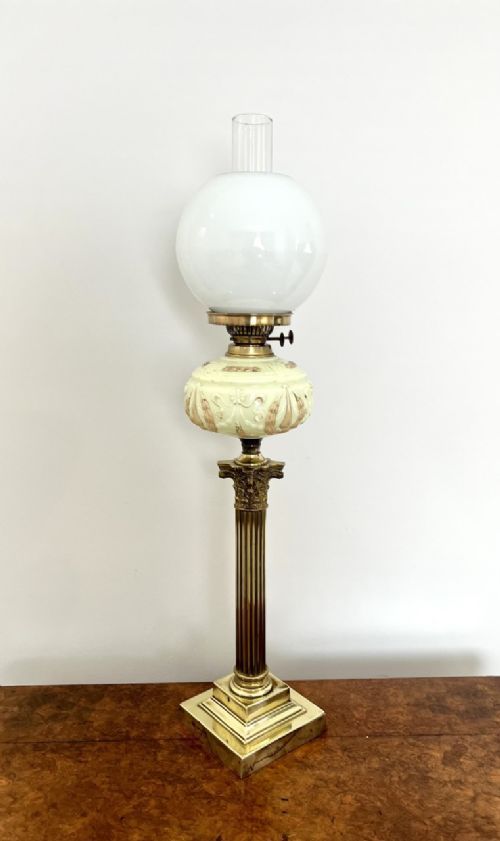
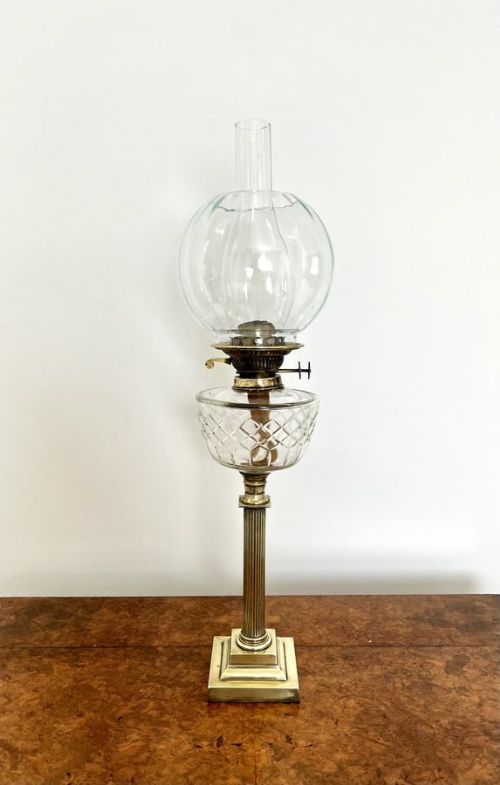
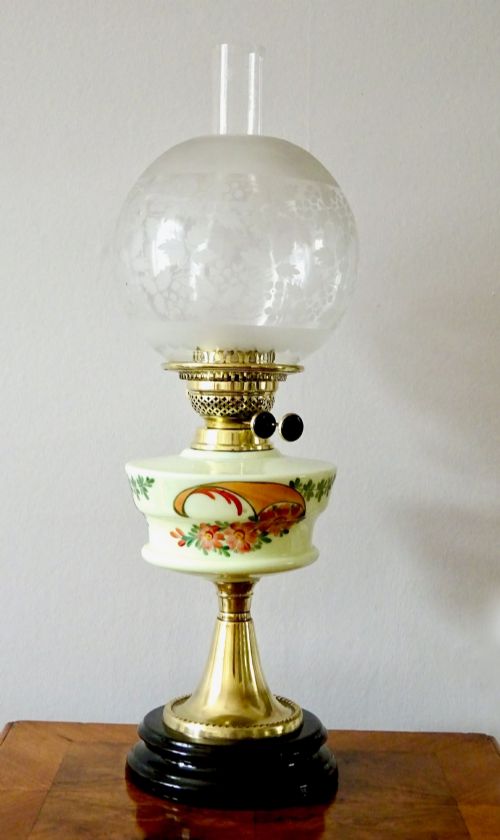
Bases frequently incorporate secondary materials like walnut, ebonised wood, marble, or ceramic to provide stability. Glass and opaline elements appear on related lighting variants that share similar period brass components.
Cartographers occasionally included mythical sea monsters and out-of-date colonies on nineteenth-century globes just to keep things interesting.
What varies in quality
The precision of the cartographic engraving and the clarity of the printed gores separate standard educational globes from finer cabinet pieces. Crisp hand-colouring and detailed place names indicate higher workshop standards.
The casting quality of the brass hardware and the stability of the mounting ring influence the overall tactile experience. Original pedestals and well-preserved varnished surfaces retain greater historical integrity than heavily restored examples.
Hinks of Birmingham·Bacon·J. Forest·Malby·Chandy Charan and Co·Crunchley
The Brass Table Globe Glossary
- Gores
- The printed paper segments shaped like lutes that are pasted onto a sphere to form the map of the earth. Accuracy in aligning these strips determines the cartographic quality.
- Terrestrial globe
- A scale model of the earth displaying continents, oceans, and political boundaries. These contrast with celestial globes which map the night sky.
- Meridian ring
- The graduated metal circle surrounding the globe that holds the sphere at an angle. It allows the globe to rotate along its axis.
- Paper-mâché
- A composite material made from paper pulp mixed with glue and resin, pressed into moulds to form lightweight spheres. This material provided a stable foundation for the paper gores.
Brass Table Globe: Frequently Asked Questions
How do I clean a brass table globe?
Use a soft, dry microfiber cloth to gently remove dust from the paper surface without applying pressure. Avoid liquid cleaners entirely, as moisture will damage the historic paper gores and adhesive.
Polish the brass base sparingly with a dry cloth to maintain the aged patina. Keep the globe away from direct sunlight to prevent the printed colours from fading.
How do I date an antique globe?
Examine the political boundaries and place names printed on the sphere, as these often correspond to specific historical treaties or colonial expansions. Major geopolitical changes provide a reliable terminus post quem for the manufacture date.
Check the typography, cartographer signatures, and the style of the brass stand for period characteristics. Victorian and Edwardian mountings typically feature heavier cast brass than later twentieth-century iterations.
What is the difference between a desk globe and a table globe?
Desk globes and table globes share similar construction methods, though desk variants are specifically scaled for proximity to writing surfaces and ledgers. Both types sit on independent stands rather than floor pedestals.
Table globes frequently incorporate more elaborate brass mountings and decorative wooden or ceramic feet. They were designed to function as decorative display items in libraries and parlours.
Are replacement parts common on these globes?
Many surviving globes retain their original brass meridians and weighted stands, though wooden bases were occasionally replaced during repairs. Surviving paper gores frequently show signs of historical wear and shrinkage.
Matching exact period components remains challenging due to the specific manufacturing tolerances of nineteenth-century cartographic workshops. Original pairing significantly enhances the historical coherence of the piece.