

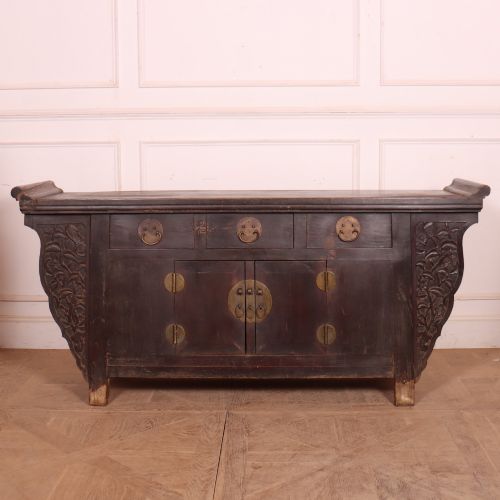
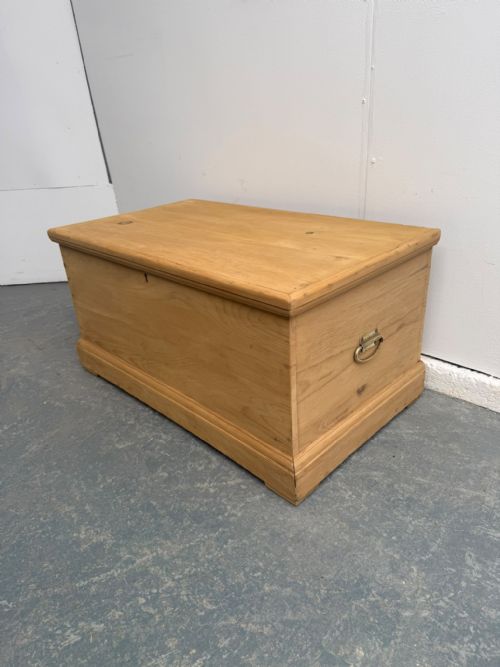
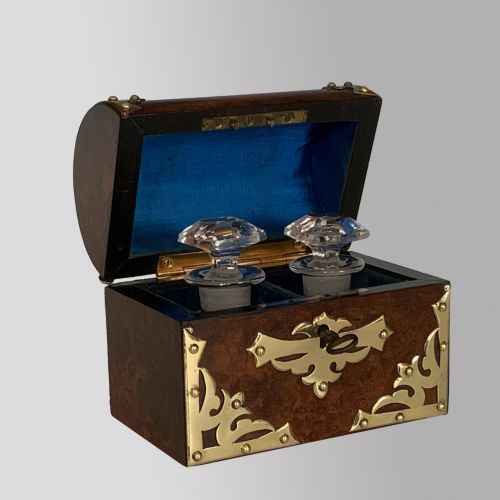
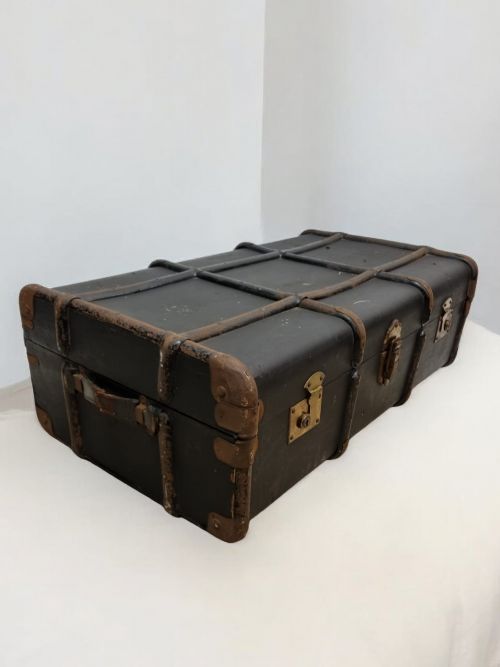

Brass Table Box
A brass table box delivers compact utility and warm metal detailing for the surface of a desk or side table.
Brass Table Box
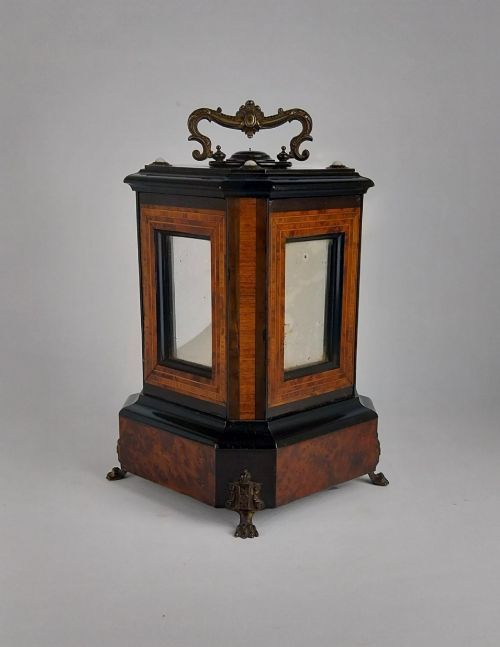
A brass table box serves as a portable container designed for desk or tabletop use, often intended for snuff, tobacco, jewellery, or writing implements. These vessels range from small pocket snuffs to substantial document and jewellery caskets meant to remain static on a surface.
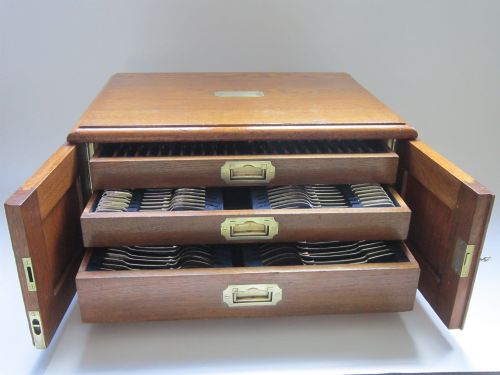
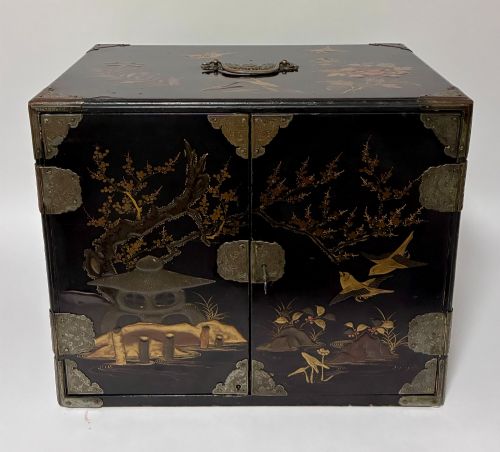
The versions encountered on this page span the Georgian, Regency, and Victorian eras, alongside later continental examples. Many incorporate rich timber carcases augmented by metal corners, straps, and inlay.
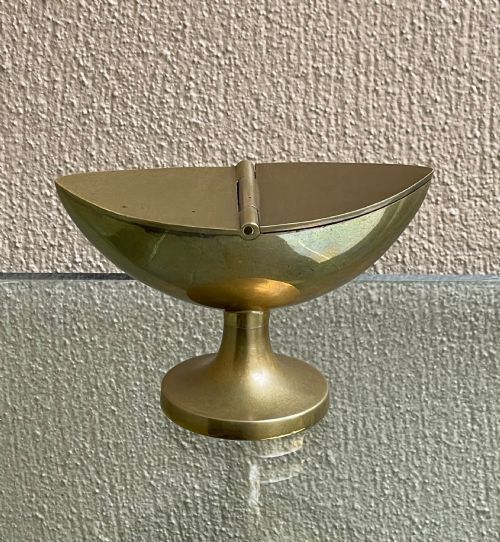
Form follows function across these pieces, resulting in rectangular caskets, navette shapes, and octagonal configurations. Interiors frequently feature fitted compartments for specific domestic or personal routines.
How they were made
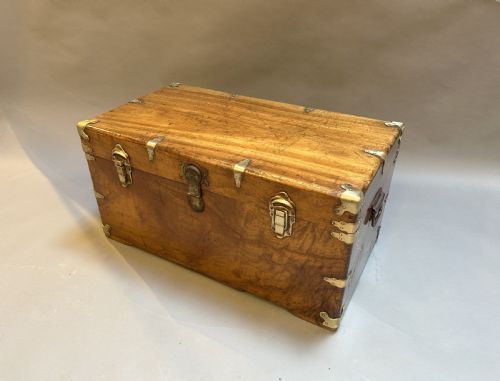
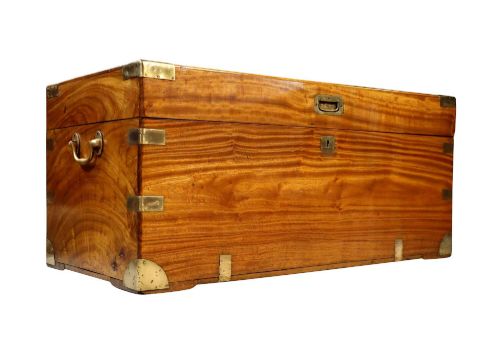
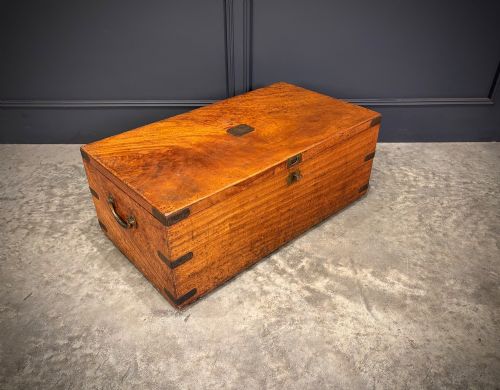
Construction relies on solid timbers such as mahogany, rosewood, kingwood, and burr walnut, forming the primary structural box. Artisans then applied cast or sheet brass corners, straps, handles, and escutcheons to reinforce corners and edges against travel wear.
Inlay techniques involve cutting thin brass stringing or foliate motifs into timber surfaces, often paired with mother-of-pearl or abalone shell. Heavy gauge cast brass appears particularly on earlier snuff and tobacco boxes, showing crisp detail from moulds.
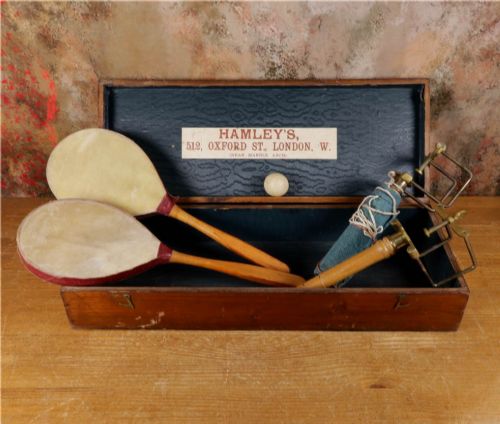
Some nineteenth-century boxes double as portable artist stations complete with integrated easels and paint compartments.
What varies in quality
The precision of the brass inlay and the tightness of the mitred timber joints set superior examples apart from standard utility boxes. Finer specimens display flush metalwork where the brass sits perfectly level with the surrounding wood grain.
Internal fitting sophistication dictates value, with secondary lidded compartments, velvet or leather linings, and original working locks with functional keys marking out higher workshop standards. The choice of exotic decorative veneers like amboyna or burr walnut further elevates a piece.
The Brass Table Box Glossary
- Escutcheon
- A protective metal plate surrounding a keyhole. This brass element prevents the surrounding wood from splintering during regular use.
- Stringing
- Thin lines of contrasting wood or metal inlaid into the surface of a box. It defines panels and outlines geometric borders.
- Campaign
- A style of portable furniture designed for military officers on the move. Pieces feature recessed brass handles and reinforced corners.
- Navette
- A pointed, boat-like shape popular for Georgian snuff boxes. This profile fits comfortably in the hand or pocket.
- Casket
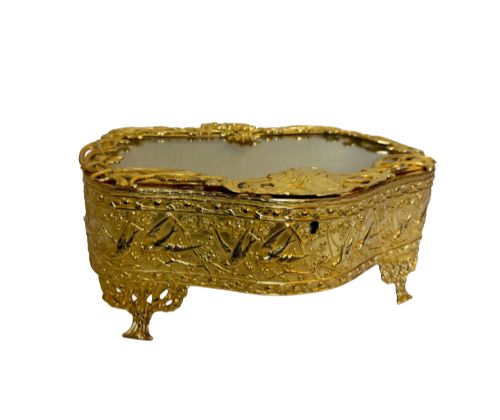
- A small ornamental box intended for valuables or jewellery. These often feature internal trays and velvet or silk linings.
Brass Table Box: Frequently Asked Questions
What were brass table boxes used for?
These boxes held valuable personal items such as jewellery, writing tools, documents, and tobacco or snuff. Owners kept them on desks, dressing tables, or sideboards for daily access.
Larger versions accommodated letters and stationery, while smaller pocket varieties held specific quantities of dry goods or currency.
How can I tell a Georgian box from a Victorian one?
Georgian examples often rely on simple mahogany or rosewood carcases with understated brass stringing or edge banding. The overall aesthetic prioritises restrained geometry and functional elegance.
Victorian pieces frequently display heavier brass mounts, more complex burr walnut or coromandel veneers, and elaborate cartouches. Interior fittings also became more intricate during the nineteenth century.
Are the locks and keys usually original?
Many boxes retain their original lever locks, though working keys are less common due to centuries of displacement. Specialised makers stamped their lock mechanisms, which helps date the piece.
Replacement keys are frequently fitted to allow the functional use of the brass locking mechanism today.
How should I care for the wood and brass?
Maintain the timber using traditional wax polish applied sparingly and buffed with a soft cloth. Avoid modern liquid polishes that can degrade historical finishes.
Clean brass elements gently without harsh chemical abrasives to preserve the natural oxidation and patina accumulated over generations.