


Oval Brass Box
These oval brass box examples range from pocket snuff containers to heavy coal bins, uniting utility and decorative metalwork.
Oval Brass Box
An oval brass box brings together utilitarian storage and decorative metalwork across several centuries, appearing in forms such as small pocket snuff containers and large hearthside coal bins. These vessels serve various domestic functions, holding tobacco, trinkets, or sewing accessories.
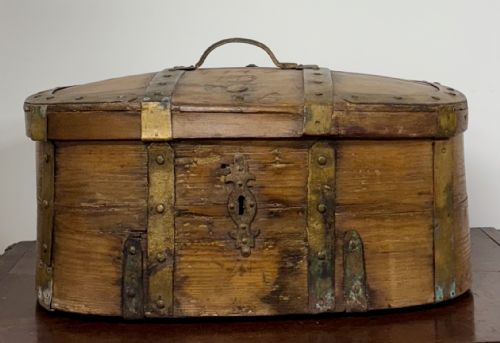
The pieces on this page span the eighteenth, nineteenth, and early twentieth centuries, encompassing Georgian, Victorian, and Edwardian periods alongside French and Dutch continental origins. Buyers encounter diverse manifestations, from engraved pocket items to substantial mahogany and brass-bound wine coolers.
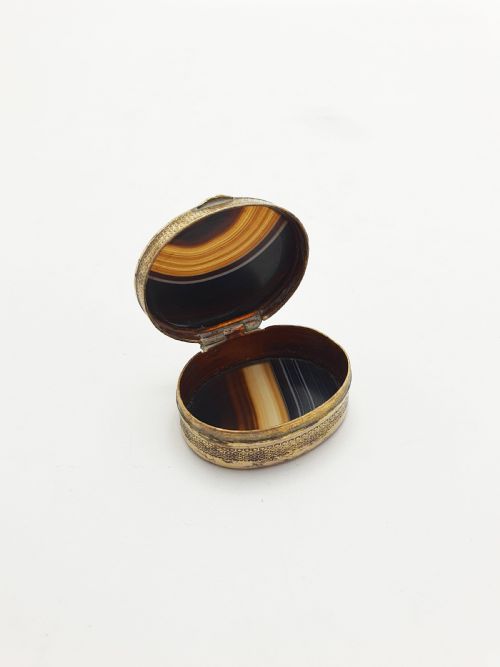
Makers utilised brass frequently in combination with secondary materials like agate, porcelain, mahogany, and walnut to create functional receptacles. The curved profile distinguishes these pieces from standard rectangular boxes, offering a softer aesthetic suited to tabletop display.
Assessing quality and craftsmanship
The gauge of the metal and the crispness of the engraving distinguish finer examples from standard production pieces. Heavy gauge brass and deeply hand-wrought decoration indicate superior workmanship in tobacco and snuff boxes.
Material integration plays a role in overall execution, particularly where inset agate or porcelain meets the brass bezel. Tight joints, original hinges, and well-preserved surface patinas elevate the standing of a piece.
Proportion and structural integrity define larger storage forms like wine coolers and log bins. Original stands, cohesive brass binding, and balanced oval dimensions separate exceptional specimens from later adaptations.
Periods represented span the eighteenth century, Georgian era, nineteenth century, Victorian period, Edwardian era, and nineteen hundred.
The Oval Brass Box Glossary
- Cellarette
- A lockable container used for holding bottles of wine or spirits, often lined with lead and bound in brass hoops. These large vessels typically sit on the floor or on dedicated wooden stands.
- Snuff box
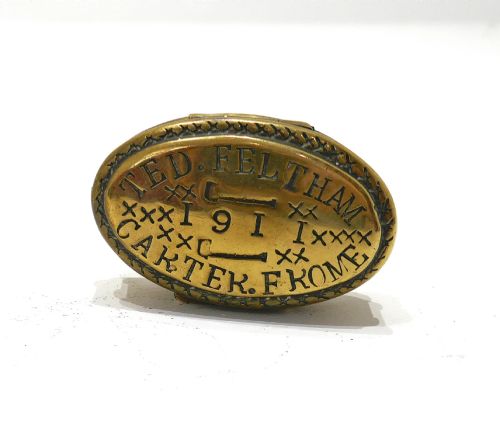
- A small pocket-sized receptacle designed to hold powdered tobacco, frequently fitted with a tight-hinged lid to keep the contents dry. Examples often feature engraved initials or commemorative dates on the brass surface.
- Etui
- A small case used for holding sewing needles, scissors, and other small implements. Victorian versions often incorporated brass and textile fittings.
- Agate
- A cryptocrystalline quartz mineral displaying coloured bands, frequently sliced and set into the lids of brass trinket boxes. This stone adds contrasting natural patterns to the metallic finish.
- Hand wrought
- Formed or beaten into shape by manual hammering rather than machine stamping. This technique leaves subtle surface irregularities that indicate period handcraft.
Oval Brass Box: Frequently Asked Questions
What were these boxes used for?
These vessels held personal items, dried tobacco, snuff, sewing tools, or bottled wine depending on their scale. Smaller pocket boxes served individuals on the go, whilst larger bins managed hearth supplies or dining room refreshments.
Over successive periods, the domestic role shifted from utilitarian storage to prominent tabletop display. Owners kept them in parlours, studies, and dining rooms for daily convenience.
How do I date an antique brass box?
Dating relies on observing construction methods, hinge types, fastening techniques, and stylistic markers associated with Georgian, Victorian, or Edwardian periods. Engraved dates or maker marks occasionally provide direct chronological evidence.
Secondary materials and overall wear patterns also help establish the era of manufacture. Hand-wrought surfaces typically point towards eighteenth-century origins, whereas later nineteenth-century examples often show machine-assisted production.
How should I clean antique brass?
Preserving the original patina involves dusting gently with a soft cloth and avoiding aggressive chemical polishes that strip historical age. Excessive shining removes the dark oxidation valued by collectors.
If the metal requires attention, mild soap and warm water applied sparingly will remove surface grime without damaging the underlying brass or inset stones.
Are these boxes English or continental?
Origin varies across the selection, with domestic English pieces appearing alongside Dutch and French examples. Continental makers frequently utilised distinct engraving styles and construction details.
Dutch tobacco containers and French trinket boxes often display alternative motifs and brass gauges compared to their British counterparts.
Can I use a cellarette for storage today?
Large mahogany and brass-bound cellarettes function well as contemporary drinks cabinets, side tables, or blanket storage. Their sturdy timber frames and lined interiors accommodate modern items easily.
Placing them in living spaces allows them to serve practical storage needs while displaying period woodwork and metalwork.