


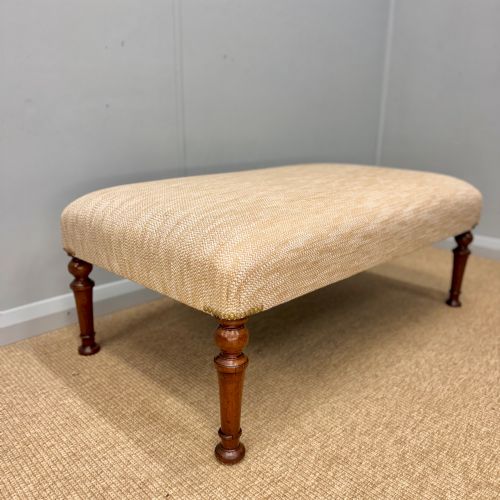
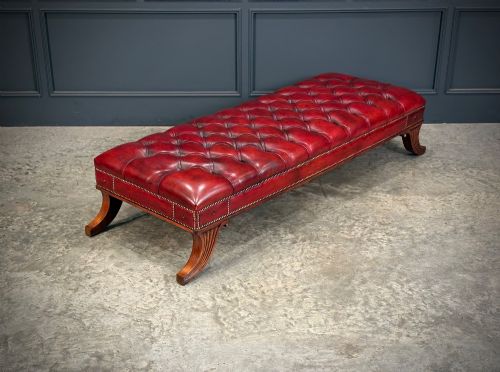
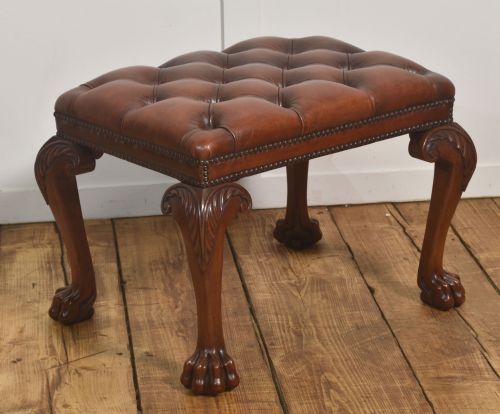
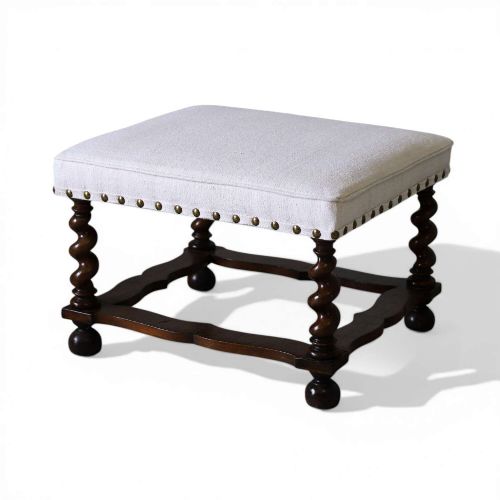

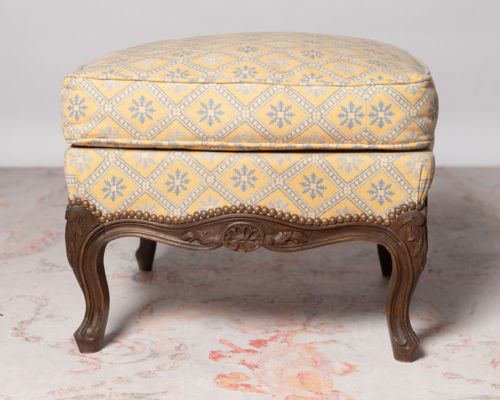


Brass Studded Ottoman
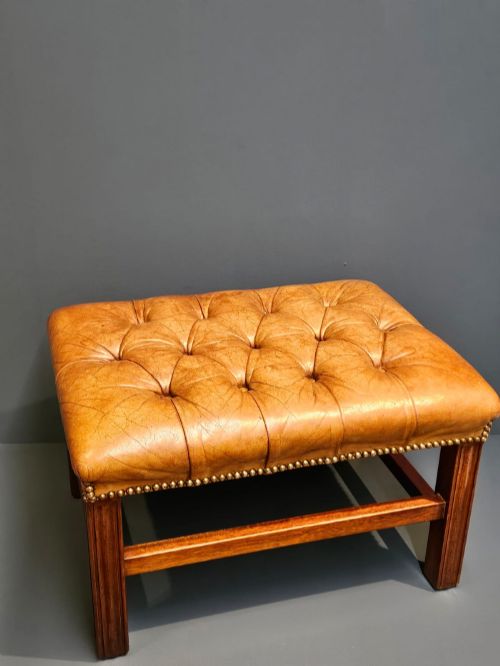
A brass studded ottoman brings tactile leather and sturdy timber together, serving as a functional seat or low table in a traditional interior.
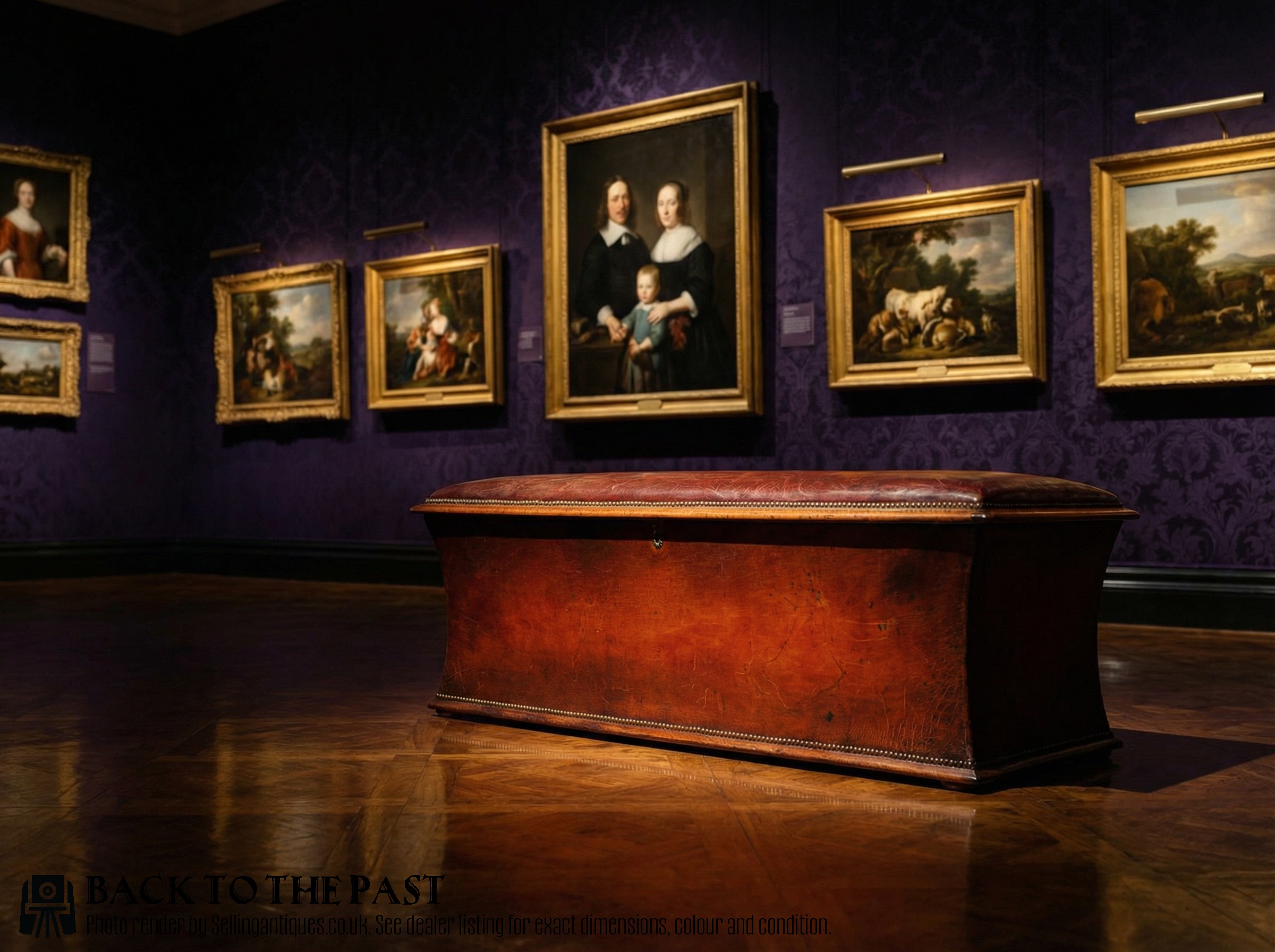
Brass Studded Ottoman
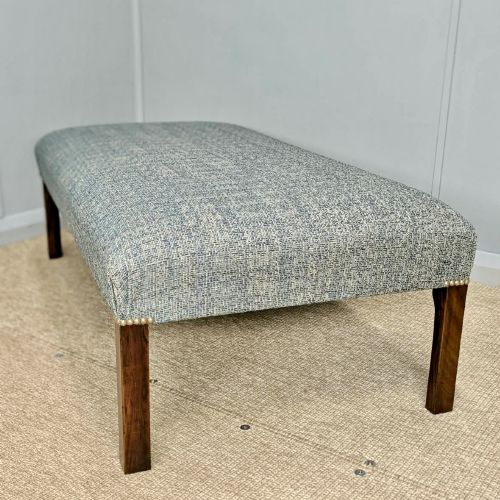
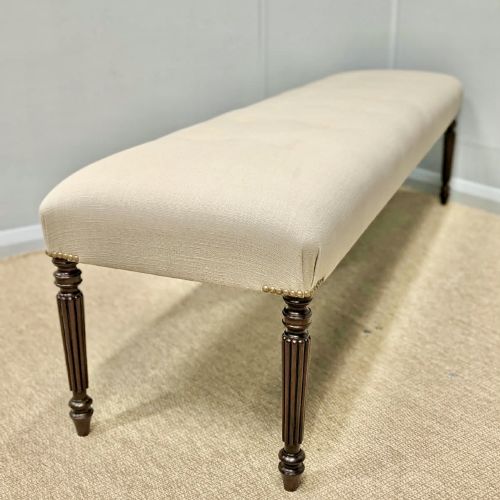
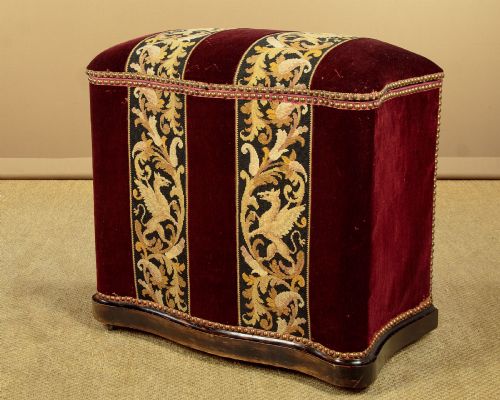
A brass studded ottoman spans a variety of low seating forms, including footstools, long benches, and box ottomans designed with internal storage. When searching for a brass studded ottoman, buyers encounter pieces configured primarily as rectangular or square footstools and upholstered box seats.
The selection here draws heavily from the nineteenth century, Victorian, and Regency periods, alongside Edwardian examples and eighteenth-century designs. Mahogany and rosewood frames dominate, frequently accompanied by walnut, oak, and fabric or leather upholstery.
The physical format ranges from compact footstools on brass castors to very large country house ottomans and blanket boxes. These seating options integrate easily into traditional English and Regency schemes as flexible centrepieces or fireside companions.
Materials and construction
Frames are constructed from dense hardwoods such as mahogany, rosewood, walnut, and oak, providing a rigid structural base for heavy daily use. Joinery techniques vary by period, supporting both carved cabriole legs and fluted or barley-sugar supports.
Upholstery relies on leather, fabric, linen, and silk surfaces secured to the timber frame with individual brass studs. Deep buttoning and hand-dyed leather finishes appear regularly across nineteenth-century and Edwardian pieces, often paired with brass castors for mobility.
Brass Studded Ottoman Retail Price Guide 2026
Typical asking prices for brass studded ottoman among the pieces listed under this phrase on Sellingantiques today, from the lower quarter to the upper quarter. They describe what is for sale here now, not the wider market.
Some nineteenth-century box ottomans double as giant blanket chests, proving that Victorians hid their clutter in style.
Evaluating the standard
Quality rests upon the choice of timber and the crispness of any hand-carved detailing on the frame. Dense mahogany and richly figured rosewood signify superior initial manufacture compared to simpler oak or utility woods.
The execution of the upholstery work separates standard items from finer examples. Uniform placement of brass studding, deep buttoning precision, and the integrity of traditional leather treatments determine the standing of each piece.
The Brass Studded Ottoman Glossary
- Ottoman
- A low upholstered seat or bench without a back or arms, frequently featuring hinged storage beneath the lid.
- Cabriole leg
- A furniture leg that curves outward and then tapers inward, typically ending in an ornamental foot.
- Box ottoman
- A specialised stool design incorporating a hollow compartment accessed by lifting the upholstered top.
- Castor
- A small wheel mounted on a swivel assembly attached to the base of a furniture leg for ease of movement.
- Deep buttoning
- An upholstery technique where twine pulls the fabric inward to create a padded, diamond-patterned surface.
Brass Studded Ottoman: Frequently Asked Questions
How were these ottomans used?
These pieces functioned primarily as footstools, low hall seats, or movable benches in formal rooms and country houses. Box variants also served to store blankets, linens, and domestic textiles.
Their robust timber frames and upholstered tops allowed them to double as casual seating or low resting surfaces for daily use.
How do I care for the leather?
Leather upholstery requires regular treatment with appropriate conditioning creams to maintain suppleness and prevent cracking over time. Direct sunlight and excessive heat should be avoided to preserve the original dye.
Gentle dusting keeps the brass studs bright without requiring abrasive cleaning agents that might damage the surrounding hide.
Can I tell the periods apart?
Regency and Victorian examples often feature rich rosewood or mahogany with distinct leg profiles, such as fluted columns or heavy cabriole supports. Edwardian pieces tend to show lighter oak or simpler mahogany frames.
Detailing like hand-carved walnut in eighteenth-century revival styles also points towards specific eras of craftsmanship.
Where do they fit in a home?
An ottoman works effectively at the foot of a bed, beside a fireplace, or positioned centrally in a study as an informal seat. Large square or rectangular formats anchor a seating arrangement while offering surface utility.
Box versions provide concealed storage in bedrooms or living areas without sacrificing floor space.