
Brass Studded Leather Armchair
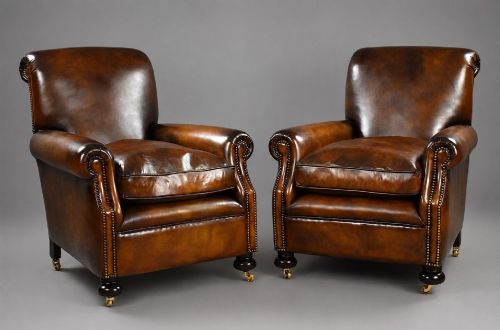
These brass studded leather armchair selections offer sturdy timber frames wrapped in patinated hides, prized for enduring comfort in studies and libraries.
Brass Studded Leather Armchair
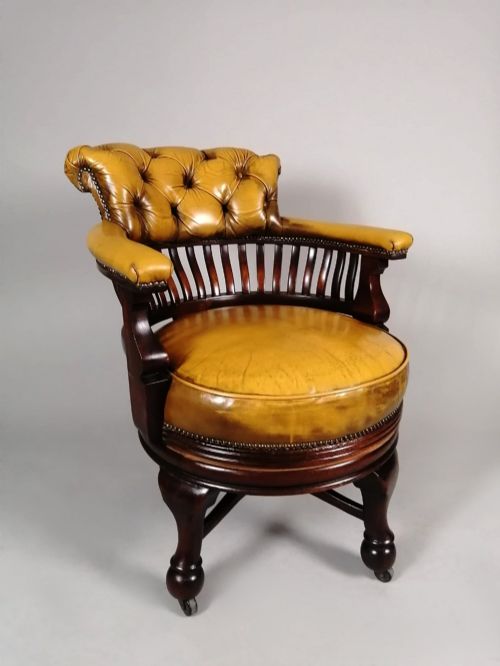
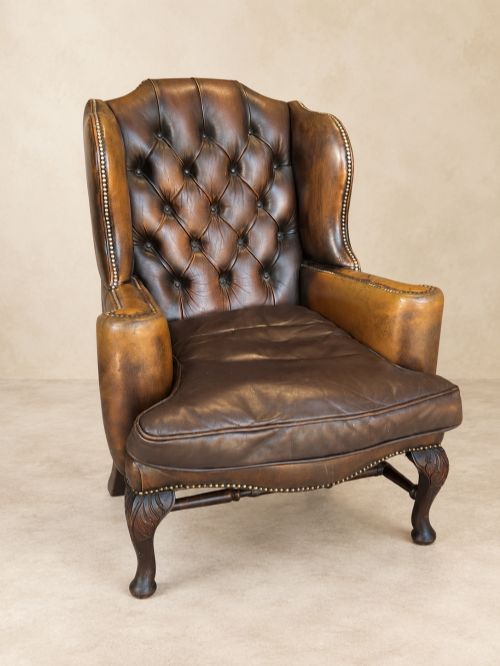
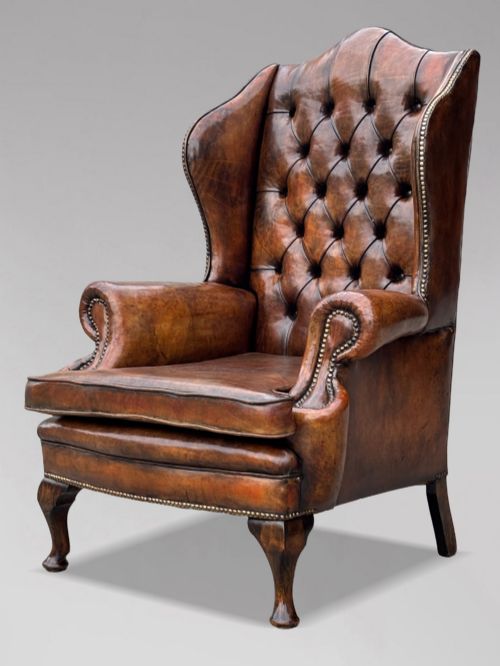
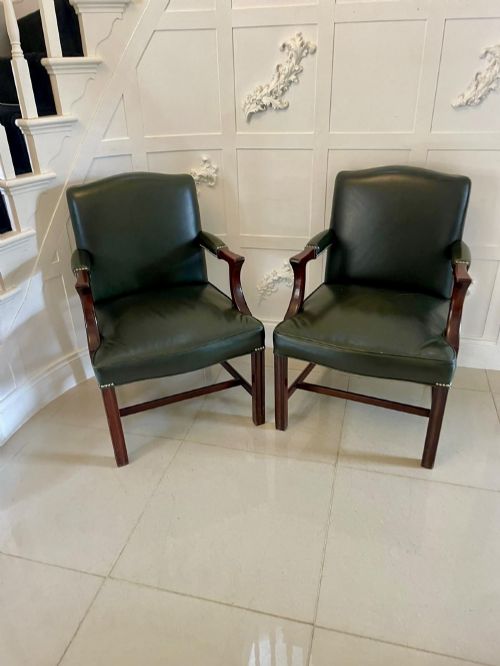
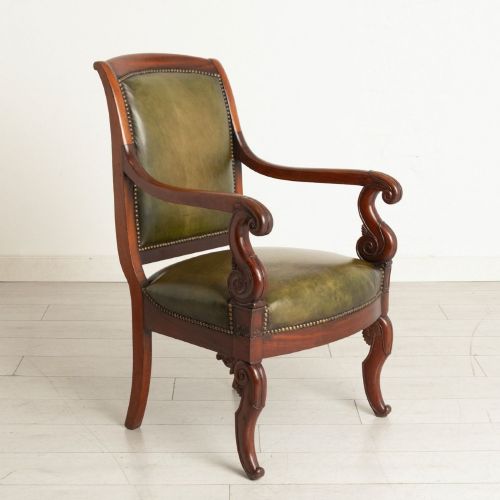
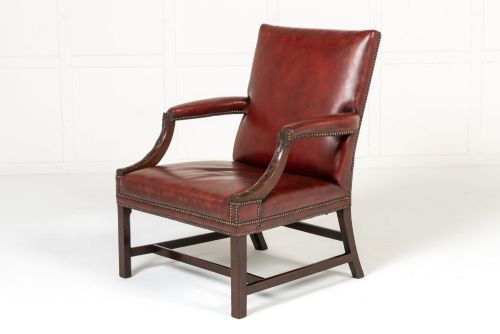
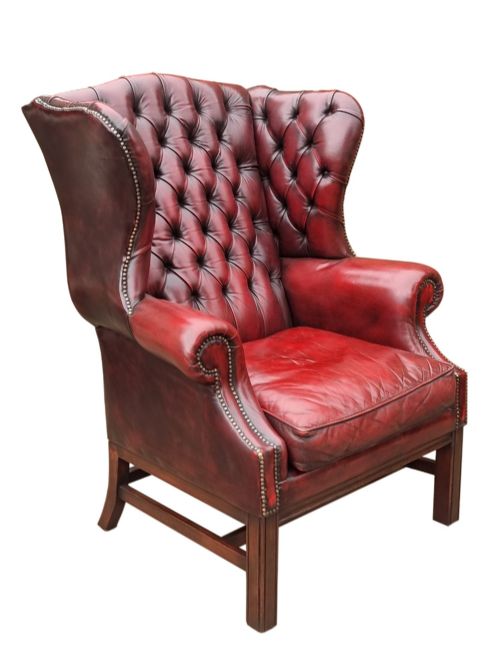
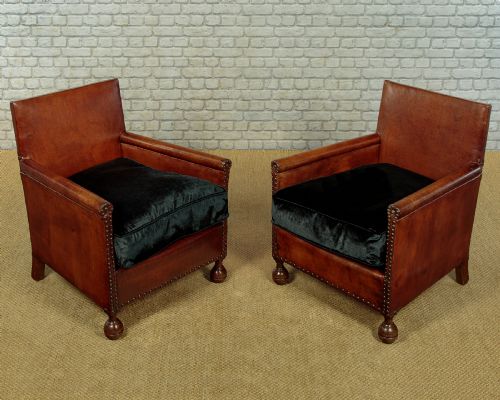
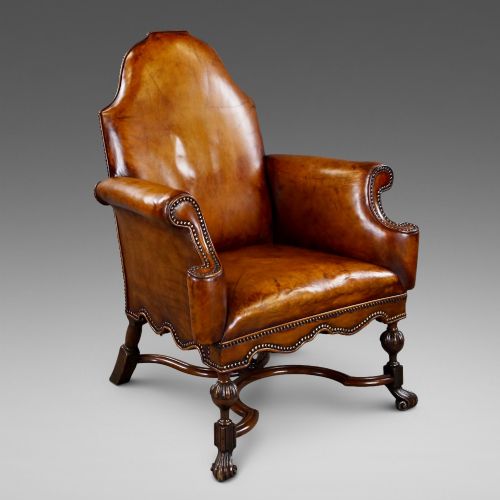
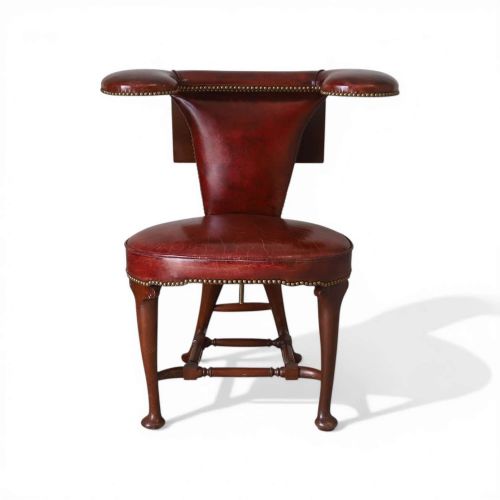
A brass studded leather armchair combines functional wooden seating with durable hide upholstery fastened by individual metal tacks, appearing across periods from the eighteenth century through to the art deco era. The nineteenth century examples and nineteen-twenties club forms dominate the selection, offering everything from deep buttoned wing backs to library armchairs and revolving desk seats.
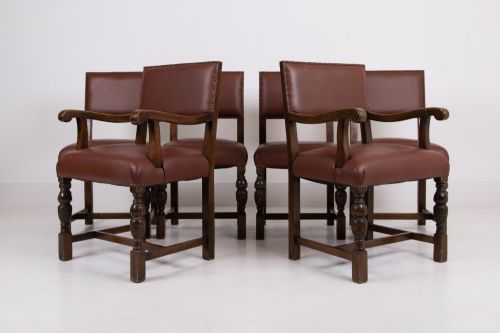
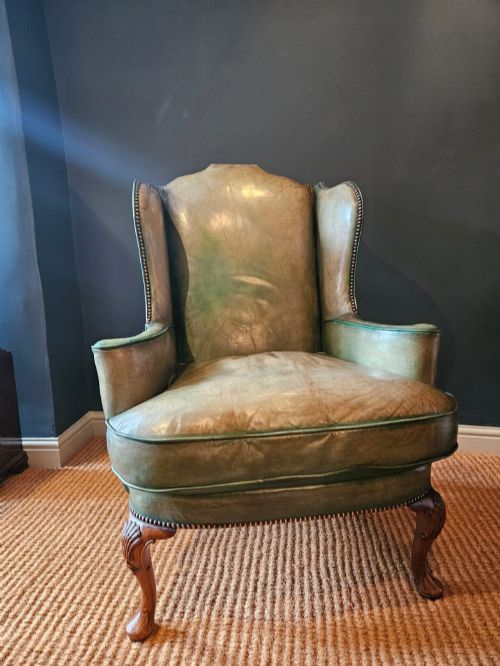
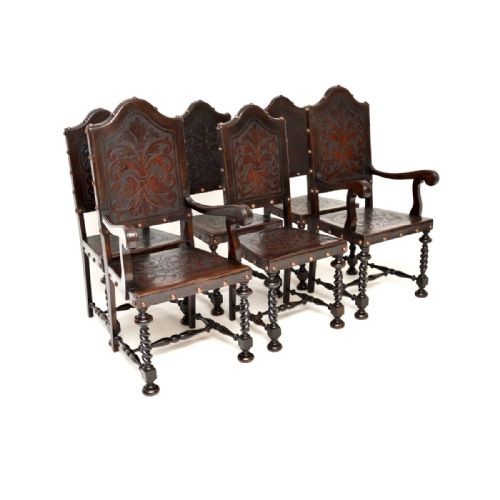
Buyers encounter diverse stylistic interpretations ranging from strict Georgian wing chairs on cabriole legs to oak dining chairs and low library seating. These pieces serve practical workspace duties or provide deep comfort in sitting rooms, relying on traditional forms that suit both formal studies and relaxed domestic spaces.
Materials and construction
Frames rely on hardwoods such as mahogany, oak, walnut, and general timber to provide structural integrity for heavy use. Upholsterers stretch natural leather over padding and secure the edges by hand-driving individual brass studs into the wooden frame.
Surface treatments involve hand-colouring or dyeing the leather to achieve deep brown, tan, red, or green shades that show natural grain variation. Cabinetmakers shape the supporting legs and armrests from solid timber, often incorporating mahogany or walnut to match prevailing periods.
Cockfighting chairs appear among the oak seating, offering narrow slanted backs designed for eighteenth-century spectators.
Variations in quality
Quality rests in the depth of the timber frame construction and the authentic ageing of the leather upholstery rather than surface embellishment alone. Superior examples display substantial hardwood framing, hand-stitched detailing, and hide that develops a rich, supple patina through continuous use.
The precision of the brass studding work and the proportion of the wooden elements dictate the visual success of the piece. Stronger examples maintain firm internal support and honest material integration across the legs, arms, and back without relying on replacement components.
The Brass Studded Leather Armchair Glossary
- Wingback
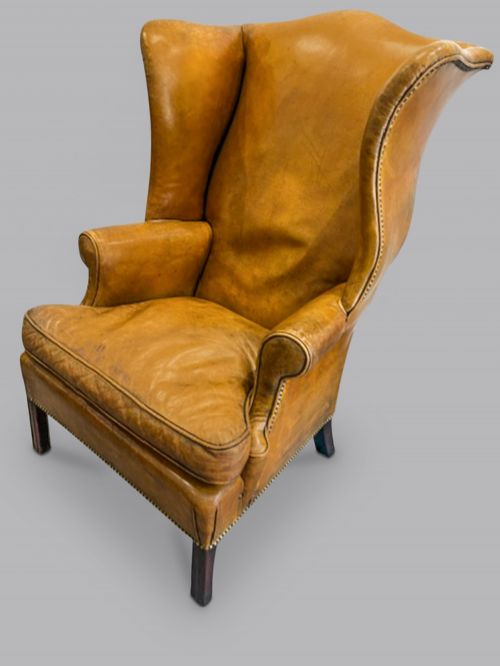
- An upholstered chair with side panels designed to shield the sitter from draughts. These high backs frequently utilise buttoning and brass studding.
- Club chair
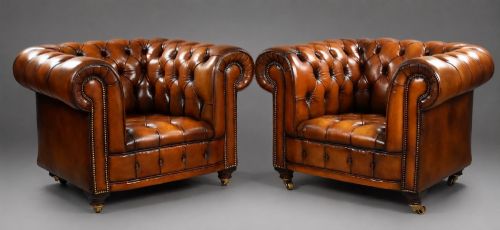
- A deep, comfortable armchair upholstered in leather, developed in France and popularised in the early twentieth century. These low-slung seats often feature rounded backs and brass tacks.
- Carver chair
- An armchair designed to match a set of dining chairs, usually placed at the table ends. These incorporate wooden arms and leather seat pads.
- Cabriole leg
- A furniture leg that curves out and then narrows inward, terminating in a pad or foot. This stylistic element appears frequently on eighteenth-century and revival seating.
- Patina
- The surface sheen and colour depth developed on leather and wood through age and handling. This quality signals genuine historical use.
Brass Studded Leather Armchair: Frequently Asked Questions
How do I date a leather armchair?
Dating relies on combining the timber species, frame construction methods, and the style of the legs with the wear patterns on the hide. Georgian pieces show specific leg carving and joinery, whereas later Edwardian and nineteen-twenties examples utilise different internal webbing and padding techniques.
Examining underneath the seat reveals the type of wood and structural fastenings used by period makers. Comparing these details against known stylistic eras helps establish the approximate decade of manufacture.
Where should I place a library chair?
These armchairs suit studies, home offices, and reading corners where their supportive backs and durable leather surfaces can be utilised daily. Desk variants pair naturally with writing tables, while larger wing and club versions anchor seating arrangements.
Keep the timber frames away from direct heat sources and strong sunlight to prevent the leather from drying out and cracking. Regular placement in well-ventilated rooms preserves both the wood and the hide.
Are these chairs comfortable for daily use?
Most variants are designed for sustained sitting, offering deep padding and supportive armrests developed for reading or desk work. The ergonomic posture varies between upright desk chairs and deep club seating.
Checking the firmness of the internal padding helps determine the seating experience. Many historical examples provide substantial lower back support through traditional horsehair or spring stuffing.