

Brass Stud Trunk
A brass stud trunk brings domestic storage alive with hide, metal, and rich timber.
Brass Stud Trunk
When you search for a brass stud trunk, you look at robust storage boxes constructed for travel, households, and distant trade. These pieces serve as blanket boxes, ottomans, and heavy travel chests designed to hold valuables or garments on long journeys.
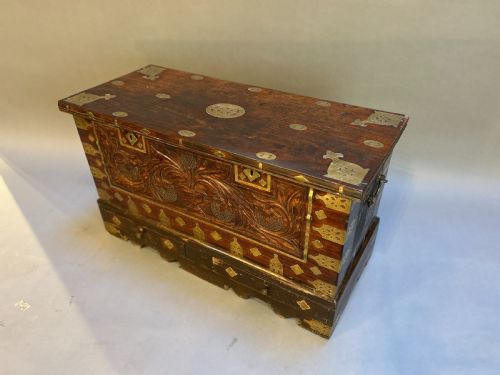
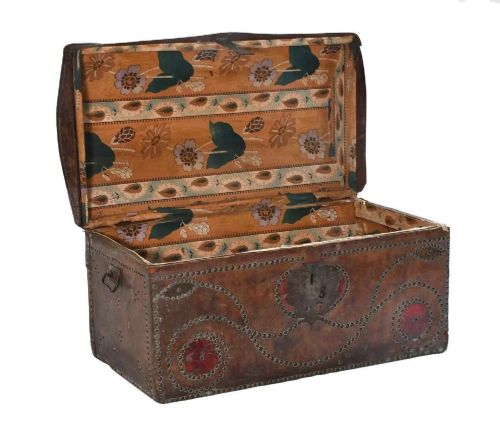
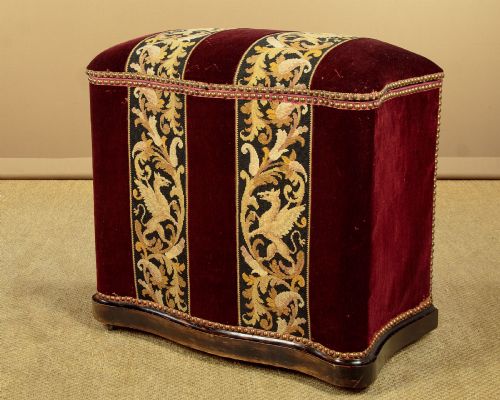
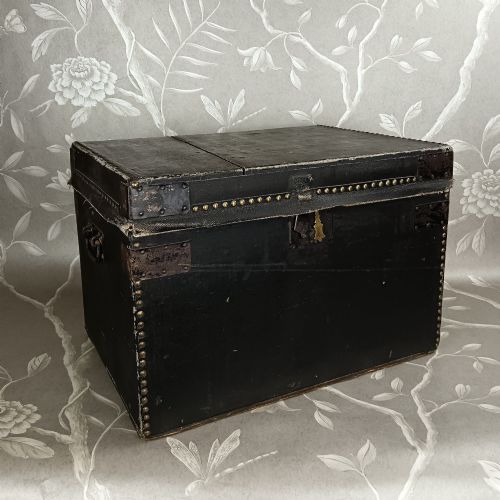
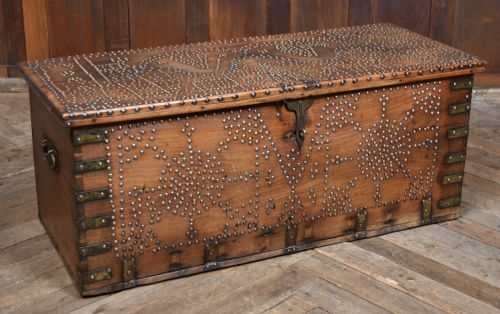
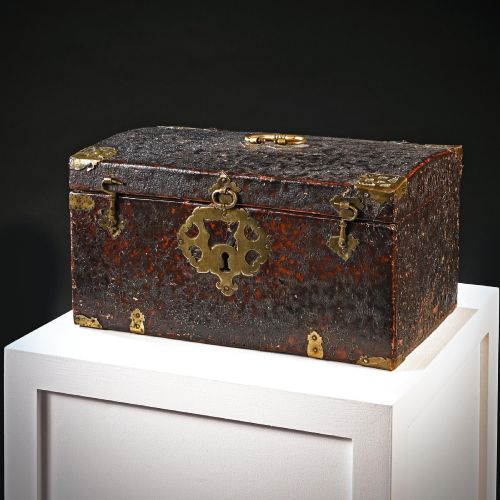
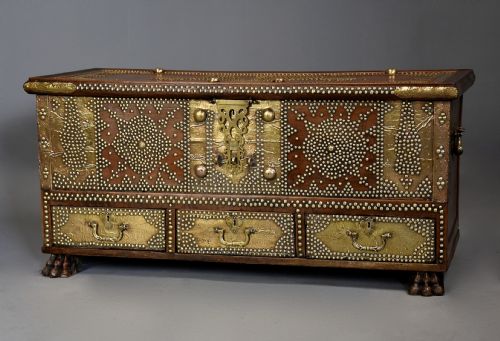
The versions you meet on this page span several centuries, from seventeenth-century Spanish and Dutch examples to nineteenth-century Victorian campaign cases and Zanzibar chests. Most specimens combine timber carcases with protective hide or leather coverings.
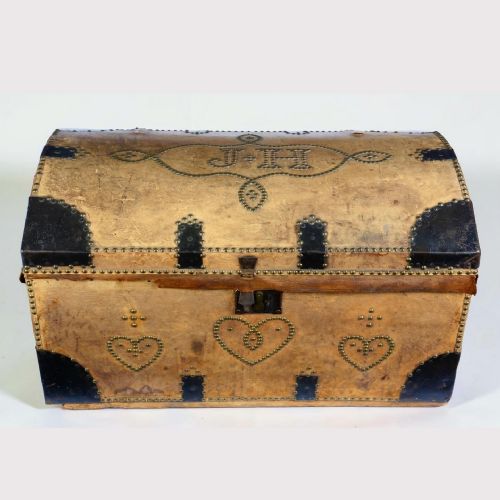
Makers fashioned these chests for domestic utility, coaching travel, and maritime trade routes. You find flat-topped variants alongside dramatic dome-topped coffers that shed water during transit.
How they were made
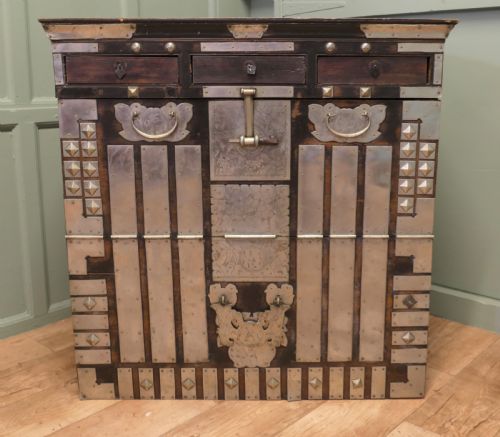
Craftsmen built the carcases from hardwoods such as teak, camphor wood, padouk, and mahogany, then clad them in leather, hide, or painted canvas. Metal bindings in iron and brass provided structural rigidity along edges and corners.
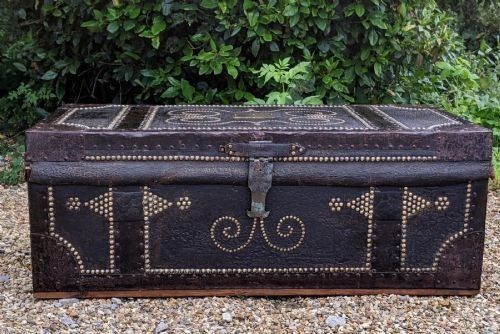
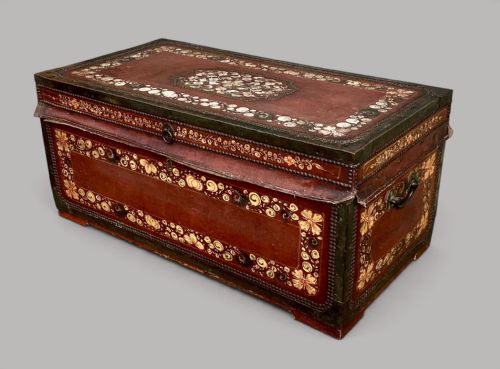
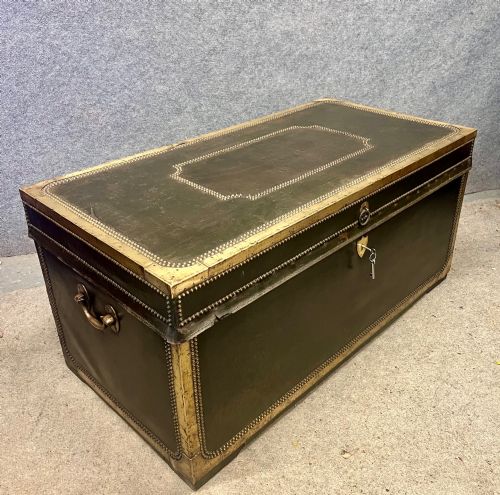
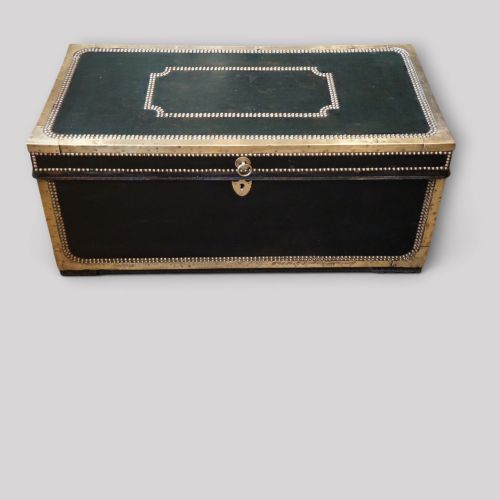
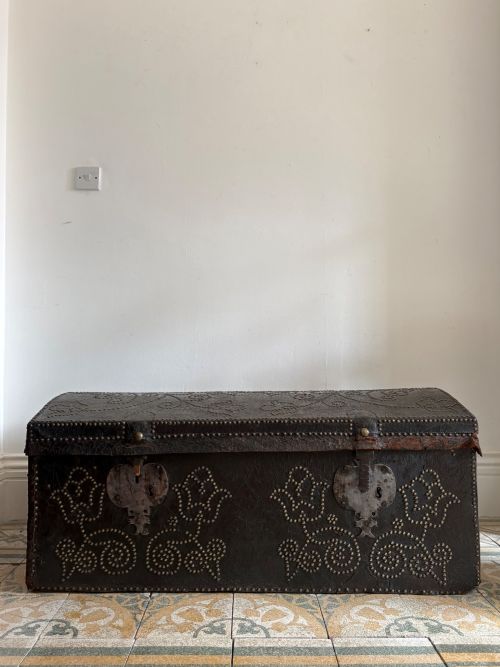
Individual brass studs, nails, and decorative nailhead details were hammered into the exterior surfaces in geometric patterns or orderly rows. These studs secured the hide covering to the wood underneath while creating elaborate surface decoration.
Carrying handles forged from iron or brass were fitted to the sides for transport by coach, ship, or porters. Interior compartments often featured fabric linings, papered storage spaces, or fitted trays for smaller items.
Brass Stud Trunk Retail Price Guide 2026
Typical asking prices for brass stud trunk among the pieces listed under this phrase on Sellingantiques today, from the lower quarter to the upper quarter. They describe what is for sale here now, not the wider market.
Listings span four centuries, featuring seventeenth-century Spanish leather chests up to early twentieth-century leather ottomans.
What varies in quality
The distinction between ordinary utility boxes and superior examples rests on timber selection and decorative ambition. Dense tropical hardwoods like padouk and camphor sit above softer woods, while thick, hand-dyed hides outlast thinner leather coverings.
The density and precision of the brass studwork separate workshop standards. Closely spaced, uniform studding takes considerably more skill than sparse, uneven nailing and transforms a utilitarian container into an elaborate statement piece.
Samuel Pratt·Wm. Insall of Bristol·Arthur Wannop·Chapple & Sons·Seabrook of St.Pauls
The Brass Stud Trunk Glossary
- Zanzibar chest
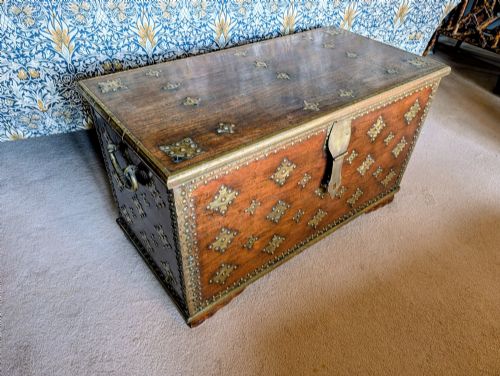
- A heavy hardwood storage trunk decorated with elaborate brass studwork and strapwork, originating from East African trade routes. These pieces often feature compartmented interiors and secret drawers.
- Campaign trunk
- A portable storage chest made for military officers or travellers on the move. They typically incorporate robust iron or brass bindings to withstand frequent transit.
- Coffer
- A heavy wooden box or chest used for holding valuables, often possessing a domed lid. Early examples frequently employ leather cladding secured by iron and brass nails.
- Padouk
- A durable tropical hardwood with a reddish hue, utilised in maritime and colonial furniture. It resists insect attack and warping in humid climates.
- Ottoman
- A low upholstered or leather-clad seat with internal storage capacity. Nineteenth-century versions often adapt large travel trunk forms for static domestic comfort.
Brass Stud Trunk: Frequently Asked Questions
What is a brass stud trunk?
A brass stud trunk is a heavy storage chest clad in leather or hide and decorated with rows of brass nails. These pieces served as travelling luggage, blanket boxes, and domestic coffers across the centuries.
Craftsmen built them using robust timbers like camphor wood, teak, and oak. The metal studs protected the leather edges from wear during long journeys by coach or ship.
How were these trunks used?
Owners utilised these chests to transport clothing, documents, and valuables during travel. Once inside a home, they doubled as blanket boxes, coffee tables, or ottomans.
Their sturdy construction allowed them to withstand rough handling by coachmen and porters. Fitted interiors often kept smaller personal possessions organised.
How do I live with a trunk?
You can place a trunk at the foot of a bed for spare linens or use it as a coffee table in a living room. The flat-topped variants offer convenient surface space while concealing interior storage.
Keep leather surfaces conditioned and avoid placing them near direct heat sources. The rich wood and metal textures complement both traditional and modern interiors.
How do I tell periods apart?
Early pieces from the seventeenth and eighteenth centuries often feature dark, thick Spanish or Dutch leather held by heavy iron and brass tacks on dome tops. Nineteenth-century examples frequently show tighter, more geometric brass stud patterns.
Victorian and later trunks introduce exotic tropical woods like padouk and camphor alongside maker plates and refined carrying handles. Examining the internal paper linings and lock mechanisms also helps establish the date.