

Brass Stud Box
A brass stud box combines robust timber or leather construction with meticulous metal fastening, offering portable security and distinctive period character.
Brass Stud Box
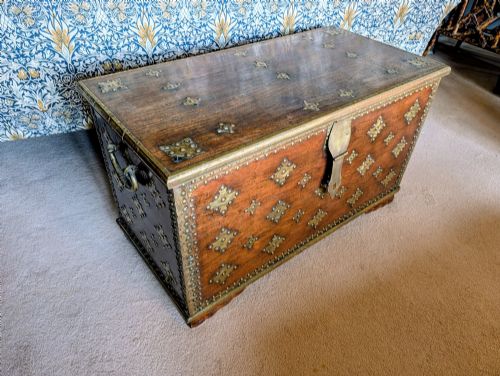
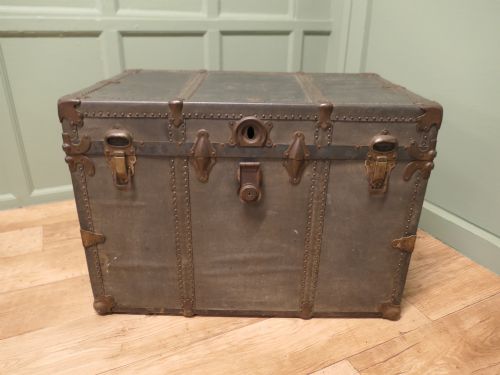
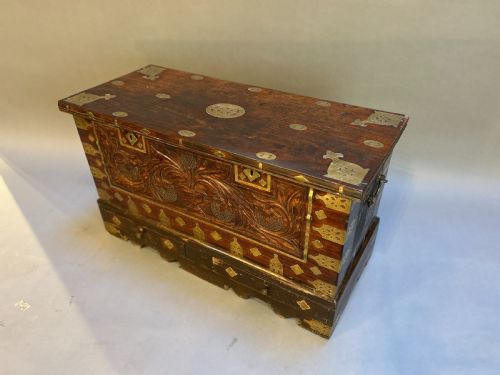
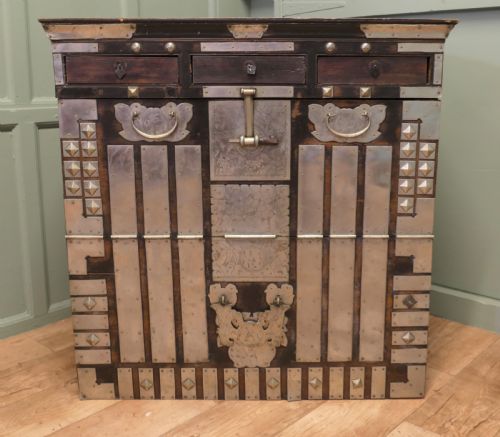
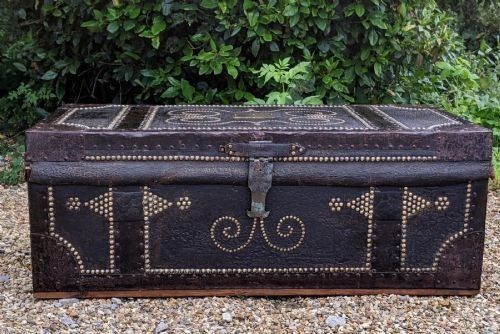
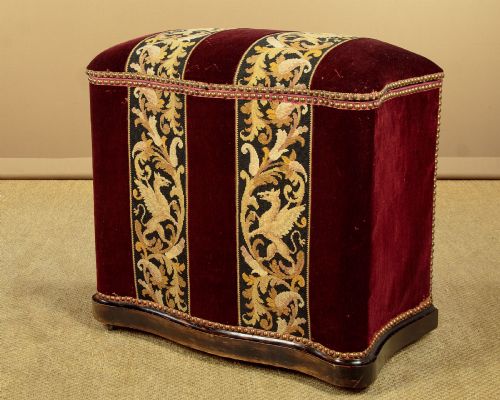
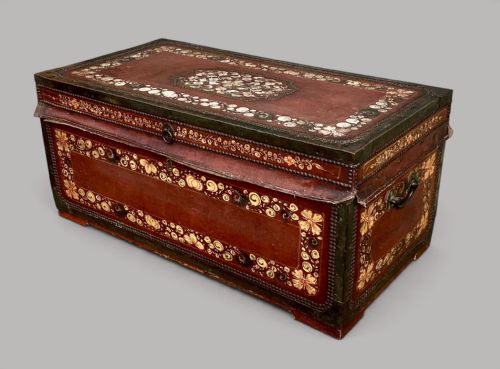
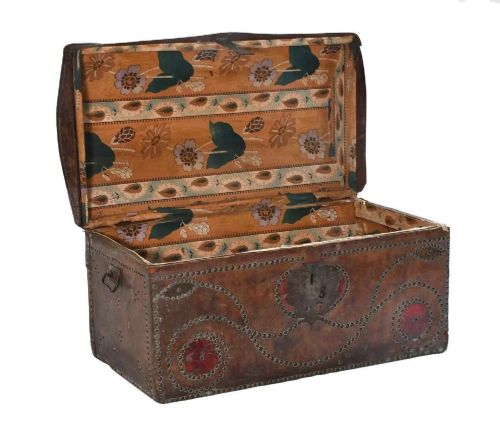
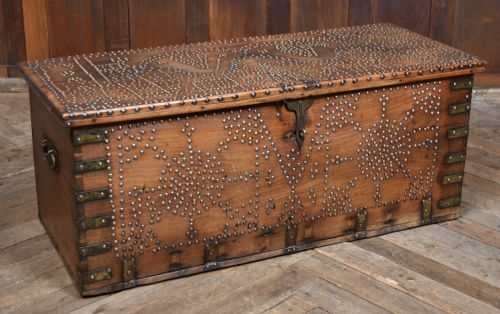
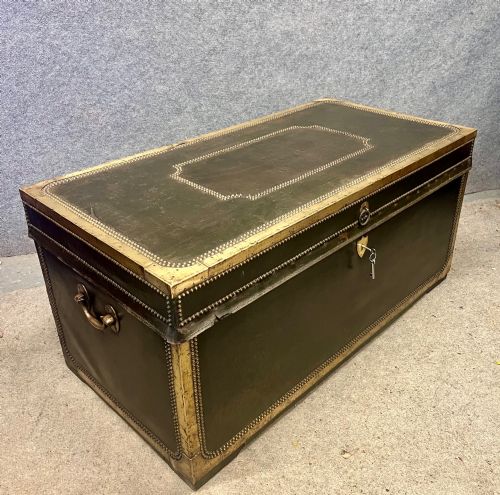
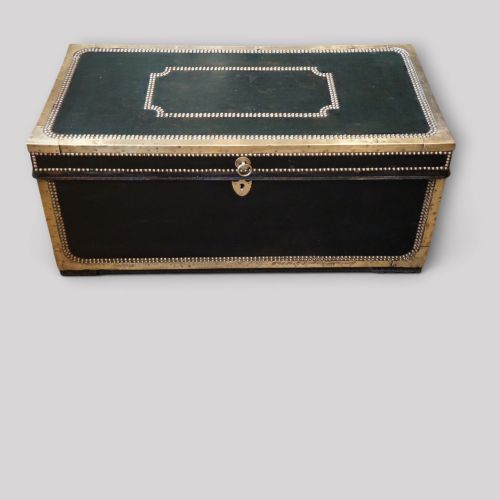
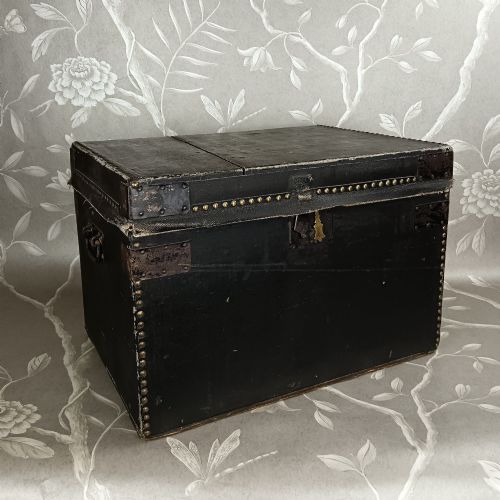
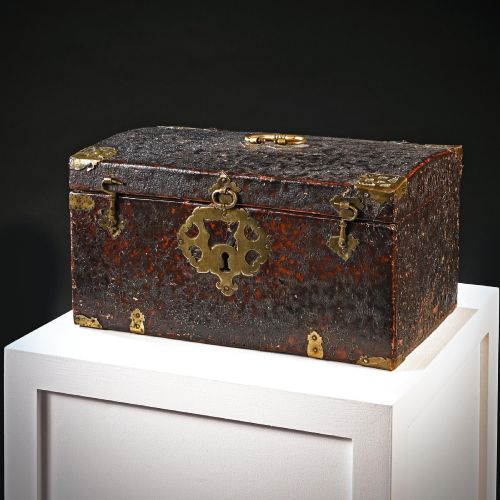
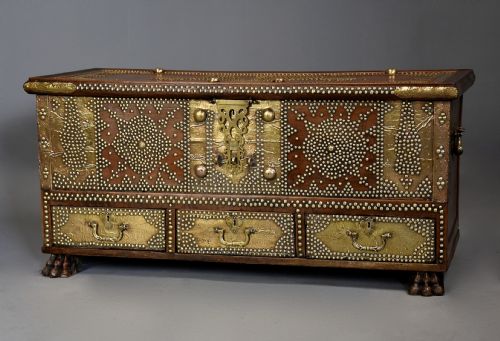
When you search for a brass stud box, you encounter sturdy storage forms ranging from compact travelling caskets to large camphor wood chests and ottomans. The examples met on this page span the seventeenth, eighteenth, and nineteenth centuries, including Victorian campaign pieces and Chinese Export trunks.
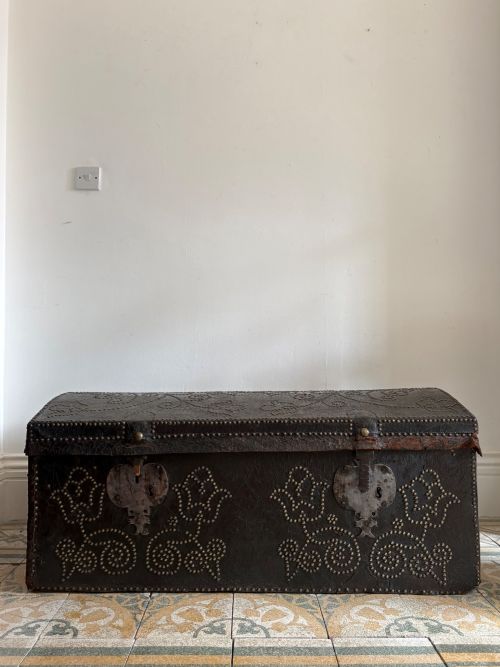
These items served primarily for travel, trade, and domestic storage, utilising durable hides and dense woods to protect contents during transit. The brass studding secures the leather or reinforces the frame while creating geometric decorative patterns across the surface.
How they were made
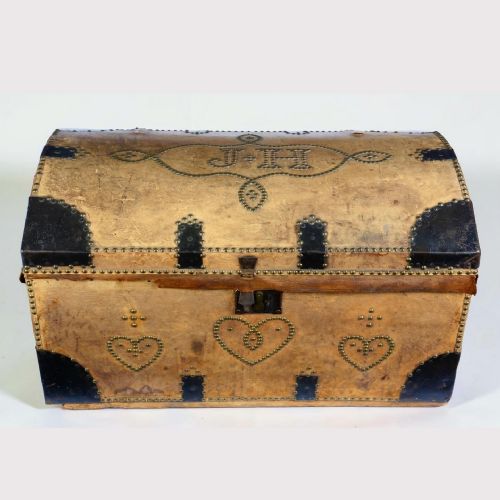
Maker construction relies on heavy timbers such as camphor wood, teak, mahogany, oak, and padouk, often covered in leather or hide. Artisans secured these materials using individual brass studs and metal binding, applying thousands of pins by hand to form lines, initials, or motifs.
Joinery techniques include dovetailed corners and reinforced iron brackets designed to endure rough handling on coaching routes, sea voyages, and military campaigns.
Brass Stud Box Retail Price Guide 2026
Typical asking prices for brass stud box among the pieces listed under this phrase on Sellingantiques today, from the lower quarter to the upper quarter. They describe what is for sale here now, not the wider market.
Several trunks bear original brass-studded initials, quietly preserving the identity of long-ago travellers who trusted these sturdy chests with their belongings.
What varies in quality
Quality rests upon the density of the studwork and the integrity of the original timber frame, with finer pieces displaying precise, uniform metal placement and intact hand-dyed hides. The presence of maker stamps, working locks, and original carrying handles elevates a piece above standard utility items.
Wear indicates genuine period travel rather than recent alteration, and superior examples retain their original hinges, linings, and structural hardware without extensive replacement.
Samuel Pratt·Wm Insall of Bristol·Arthur Wannop·Chapple & Sons·Seabrook of St Pauls
The Brass Stud Box Glossary
- Camphor wood
- A fragrant timber native to Asia, prized in nineteenth-century trunks for its insect-repellent properties.
- Campaign case
- Portable furniture designed for military officers, built with recessed handles and collapsible components for travel.
- Zanzibar chest
- A heavy trading chest originating from East Africa or India, distinguished by brass stud decoration and intricate strapwork.
- Coffer
- A large, sturdy box with a lid, used historically for storing valuables, documents, or garments.
- Dome top
- A rounded lid profile on trunks and chests designed to shed rainwater during travel and increase internal capacity.
Brass Stud Box: Frequently Asked Questions
What were brass studded boxes used for?
These boxes and trunks served travellers, merchants, and military officers for transporting clothing, documents, and valuables across land and sea. Their sturdy wooden frames and heavy metal bindings protected contents against moisture and rough handling during long journeys.
In domestic settings, smaller caskets kept jewellery and letters secure, while larger blanket boxes and ottomans stood in bedrooms or hallways for household storage.
How do I date a leather and brass trunk?
Dating relies on examining the construction methods, wood types, and the style of the brass studwork. Earlier seventeenth and eighteenth-century examples often feature dome tops and hand-tooled Spanish or Dutch leather, while nineteenth-century pieces frequently display campaign handles or Chinese Export camphor construction.
Hardware details, such as hand-cut iron screws or maker stamps on the locks, also help narrow down the period of manufacture.
Are camphor wood trunks safe for modern clothes?
Camphor wood naturally repels moths and insects, making these chests suitable for storing woollens, linens, and garments. The aromatic oils within the timber protect fabrics without the need for chemical mothballs.
Owners should ensure the interior is clean and dry before storing delicate modern textiles against the historic wood.
How should I clean a historic leather trunk?
Maintain leather surfaces by gently dusting with a soft, dry cloth to remove grit. Apply a museum-grade microcrystalline wax or specialist leather dressing sparingly if the hide appears dry, avoiding any areas where the leather is degraded or flaking.
Polish brass studs carefully with a dry cloth to prevent metal cleaner from staining the surrounding leather or wood.