

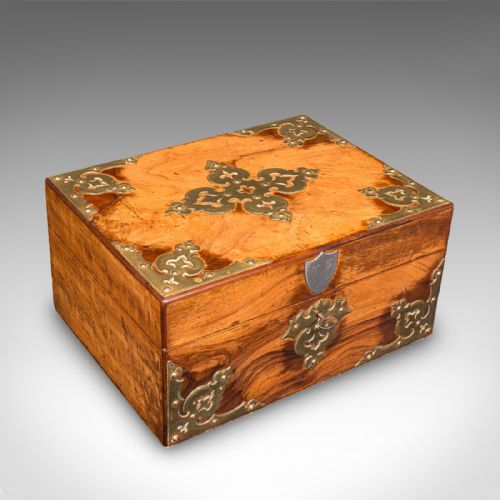
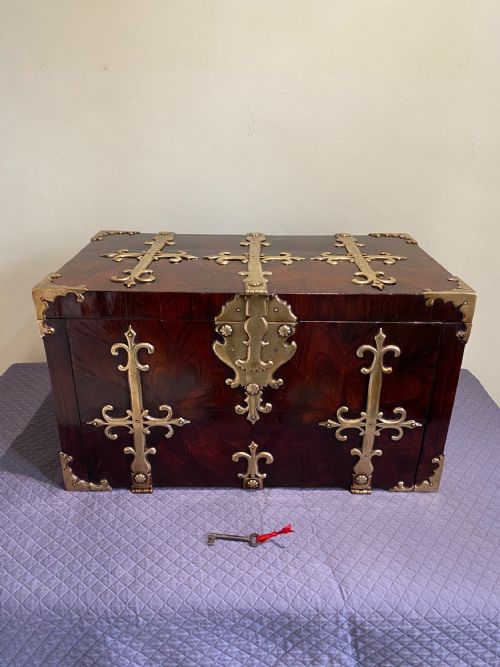


Brass Strapwork Casket
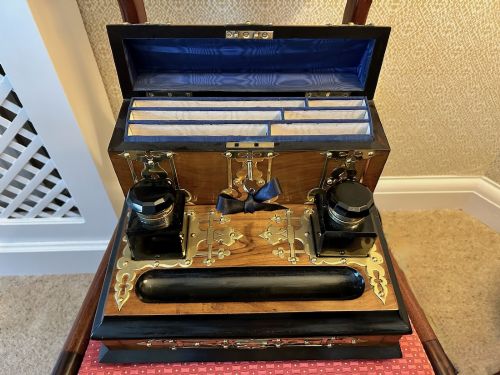
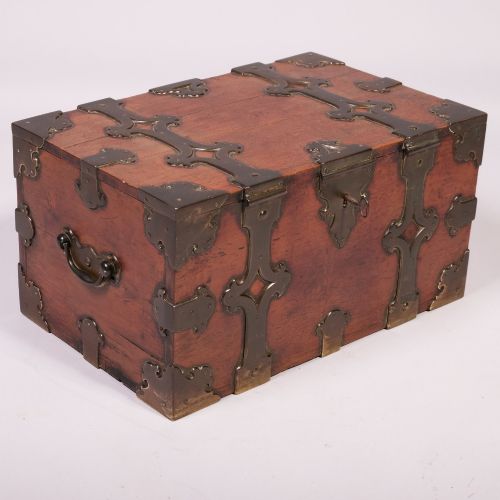
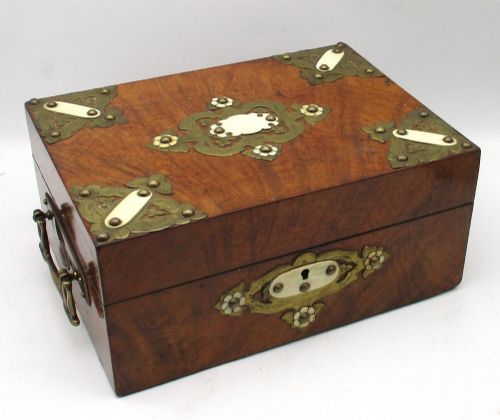
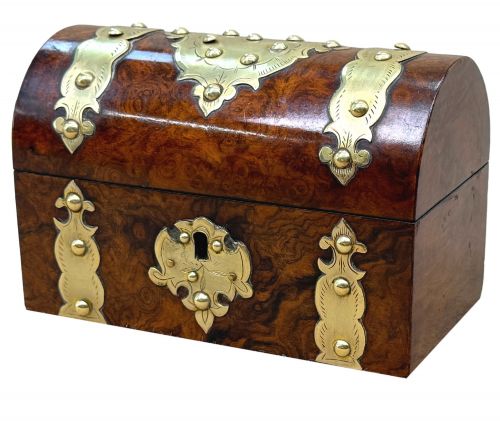
A brass strapwork casket holds papers, jewels or letters within a fitted timber frame held together by metal bands.
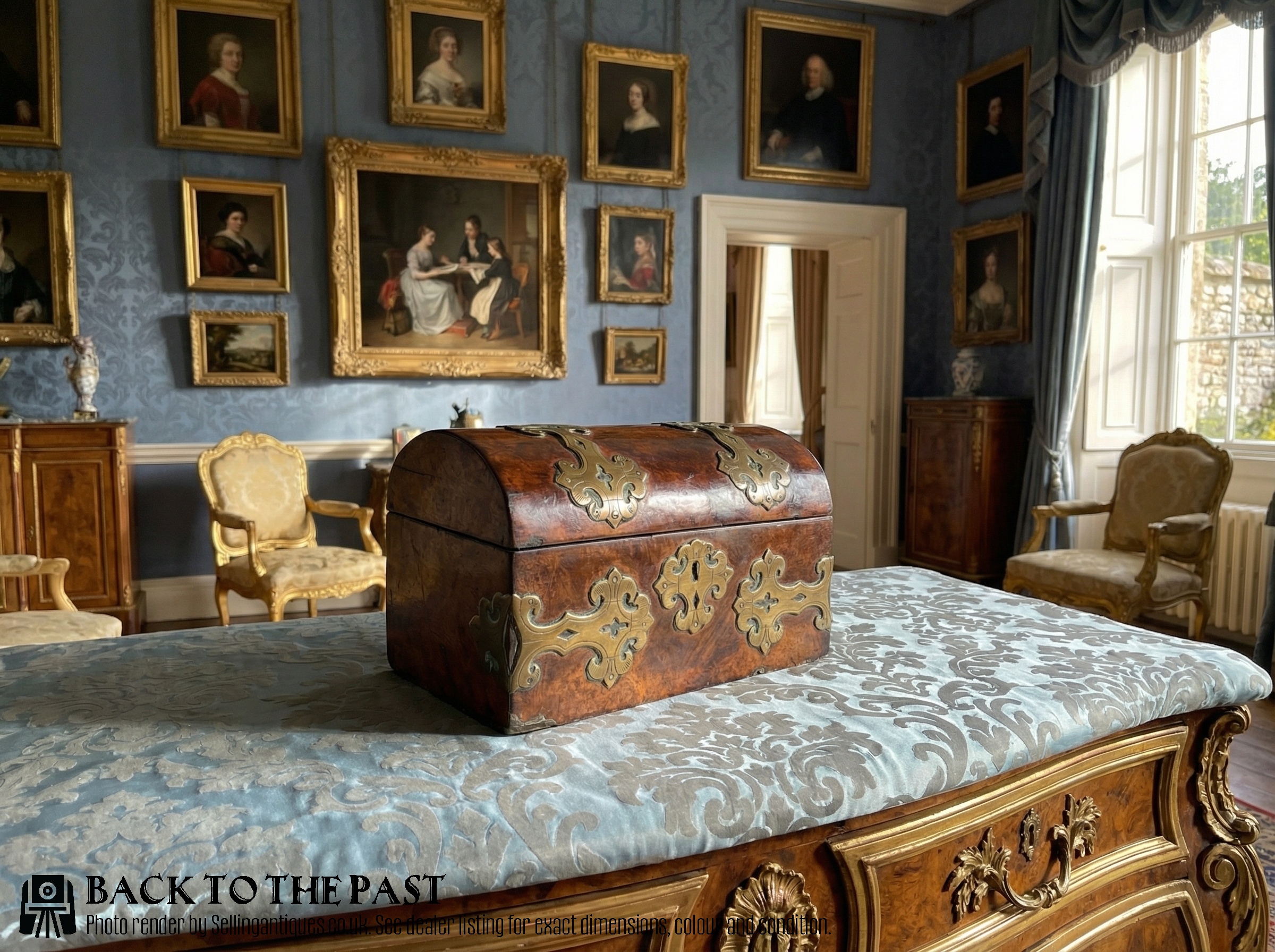
Brass Strapwork Casket
A brass strapwork casket is a sturdy wooden container reinforced with metal bands across the lid and body to protect its contents. When searching for a brass strapwork casket, buyers encounter desk accessories, stationery boxes, and jewellery boxes intended to sit upon tables or writing desks.
The versions most commonly met on this page date from the Victorian period, utilising rich timbers like burr walnut, coromandel and pollard oak. Earlier examples extend back to the seventeenth and eighteenth centuries in forms such as camphor caskets or Iberian baroque strongboxes.
These pieces served practical domestic and office functions, from holding writing paper to securing valuables. Makers styled them in Victorian Gothic Revival, Arts and Crafts, and Anglo-Chinese Colonial traditions to suit contemporary tastes.
Materials and construction
Carpenters constructed the carcasses of these boxes using dense hardwoods such as walnut, coromandel, oak and camphor wood, often selecting burr veneers for their decorative grain patterns. They reinforced the corners, edges and lids with brass strapwork, mounts or ormolu to add structural rigidity and visual contrast.
Internal compartments frequently feature silk, glass or porcelain fittings designed to organise stationery, bottles or jewellery. Lock mechanisms and hinges of cast or brass sheet metal completed the assembly, securing the heavy wooden lids.
Brass Strapwork Casket Retail Price Guide 2026
Typical asking prices for brass strapwork casket among the pieces listed under this phrase on Sellingantiques today, from the lower quarter to the upper quarter. They describe what is for sale here now, not the wider market.
Several boxes double as games compendiums, hiding dice and cards beneath their stern brass-strapped exteriors.
Distinctions in craftsmanship
The quality of a brass strapwork casket rests on the choice of timber and the precision of the metalwork. Finely figured burr walnut, coromandel, or amboyna veneers demonstrate superior material selection compared to plain domestic woods.
The alignment of the brass strapwork and the complexity of the engraving or mounting distinguish standard production pieces from finer workshop commissions. Interior fittings complete with original silk linings and intact glass bottles indicate a higher grade of preservation.
Trussell Brighton
The Brass Strapwork Casket Glossary
- Strapwork
- Metal bands applied to the exterior of a box for reinforcement and decoration. These strips of brass cross the timber surfaces to bind the corners and frame.
- Burr walnut
- A prized timber harvested from the irregular growths of walnut trees. It displays swirling grain patterns that catch the light.
- Coromandel
- A dense, dark brown timber with contrasting black stripes imported from Asia. Cabinetmakers used it for luxury nineteenth-century boxes.
- Stationery box
- A desk accessory designed to hold writing paper, envelopes and pens. Many feature tiered interior partitions.
- Ormolu
- Gilded bronze or brass mounts applied to furniture and boxes. The technique creates a bright metallic finish against the wood.
Brass Strapwork Casket: Frequently Asked Questions
What is a brass strapwork casket used for?
These caskets were built to store and protect valuable personal possessions, writing materials, or correspondence. Owners kept them on desks, dressing tables, or sideboards in period homes.
Interior trays and partitions adapted the space to hold stationery, scent bottles, or sewing implements. Their robust timber and metal construction kept contents secure.
How do I date a Victorian box?
Dating relies on timber choices, construction techniques, and style markers recorded in the evidence. Victorian pieces often employ burr walnut or coromandel alongside Gothic Revival motifs.
Hardware styles and lock mechanisms also provide clues to the decade of manufacture. Mid-nineteenth-century examples frequently feature dome tops and brass banding.
What woods are typical for these boxes?
Cabinetmakers favoured decorative hardwoods that offered stable foundations and striking grain patterns. Walnut, burr walnut, oak, and coromandel appear frequently across the listings.
Exotic timbers like camphor wood and amboyna also surface, reflecting global trade in the eighteenth and nineteenth centuries. These woods were chosen for durability as much as appearance.
How do I care for wood and brass?
Maintenance involves keeping the timber and metal away from direct heat and sudden humidity changes. Regular dusting with a dry cloth protects the polished surfaces.
Brass strapwork benefits from gentle cleaning without abrasive polishes that might damage the surrounding wood veneer. Leather or silk interiors require protection from moisture.