
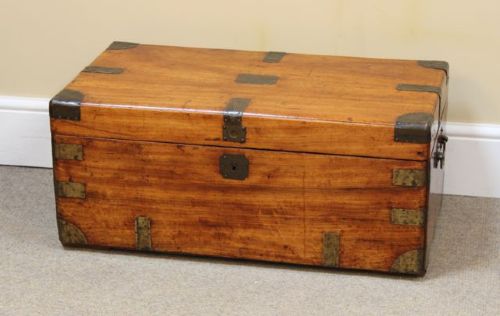
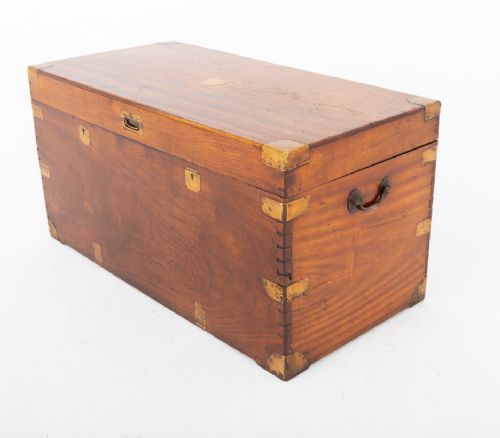


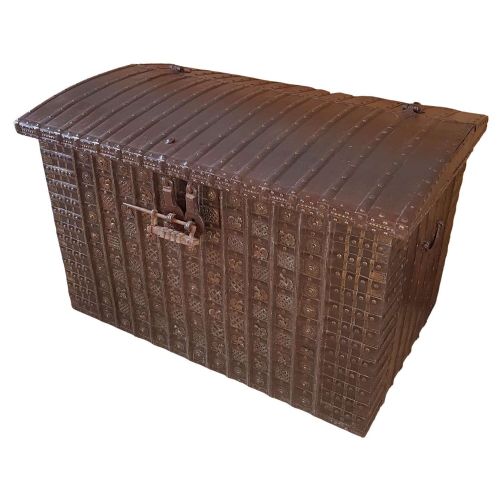


Brass Strapped Wooden Coffer
A brass strapped wooden coffer offers robust storage, bringing enduring travel history and tactile metalwork straight into a room.
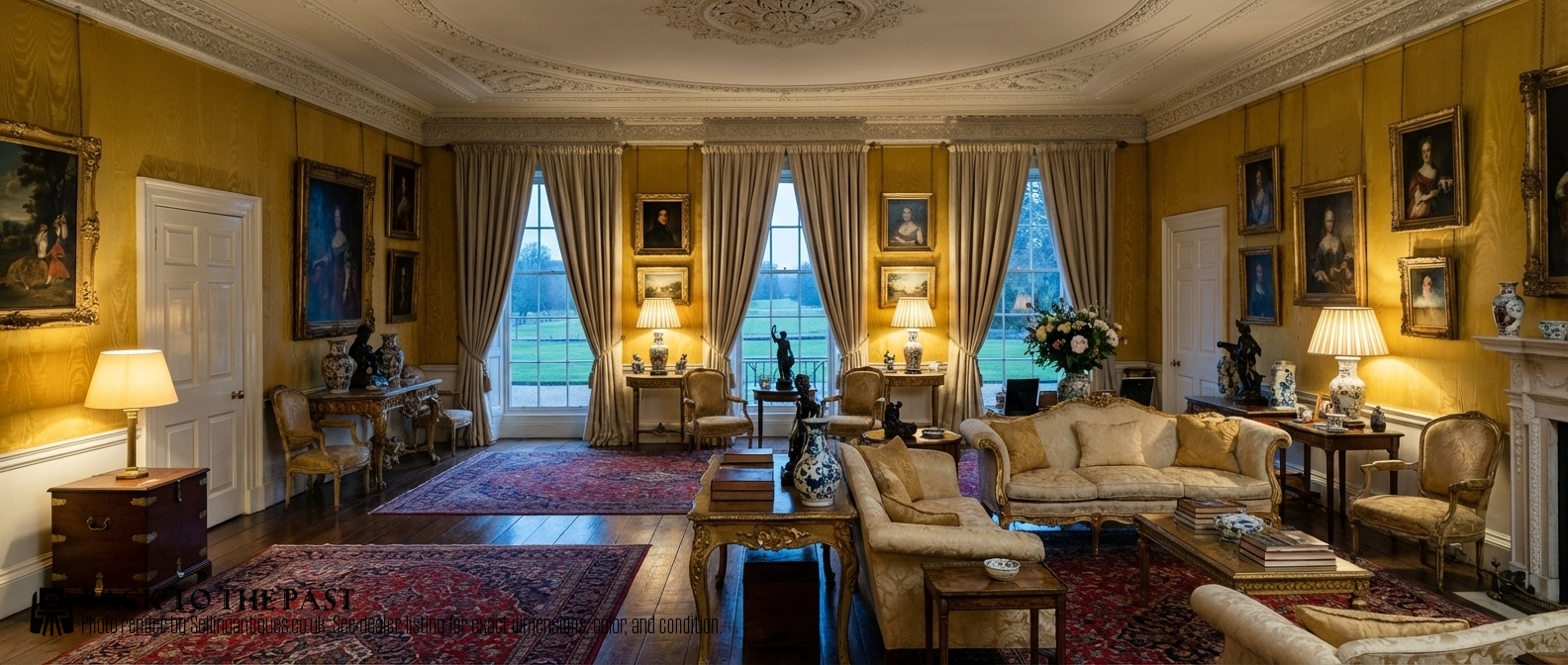
Brass Strapped Wooden Coffer
A brass strapped wooden coffer combines timber construction with structural metal reinforcement, serving as heavy-duty travelling baggage or secure domestic storage. These pieces bridge utilitarian function and decorative presence.
The selections span centuries from the Georgian period through Victorian times, alongside specific regional origins including Anglo-Indian and Chinese export workshops. Buyers most frequently encounter teak, camphor wood, and oak variations built for military campaigns or merchant travel.
Forms range from dome-top coffers and dowry chests to standard blanket boxes and travelling trunks. Each object displays metal strapping designed to protect corners and seams during transit.
Materials and construction methods
Construction relies on durable timbers such as teak, camphor wood, oak, and pitch pine, selected for structural strength and resistance to travel wear. These woods provide a heavy, stable carcase capable of withstanding rough journeys.
Sheet brass and iron straps are fastened across the wooden exterior using pins or rivets, reinforcing the joints and lid margins. Additional hardware includes recessed carrying handles and protective corner brackets.
Lock mechanisms and escutcheons are integrated into the front fascia, often accompanied by interior compartments or fitted tills for smaller personal items.
Camphor wood chests retain a distinct herbal aroma from the living tree, quietly perfuming rooms over a century after manufacture.
Evaluating the craftsmanship
Quality rests upon the integrity of the timber selection and the precision of the metalwork integration. Heavier gauge brass strapping and hand-hammered fixings denote careful construction intended for demanding service.
The sophistication of internal fittings, original inscriptions, and surviving locking mechanisms distinguish standard utility boxes from superior officer's chests. Timber figuring, such as burl wood accents, elevates the visual interest of the exterior.
Proportion and surface preservation define the overall standard, where patinated wood and original mounts remain intact without excessive modern replacement.
The Brass Strapped Wooden Coffer Glossary
- Campaign trunk
- A sectional or reinforced chest designed for easy transport by military officers during active service. These boxes feature recessed brass handles to prevent snagging.
- Camphor wood
- A fragrant tropical timber frequently utilised for military and merchant chests because its natural oils repel insects. It displays a distinct aroma and warm grain.
- Coffre fort
- A heavy storage chest featuring enhanced security measures, often associated with merchant or export use. The French term translates directly to strongbox.
- Damchiya
- A traditional Indian dowry chest characterised by low proportions, decorative banding, and internal compartments. These pieces often incorporate elaborate iron or brass hardware.
- Escutcheon
- A protective metal plate surrounding a keyhole that prevents the surrounding wood from splintering. It acts as both a functional reinforcement and a decorative detail.
Brass Strapped Wooden Coffer: Frequently Asked Questions
How were campaign chests used?
Campaign chests served military officers and travellers as portable wardrobes and desk units during long journeys.
Their robust construction and recessed handles allowed them to be packed onto animals or wagons without damaging the exterior.
How do I care for camphor wood?
Camphor wood requires minimal maintenance beyond dusting with a dry cloth and avoiding direct sunlight.
Keeping the timber away from extreme heat sources prevents the natural oils from drying out and preserves the aromatic grain.
How can I tell the period?
Dating relies on examining the timber species, construction joints, and the style of the brass strapping and locks.
Georgian and Victorian examples often feature distinct hardware profiles and inscriptions that link them to specific historical contexts.