




Brass Strapped Storage Trunk
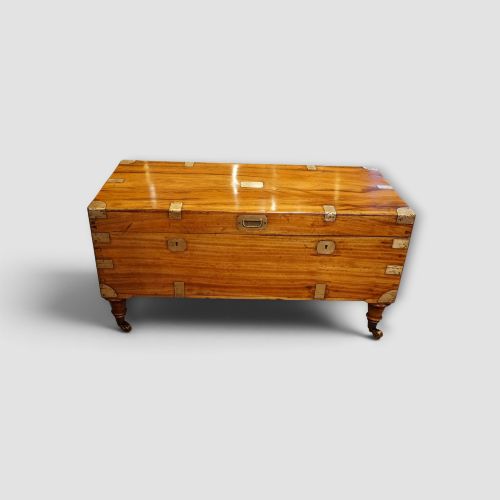
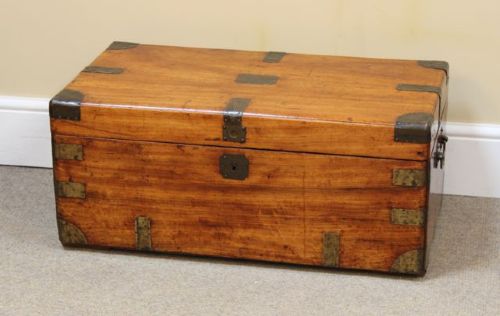
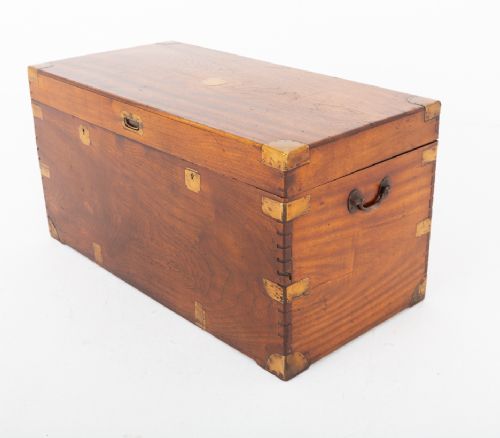
A brass strapped storage trunk offers robust utility and historical character, built from durable woods and secured with heavy metal work for travel or home use.
Brass Strapped Storage Trunk
A brass strapped storage trunk is a heavy-duty container designed for travel and household storage, combining structural timber with protective metal banding. Buyers searching this phrase will find a variety of forms ranging from utilitarian travelling chests to decorative dowry coffers.
The pieces on this page originate predominantly from the nineteenth century, including specific decades such as the eighteen-fifties, sixties, seventies, eighties, and nineties, alongside Georgian and eighteenth-century examples. Styles span military campaign, Anglo-Indian, and colonial campaign aesthetics, reflecting their origins in British domestic life and overseas service.
Forms include blanket boxes, merchants' trunks, officer's travelling chests, and silver boxes. Teak, camphor wood, and oak appear frequently alongside mahogany, pitch pine, walnut, elm, and rosewood.
Materials and construction methods
Construction relies on dense timbers such as teak, camphor wood, and oak, chosen for their resilience against travel and humidity. These woods provide a sturdy structural carcase designed to withstand the rigours of transit.
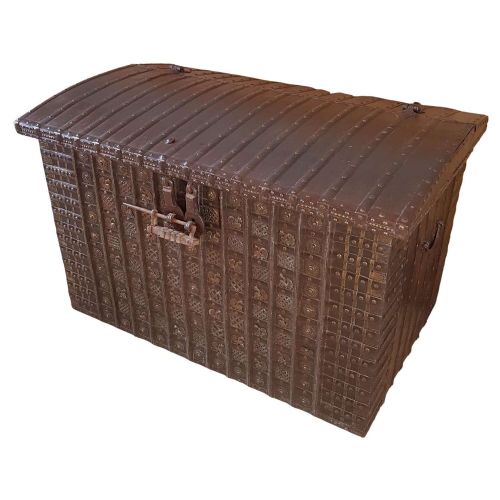
Metal reinforcement is integral, utilising brass straps, iron banding, and brass mounts to protect corners and edges from impact. These metal elements are fastened securely to the timber body, often accompanied by locks and handles for portability.
Brass Strapped Storage Trunk Retail Price Guide 2026
Typical asking prices for brass strapped storage trunk among the pieces listed under this phrase on Sellingantiques today, from the lower quarter to the upper quarter. They describe what is for sale here now, not the wider market.
Listings feature camphor wood, teak, oak, mahogany, walnut, pitch pine, elm, and rosewood across nineteenth-century and Georgian periods.
Distinctions in quality and execution
Quality separates through the selection of timber and the precision of the metalwork, distinguishing standard utility boxes from superior officer's chests. Finer pieces display carefully fitted brass strapping and well-preserved secondary woods.
The presence of original inscriptions, specialised locks, and intact mounts elevates a piece's historical integrity. Simpler domestic chests utilise more common timbers and basic iron banding rather than decorative brass.
The Brass Strapped Storage Trunk Glossary
- Brass Strapped
- A method of reinforcing wooden chests using strips of brass across the exterior joints and surfaces. This technique adds both structural strength and decorative contrast to the dark timber.
- Campaign
- A style of furniture designed to dismantle or withstand frequent travel by military officers and administrators. These pieces typically feature recessed handles and protective metal corners.
- Camphor Wood
- An aromatic timber frequently utilised for campaign and merchant trunks due to its natural insect-repellent properties. It protects stored textiles and documents from pests.
- Coffer
- A heavy wooden box traditionally used for holding valuables, linen, or documents. These storage pieces often feature robust hinged lids and iron or brass bands.
- Damchiya
- A traditional Indian dowry chest characterised by low proportions and ornate front panels. These trunks serve as decorative storage units within domestic interiors.
Brass Strapped Storage Trunk: Frequently Asked Questions
Where were these trunks made?
The pieces originate from diverse workshops and regions, including British makers and Anglo-Indian or continental workshops. Overseas items often reflect colonial campaign requirements or local craftsmanship.
Materials such as rosewood and camphor wood point towards non-European origins, while oak and pine suggest European production.
How do I date a trunk?
Dating relies on stylistic clues, construction techniques, and materials associated with specific periods like the eighteenth or nineteenth century. Specific dates or decades inscribed on pieces or recorded in listings provide further chronological markers.
Hardware styles, such as locks and brass mounts, also help distinguish Georgian examples from Victorian campaign pieces.
How do I care for camphor wood?
Camphor wood requires minimal maintenance due to its natural oils and durable nature. Keeping the timber away from extreme temperature fluctuations preserves the wood and its scent.
Gentle cleaning with a dry or slightly damp cloth maintains the polished surface without damaging the brass straps.