



Maritime Wooden Travelling Box
These maritime wooden travelling box items are robust portable containers built for journeys, offering enduring utility and historic character.
Maritime Wooden Travelling Box
A maritime wooden travelling box represents portable storage used during long journeys across land and sea. Buyers examining a maritime wooden travelling box encounter robust trunks, chests, and scientific instruments designed for officers and travellers. The selection on this page centres on sturdy forms spanning the Georgian, Victorian, and Edwardian eras.
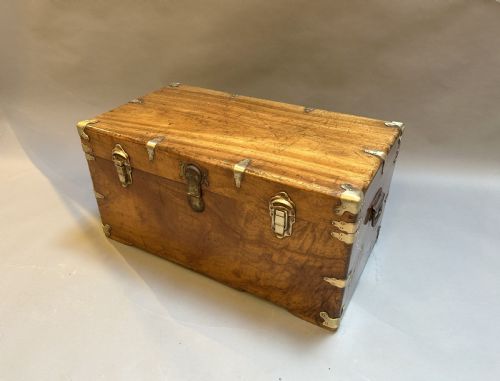
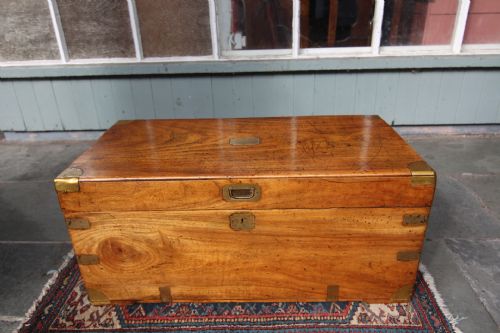
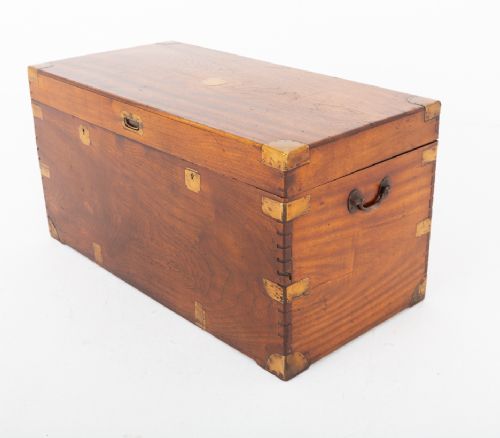
Most examples appearing here take the form of camphorwood or teakwood campaign trunks and blanket boxes. These pieces often display military styles and colonial campaign influences reflecting their period of origin.
How they were made
Joiners built these trunks using resilient timbers such as camphorwood, teak, pine, and mahogany to withstand harsh travelling conditions. Metal reinforcement played a crucial role in their construction.
Workshops added brass corners, bindings, and iron hardware to protect the wooden edges from heavy impacts during transit. Selected items also incorporate glass and paper components where scientific instruments or internal linings are present.
Maritime Wooden Travelling Box Retail Price Guide 2026
Typical asking prices for maritime wooden travelling box among the pieces listed under this phrase on Sellingantiques today, from the lower quarter to the upper quarter. They describe what is for sale here now, not the wider market.
Listings feature camphorwood, teak, and mahogany woods, alongside brass and iron hardware across Victorian and Edwardian periods.
What varies in quality
Superior examples distinguish themselves through the selection of dense timbers like camphorwood and well-fitted brass hardware. The precision of the joinery determines how securely the box withstood decades of movement.
The presence of original working keys, intact internal compartments, and secondary woods like pine or mahogany marks the difference between standard utility items and finer officer pieces.
Samuel Porter
The Maritime Wooden Travelling Box Glossary
- Campaign chest
- A portable storage unit made in sections so it could be transported easily on military expeditions. These pieces typically feature recessed brass handles and corner brackets.
- Camphorwood
- An aromatic timber prized for cabinetmaking because its natural oils repel insects. This wood forms the primary body of many traditional travel chests.
- Travelling coffer
- A heavy-duty chest used for carrying valuables or personal belongings on journeys. These containers often rely on iron bindings for extra strength.
- Sundial and compass
- A portable navigational instrument combining a dial and magnetic needle. These scientific items assisted travellers with direction and timekeeping.
Maritime Wooden Travelling Box: Frequently Asked Questions
What is a maritime wooden travelling box?
A maritime wooden travelling box is a portable chest or trunk built to transport personal belongings on ships or military campaigns. These durable containers date from the Georgian period through to the Edwardian era.
They rely on sturdy timbers and metal reinforcements to endure long journeys. Today, collectors use them as functional storage furniture with historic appeal.
How were campaign chests used?
Campaign chests served military officers and colonial travellers needing secure storage that could be dismantled or loaded quickly. Their modular design allowed easy transport across difficult terrain.
Built-in handles and brass bindings protected the corners during transit. Inside, compartments kept uniforms, documents, and personal items organised.
Why is camphorwood common in these trunks?
Camphorwood was selected for travel chests because its natural scent deters moths and insects. This property made the timber ideal for protecting clothing during sea voyages.
The wood is also resilient and stable in changing climates. Its distinct aroma often lingers in antique examples.
How do I identify a Victorian piece?
Victorian trunks often feature darker hardwoods, robust brass bindings, and military campaign styling. Many examples incorporate recessed brass handles designed to avoid snagging during transport.
Construction methods from this era focused on heavy-duty durability. Labels or maker inscriptions, when present, also help confirm the nineteenth-century origin.