





Brass Strapped Chest
A brass strapped chest is a robust box reinforced for travel or service, offering enduring storage and heavy metal detail that anchors a room.
Brass Strapped Chest
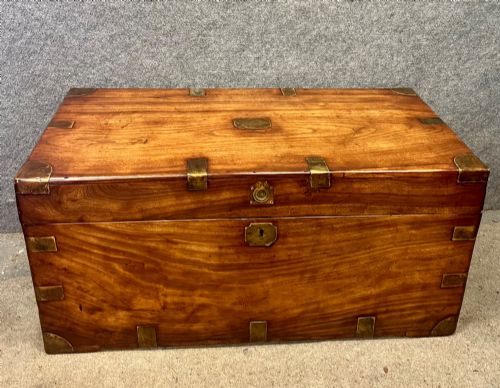
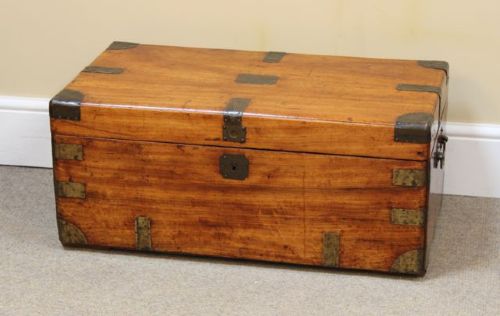
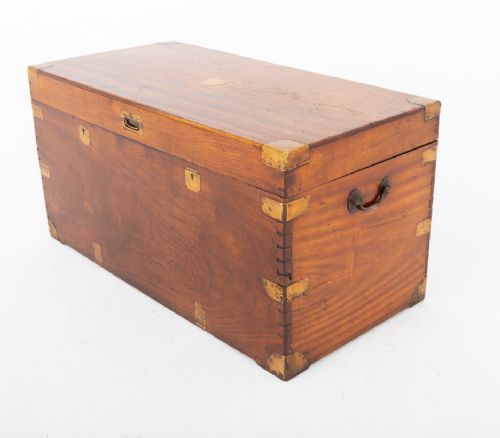
A brass strapped chest serves primarily as a heavy-duty container for travel, storage or service, taking forms such as campaign trunks, merchants chests, blanket boxes and wine coolers. When exploring brass strapped chest options, one encounters pieces originating from British, Georgian, Victorian, Anglo-Indian, Colonial Indian and Scandinavian workshops.
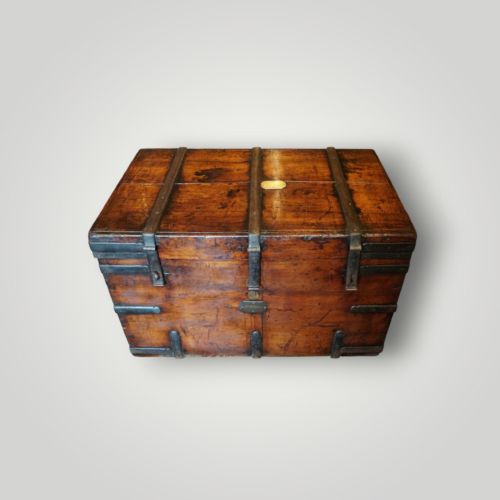
The selection ranges from large camphor wood and teak military trunks designed for officers on the move to smaller walnut, oak, mahogany and elm boxes intended for silver, cigars or wine. Many display structural reinforcement in iron or brass, balancing utilitarian durability with decorative metalwork across centuries of craftsmanship.
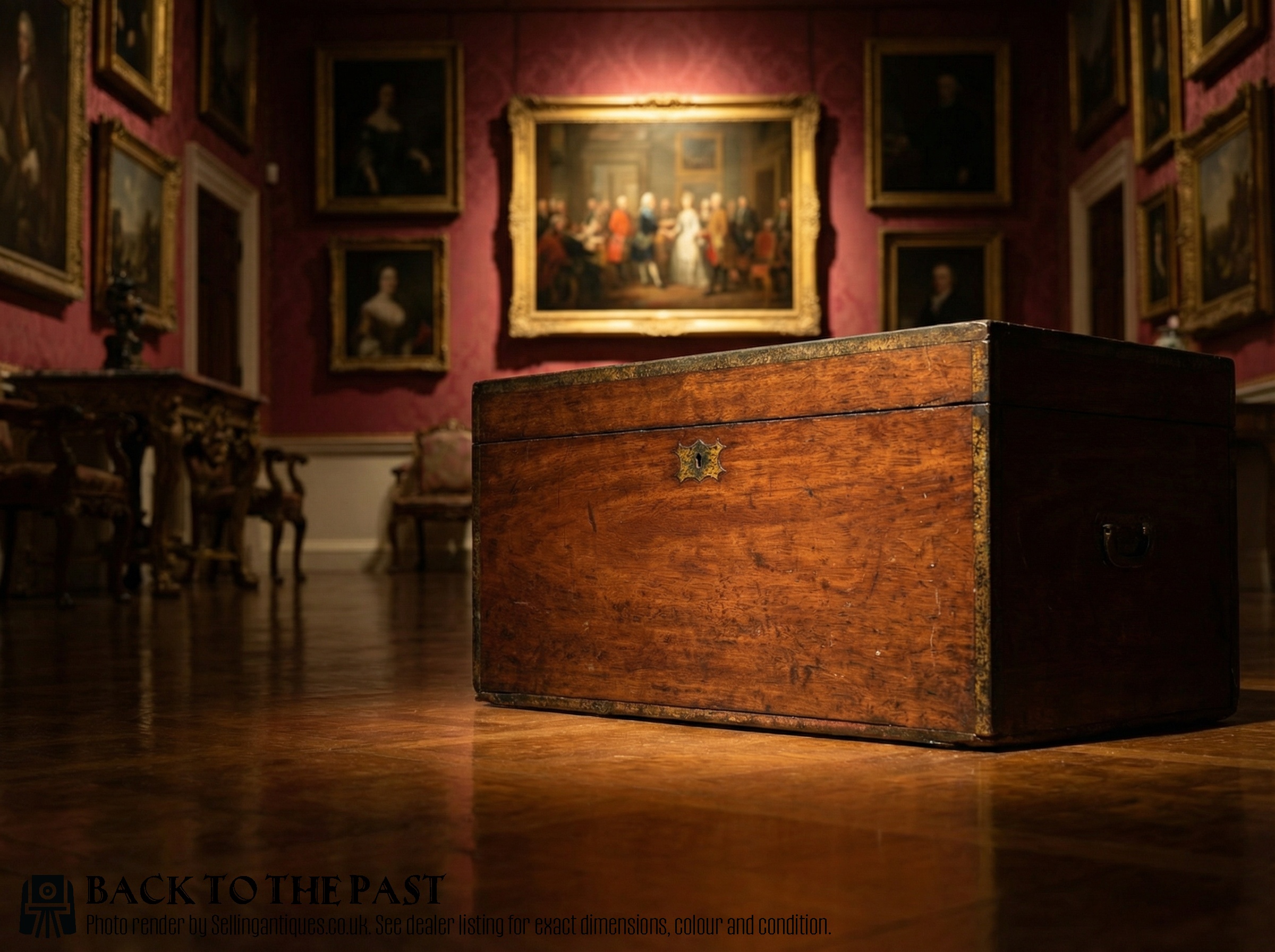
Materials and construction
Cabinet makers utilised durable timbers like teak, camphor wood, mahogany, oak and walnut to build the carcass of each trunk or box, often selecting woods resistant to travel wear and tropical conditions. These sturdy bodies are fastened with dovetailed joints and heavy timber panels designed to withstand repeated handling.
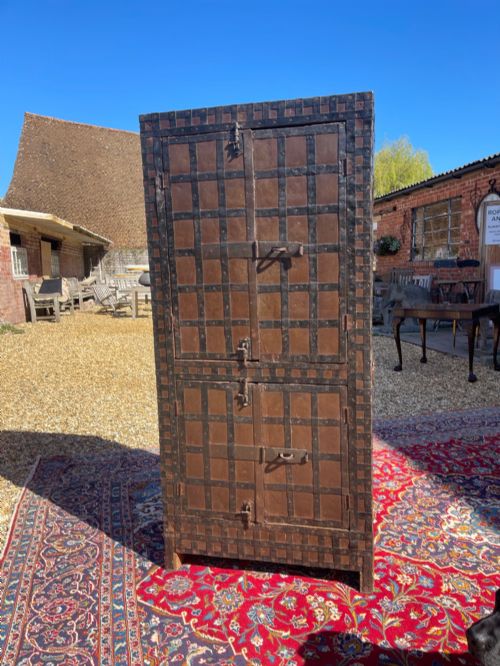
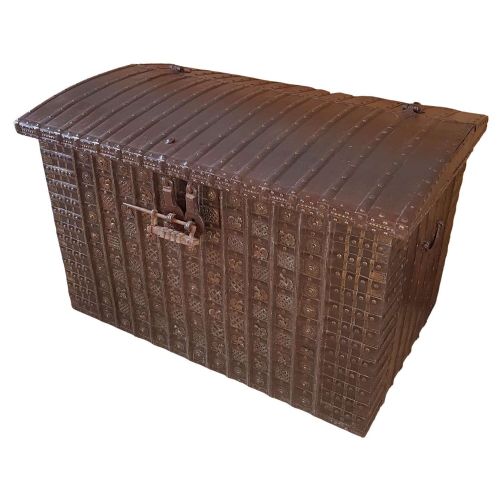
To reinforce the structure against the rigours of transit, makers applied straps, corners and mounts in brass, iron and wrought iron, securing them with flush pins or screws. Handles and locks in matching brass or iron were integrated into the design to protect contents and facilitate lifting.
Brass Strapped Chest Retail Price Guide 2026
Typical asking prices for brass strapped chest among the pieces listed under this phrase on Sellingantiques today, from the lower quarter to the upper quarter. They describe what is for sale here now, not the wider market.
Current listings feature camphor wood, teak, mahogany, oak and walnut trunks dating from the seventeenth to the early twentieth century.
Judging the work
Quality in a brass strapped chest rests on the integrity of the timber selection and the precision with which the metal mounts are fitted into the wood surface. Finer examples display hand-cut dovetailing, neatly countersunk brass straps that sit flush with the grain, and original locks or inscriptions that record the piece's history.
Lesser or more utilitarian examples rely on heavier, coarser iron banding and simpler softwood or pine carcases lacking the refined timber choice seen in Georgian and Victorian campaign pieces. The harmony between the weight of the metal hardware and the proportion of the wooden box dictates the overall success of the piece.
The Brass Strapped Chest Glossary
- Campaign trunk
- A chest designed for military officers on active service, typically constructed in sections with recessed brass handles and corner brackets to facilitate transport.
- Cellarette
- A fitted container or chest used to hold bottles of wine or spirits, frequently featuring brass banding and interior divisions.
- Camphor wood
- An aromatic timber prized for campaign furniture because its natural scent deters insects, making it ideal for clothing storage.
- Dovetail
- A joint formed by interlocking wedge-shaped fingers of wood, providing exceptional tensile strength at the corners of a chest.
- Coffer
- A large heavy box used for storing valuables, often strengthened with metal straps and bands for added security.
Brass Strapped Chest: Frequently Asked Questions
What is a campaign chest?
A campaign chest is a portable piece of furniture built for military officers on the move, designed to dismantle or travel easily.
These chests often feature flush brass handles, reinforced corners and durable timbers like teak or camphor wood to endure rough transport.
How were brass straps used?
Brass straps provided structural reinforcement to the wooden corners, edges and lids of trunks subjected to heavy travel.
They absorbed impacts and held the joints firm during long journeys across land and sea.
Where were camphor wood trunks made?
Camphor wood trunks were frequently produced in Anglo-Indian and Colonial workshops for British officers and merchants.
The aromatic wood protected uniforms and textiles from moths and humidity during maritime voyages.
How do I care for teak furniture?
Teak requires minimal maintenance due to its natural oils, benefiting from occasional gentle dusting and conditioning.
Keep these trunks away from direct heat sources to prevent the timber and brass mounts from shifting.