





Brass Spandrel Clock
A brass spandrel clock brings together precision movement and metalwork, offering the timeless presence of a traditional dial in your home.
Brass Spandrel Clock
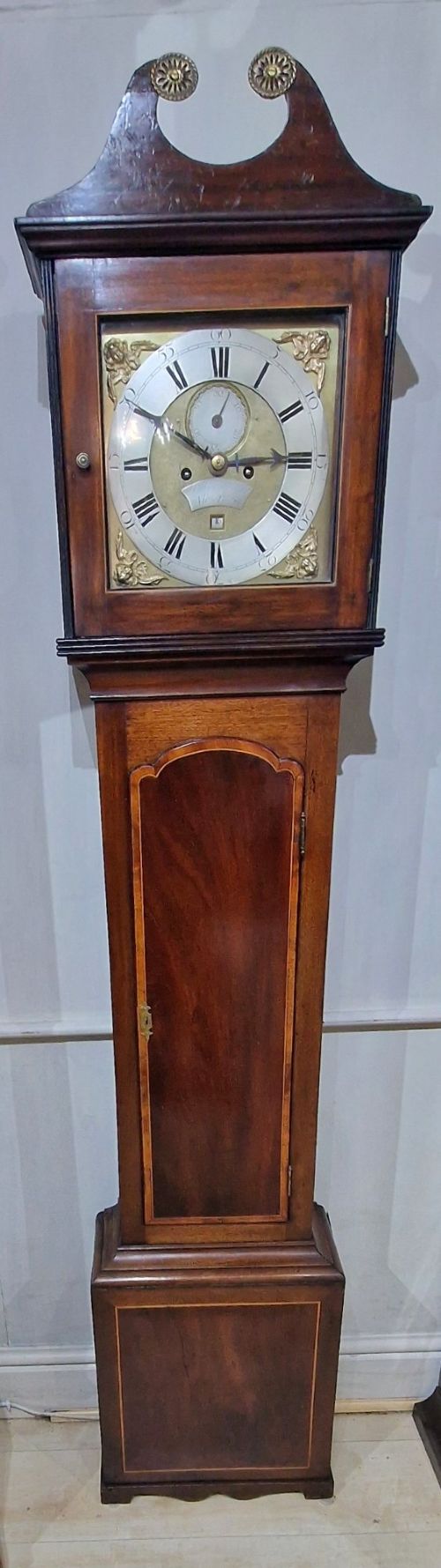
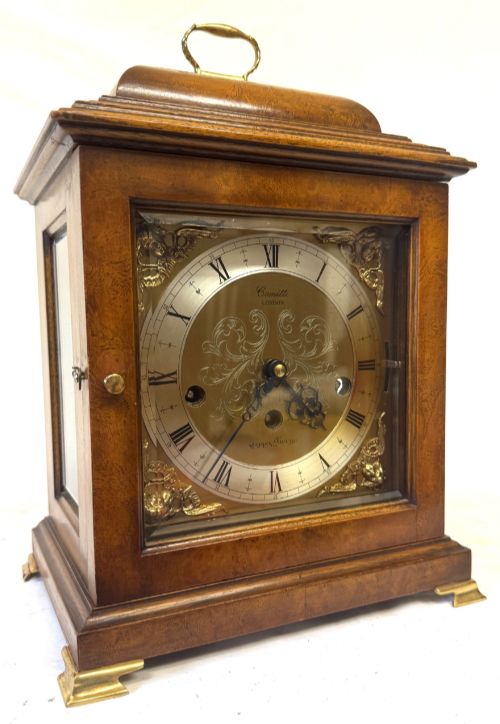
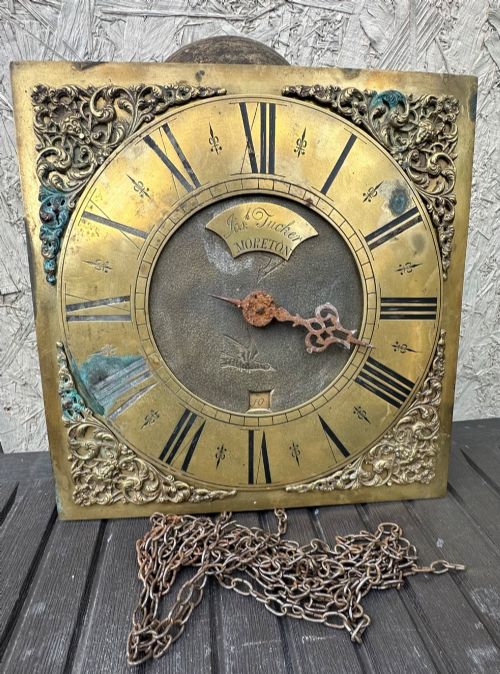
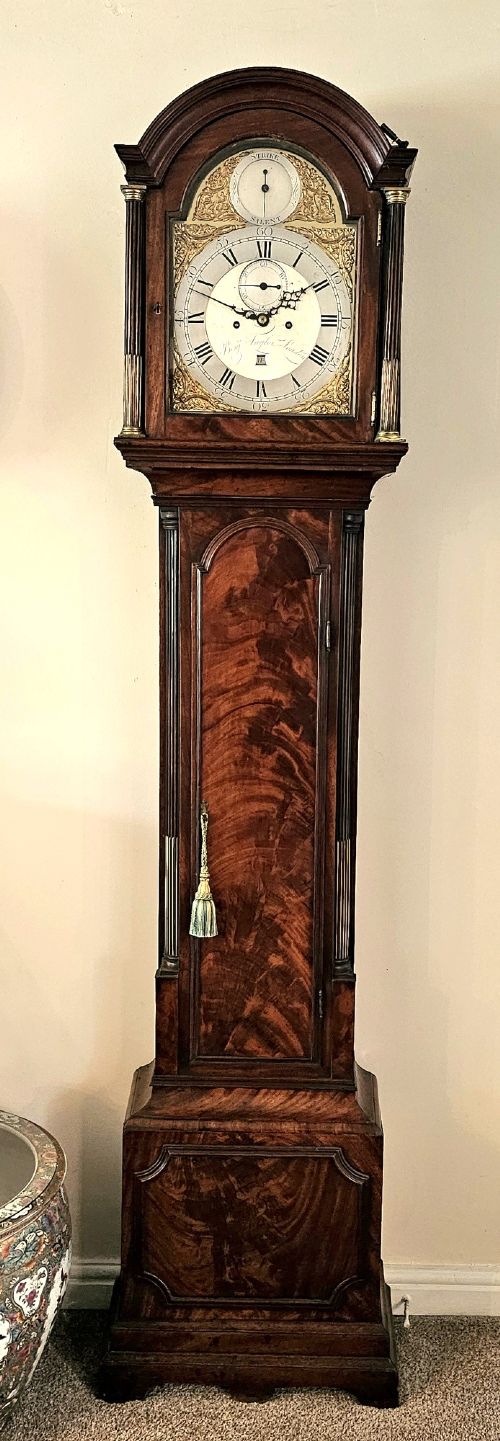
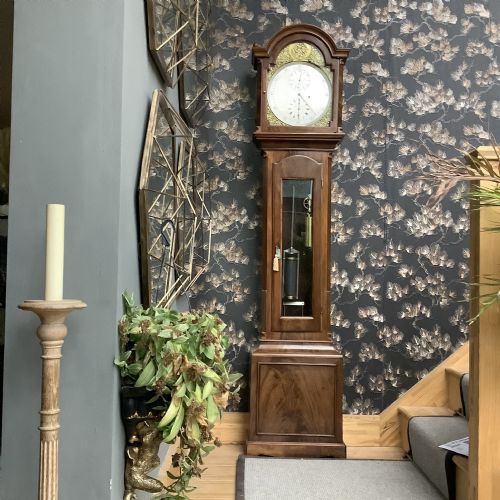
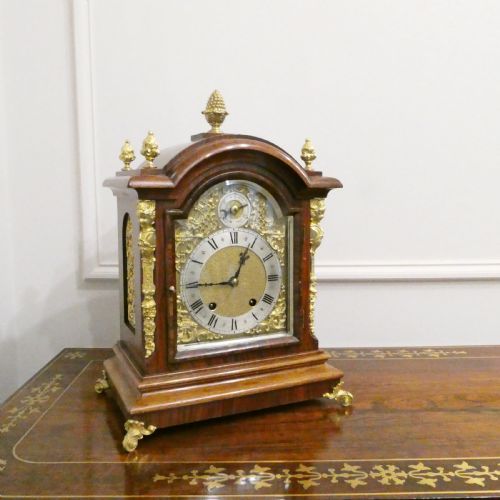
A brass spandrel clock is a horological piece defined by decorative corner pieces surrounding the dial face, commonly found in longcase, bracket, and mantel formats. You will most frequently encounter eighteenth-century examples featuring brass faces paired with oak or mahogany cabinetry.
The selection ranges from tall floor-standing longcase designs to smaller table bracket clocks driven by fusee movements. Many originate from Georgian workshops, while later revivals and twentieth-century interpretations also appear across the selection.
Makers from London and regional towns such as Yarmouth, Bolton, and Chelmsford built these timepieces with varying dial sizes and chime mechanisms. The integration of brass spandrels anchors the visual weight of the face, whether housed in walnut, ebonised wood, or lacquered cases.
How they were made
Makers constructed the primary enclosures using dense timbers such as oak, mahogany, walnut, and pollard oak, often housing intricate brass and steel clockwork inside. Cabinets were polished or lacquered, while dials combined cast brass spandrels with silvered metal chapters.
Movements relied on mechanical drive systems like single or double chain fusees, spring-driven mechanisms, and pendulum regulation. Craftsmen cast individual components by hand, resulting in tailored gear trains and signed dials unique to each workshop.
Brass Spandrel Clock Retail Price Guide 2026
Typical asking prices for brass spandrel clock among the pieces listed under this phrase on Sellingantiques today, from the lower quarter to the upper quarter. They describe what is for sale here now, not the wider market.
The selection includes regional makers from Bolton and Yarmouth alongside prominent London workshops.
What varies in quality
Quality rests in the crispness of the brass casting on the spandrels and the fidelity of the movement's engraving. Finer examples display meticulous hand-cut dial signatures and well-proportioned timber cases that have retained their original patination.
The caliber of the interior movement, from standard striking trains to complex musical or automation mechanisms, separates standard production from superior craftsmanship. Balance between the dial proportions and the cabinet construction determines the overall architectural success of the piece.
Comitti Of London·Mappin & Webb·Schneckenburger·Winterhalder & Hofmeier·Thomas Utting·William Withers·James Smith·Chater & Son·Standring Of Bolton·Joseph Lum·William Lister·John Taylor·Thomas Rogers
The Brass Spandrel Clock Glossary
- Spandrel
- The triangular space between the dial circle and the square frame of a clock face, typically filled with cast brass ornamentation. These decorative corners define the classic appearance of period clock faces.
- Fusee
- A conical pulley used in spring-driven clocks to maintain equal force on the gear train as the mainspring unwinds. This mechanism ensures steady timekeeping throughout the run.
- Longcase clock
- A tall pendulum clock housed in a wooden case with a base, trunk, and hood enclosing the dial. Often called grandfather clocks, they measure time via weights suspended inside.
- Bracket clock
- A portable table or shelf clock originally designed to sit on a wall bracket. They commonly feature a carrying handle and glazed access panels.
- Escapement
- The mechanical linkage that converts rotational force into impulse to keep the pendulum swinging. Common variants include anchor and tic-tac configurations.
Brass Spandrel Clock: Frequently Asked Questions
What is a brass spandrel clock?
A brass spandrel clock is a timepiece featuring decorated metal corner pieces framing the dial face. These clocks encompass longcase, bracket, and mantel formats.
They span multiple centuries of British and continental clockmaking, utilising mechanical movements housed in wooden cabinetry.
Where should I place a bracket clock?
Bracket clocks suit heavy furniture tops, mantelpieces, or dedicated wall shelves where their chime mechanisms can resonate. Ensure the surface remains stable and level.
Keep them away from direct sunlight and fluctuating heat sources to protect the wooden cases and internal steel components.
What is a grandmother clock?
A grandmother clock is a smaller, more slender version of a traditional longcase clock. They were produced in various periods to fit compact domestic spaces.
Despite their reduced scale, they retain mechanical movements and classic dial layouts.