



Brass Signalling Cannon
These brass signalling cannon pieces are historical marine and desk ornaments designed for audibly marking time or events.
Brass Signalling Cannon
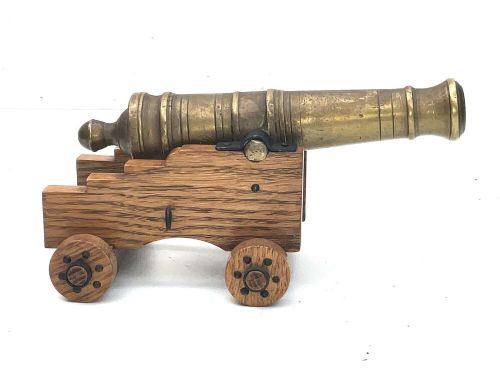
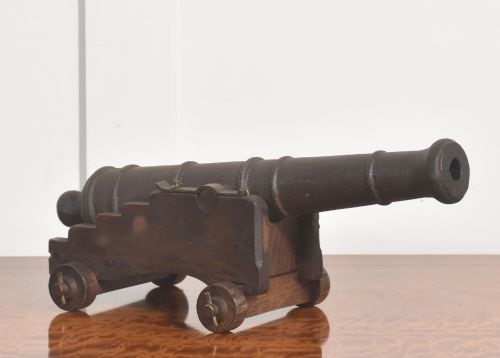
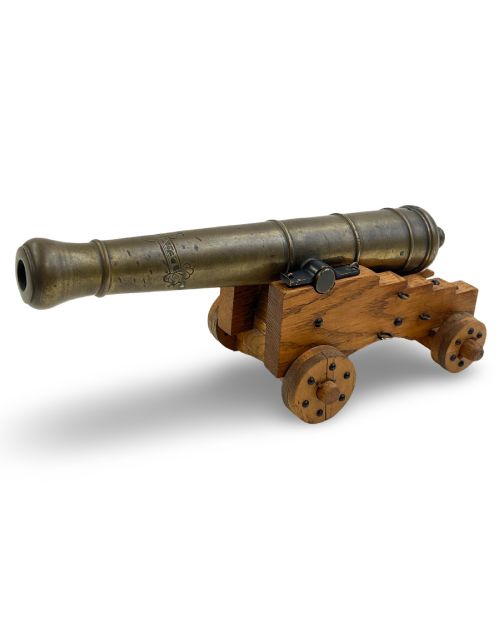
A brass signalling cannon is a functional scale model or decorative ordnance piece historically used for maritime communication, estate salutes or timing markers. When you explore this selection, you encounter items predominantly styled as desk ornaments, scale models and maritime antiques dating from the eighteenth century through to the Edwardian era.
The assortment includes pieces mounted on timber carriages, such as oak and mahogany, alongside variations featuring cast iron carriages or polished steel barrels. Origins span English and French maritime traditions, reflecting the widespread military and civilian use of small ordnance during these periods.
Materials and construction methods
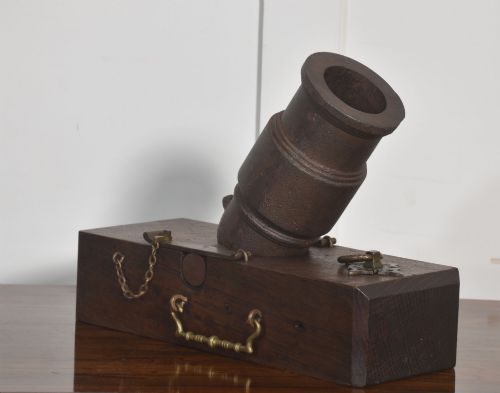
These items are constructed using durable metals including brass, bronze and cast iron for the barrels and mortars, combined with hardwoods like oak and mahogany for the carriages and undercarriages. Metal barrels are cast and occasionally polished or inscribed with commemorative details, while timber mounts provide sturdy support.
Makers integrated mixed media by pairing heavy metal barrels with fitted wooden bases, sometimes incorporating painted elements or steel components. The combination of cast bronze and carved wood defines the physical construction seen across the inventory.
Brass Signalling Cannon Retail Price Guide 2026
Typical asking prices for brass signalling cannon among the pieces listed under this phrase on Sellingantiques today, from the lower quarter to the upper quarter. They describe what is for sale here now, not the wider market.
Listings feature materials including brass, bronze, cast iron, oak, wood, iron, paint and steel across various nineteenth and early twentieth-century periods.
Assessing quality and craftsmanship
Quality in these items is determined by the precision of the metal casting and the fidelity of the scale model. Finer examples exhibit crisp detailing on the barrel, careful polishing and substantial weight in both the metal ordnance and the timber carriage.
The integration between the barrel and its mount also indicates standard; superior pieces feature well-fitted wooden undercarriages and historically accurate proportions. Inscribed or commemorative markings further distinguish specific pieces within the range.
The Brass Signalling Cannon Glossary
- Carriage
- The mounting frame or chassis that supports the cannon barrel. It is typically constructed from dense hardwoods like oak or mahogany, or robust cast iron.
- Signal Mortar
- A short, wide-mouthed ordnance piece designed for firing upward to produce a loud report rather than propelling a flat trajectory shot.
- Undercarriage
- The sub-base or lower mounting structure upon which the main carriage and barrel rest. These are frequently fashioned from polished timber for desk display.
- Militaria
- Antiques and collectables relating to military history, warfare and armed forces. This category encompasses model ordnance and signalling equipment.
- Maritime Antiques
- Physical artefacts connected with seafaring, naval history and coastal life. These items often reflect the practical tools and decorative objects of historical vessels.
Brass Signalling Cannon: Frequently Asked Questions
What is a brass signalling cannon?
A brass signalling cannon is a small-scale piece of ordnance historically utilised to create loud auditory signals for maritime timing, estate salutes or celebratory events.
Unlike functional battlefield artillery, these models were primarily manufactured for decorative display or practical acoustic signaling on ships and properties.
How were these cannons used historically?
Owners fired these small cannons using gunpowder to mark the beginning or end of the working day, signal ships in coastal waters or commemorate significant public events.
Many examples also served as decorative desk ornaments or conversation pieces within maritime households and offices.
What materials are typical for these pieces?
Barrels are predominantly cast from brass, bronze or cast iron, occasionally featuring polished steel finishes or historical inscriptions.
Carriages and undercarriages are commonly built from durable woods such as oak and mahogany, providing a stable base for the metal ordnance.
How do I identify the period of a cannon?
Dating relies on stylistic clues, metal casting techniques and timber characteristics associated with eighteenth-century, Victorian or Edwardian manufacturing.
Inscriptions, commemorative markings and the specific design of the carriage also provide clear indicators of the era of origin.