
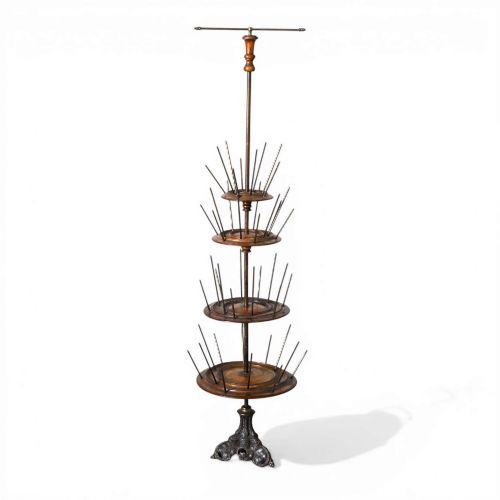


Brass Shop Fitting
A brass shop fitting is a functional commercial survivor designed to display merchandise, appealing to collectors of industrial and mercantile history.
Brass Shop Fitting
A brass shop fitting covers practical mercantile hardware and retail display structures originating from commercial environments of the nineteenth and twentieth centuries. When searching for this phrase, buyers encounter items ranging from adjustable stands to glazed cabinets and countertop display units.
The pieces appearing on this page span several distinct periods including the Victorian era, the Edwardian period, and the 1920s and 1930s Art Deco commercial styles. Common forms include display stands, hat stands, haberdashery cabinets, and countertop shelves utilised in trade.
Origins vary between English workshops and continental makers, reflecting the commercial expansion and shop design trends of the period. These utilitarian objects now find a second life in domestic interiors for modern display purposes.
Materials and construction
Brass forms the structural and decorative basis for these fittings, frequently combined with glass panels, cast iron bases, and timber frames such as mahogany, oak, walnut, and pitch pine. Metal components provide adjustable mechanisms and robust frames capable of supporting commercial merchandise.
Cabinetry utilises traditional joinery alongside glass glazing to create visible storage spaces, while display stands incorporate weighted bases and articulated joints for functional utility. Surface finishes range from polished metal to aged patinas developed through decades of active retail use.
Listings feature items spanning the nineteenth century, Victorian period, Edwardian era, 1920s, and 1930s Art Deco.
Assessing quality in retail fittings
Quality in a brass shop fitting rests on the heaviness of the casting, the integrity of the joints, and the sophistication of any adjustable mechanisms. Superior examples display crisp definition in the metalwork and robust construction that withstands active deployment.
Finer display cabinets and counters integrate secondary materials like mirrored interiors, bevelled glass, and carefully selected hardwoods alongside the brass framework. The presence of maker signatures or specialised mercantile hardware elevates the standing of an individual piece.
Saml. Elliott & Sons·Siegel
The Brass Shop Fitting Glossary
- Haberdashery cabinet
- A specialised multi-drawer storage unit designed for small sewing items, ribbons, and textiles. These pieces often feature glass-fronted drawers or drop-front compartments for customer viewing.
- Display stand
- An upright vertical structure utilising metal framing to present merchandise at eye level. They frequently feature adjustable arms or tiers.
- Display counter
- A shop fixture featuring a glazed top or front section intended to showcase goods securely to customers across a retail barrier.
- Cotton reel display tree
- A tiered vertical stand specifically engineered to hold sewing threads in a retail environment. They turn or step upward to maximise visibility.
Brass Shop Fitting: Frequently Asked Questions
What is a brass shop fitting?
A brass shop fitting is a piece of commercial hardware or display furniture utilised in nineteenth and twentieth-century retail environments to present goods to customers.
These items range from adjustable display stands and hat racks to glazed countertop cabinets and multi-tiered merchandising trees.
How were shop fittings used?
Merchants employed these fixtures to organise, secure, and advertise stock within retail shops, draperies, and jewellers.
Adjustable stands allowed shopkeepers to modify display heights, while glass cabinets protected delicate items while maintaining visibility for buyers.
How do I date a shop fitting?
Dating relies on stylistic indicators, construction materials, and manufacturing techniques associated with periods like the Victorian era, Edwardian period, and the 1920s or 1930s.
Art Deco geometric lines point to the interwar decades, whereas heavier cast iron and brass combinations often indicate nineteenth-century production.
Can I use these at home?
Yes, these commercial pieces adapt readily to domestic interiors for organising and displaying collections, clothing, or decorative objects.
Countertop shelves, hat stands, and small display cabinets bring an industrial or mercantile aesthetic into modern living spaces.