
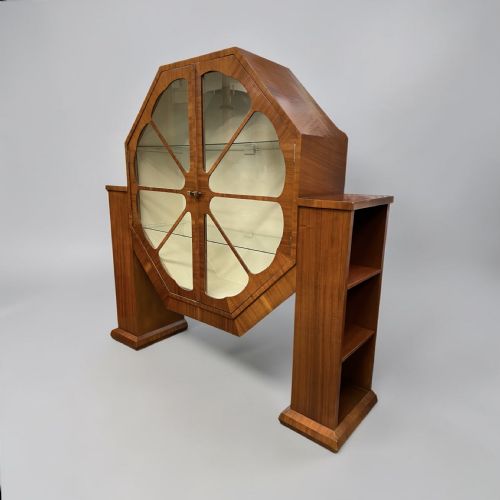
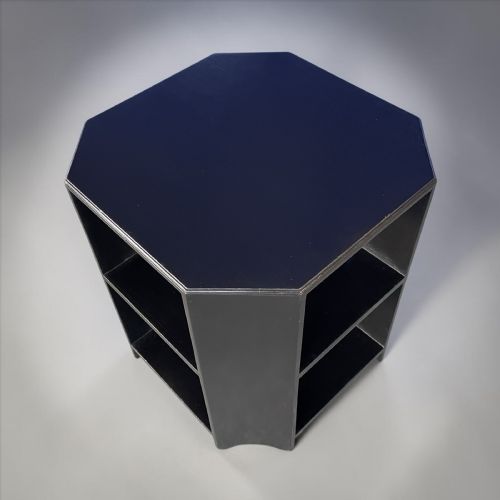


Art Deco Display Pedestal
An art deco display pedestal brings architectural presence and geometric flair to interior spaces, elevating objects of interest with period style.
Art Deco Display Pedestal
An art deco display pedestal stands as a striking vertical focal point within a room, designed specifically to showcase decorative items, sculptures or plants. These supports draw the eye upward through strong lines and careful proportions.
The selections available here include related forms from the early twentieth century, spanning pedestals, columns, plant stands and occasional tables. Walnut, burr walnut, ebonised wood and brass feature prominently among the materials.
How they were made
Cabinet makers utilised rich timbers such as walnut and macassar ebony, often applying contrasting veneers to create visual depth and striking grain patterns. Ebonised finishes and brass elements provide the sharp metallic accents characteristic of the period.
Construction techniques combine solid timber framing with precise veneering, ensuring stability for heavy decorative objects while maintaining sleek, streamlined silhouettes.
Jewellers once utilised compact countertop shelves to display precious trinkets before these small fixtures found new life in domestic interiors.
What varies in quality
The distinction between standard examples and superior pieces rests on the choice of timber and the precision of the veneer work. Book-matched grains and contrasting exotic woods elevate an ordinary column into a sophisticated sculptural object.
The Art Deco Display Pedestal Glossary
- Veneer
- A thin slice of figured wood applied over a stable secondary timber to create decorative surfaces. This technique allowed makers to utilise expensive exotic woods efficiently.
- Ebonised
- Wood treated with a chemical stain or black finish to imitate ebony. This process gives a dense, uniform dark surface favoured in modern design.
- Macassar ebony
- A heavily figured tropical timber featuring dark brown and warm golden stripes. It appears frequently on high-status items from the period.
- Torchiere
- A tall standing light fixture or display column derived from historical torch holders. These pieces lift items well above floor level.
- Amsterdam School
- An expressionist architectural and design style originating in the Netherlands. It emphasises rounded brickwork, traditional craftsmanship and rich ornamentation.
Art Deco Display Pedestal: Frequently Asked Questions
What is an art deco display pedestal used for?
These vertical structures serve as platforms for sculptures, vases, lamps or botanical specimens. They draw attention to specific objects by raising them to eye level.
Placed in corners or empty hallways, they transform unused space into a deliberate interior feature.
How do I identify the period of a pedestal?
Examine the timber choices, geometric silhouettes and surface finishes closely. Pieces from this era often combine dark woods with metallic accents.
Construction methods and material pairing offer reliable clues to dating furniture accurately.
Where should I place a pedestal in a room?
Position pedestals against plain walls or in vacant corners where their vertical form can stand out. Avoid cluttered backgrounds that distract from the silhouette.
Pairing them with a single well-chosen decorative object yields the strongest visual impact.
How do I care for wooden display surfaces?
Dust surfaces regularly with a soft, dry cloth to prevent particulate buildup on delicate veneers. Avoid harsh chemical cleaners that can strip historic finishes.
Keep wooden items away from direct heat sources and strong sunlight to prevent timber warping.