




Vintage Retail Display Stand
A vintage retail display stand brings tangible history into a room, offering robust commercial character for modern interiors through genuine shop fittings.
Vintage Retail Display Stand
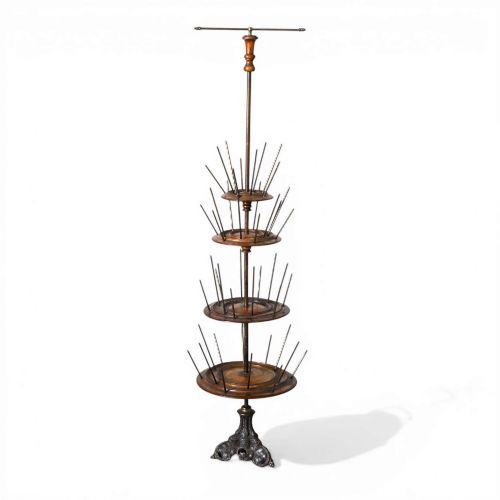
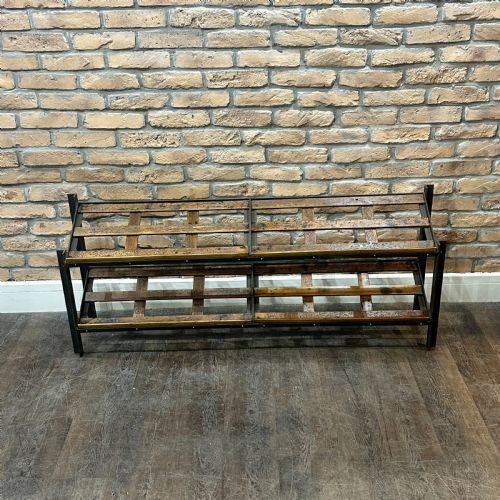
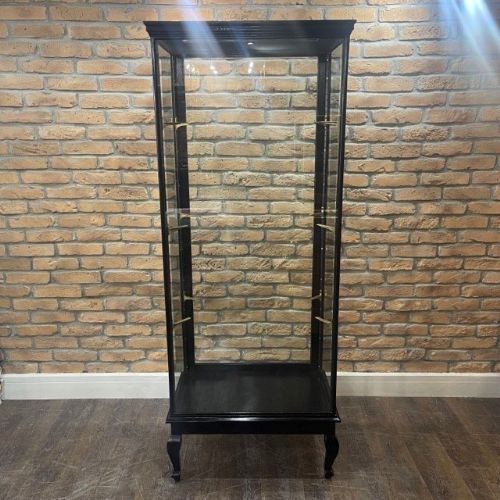
When you search for a vintage retail display stand, you are looking at authentic shop fittings and commercial furniture designed for trade. These pieces range from countertop hat stands and cotton reel display trees to towering cabinets, shop display counters, and modular shelving units.
The versions you are most likely to meet on this page span the Victorian era through the Edwardian period, the Art Deco years, and mid-century design. Originating from English, French, and Italian workshops, these stands and cabinets reflect the practical demands of historical merchants.
Forms vary from delicate brass and glass countertop shelves to heavy cast iron draper's stands and substantial oak tailors' tables. Each object served a specific commercial purpose, whether holding hats, framing photographs, or displaying jewellery.
How they were made
Makers utilised a combination of durable metals and dense hardwoods to withstand daily commercial use. Cast iron and brass provide structural integrity and decorative detail for frames, brackets, and stands, while oak and mahogany form robust tabletops and cabinet carcasses.
Glass panels, sometimes glazed or curved, enclose cabinets and counters to protect merchandise while maintaining visibility. Ebonised finishes and bronze elements appear alongside French polished woods, showing traditional cabinet-making and metal-working techniques from the nineteenth and early twentieth centuries.
Cotton reel display trees once spun gently on haberdashery counters, tempting Victorian tailors with orderly cascades of thread.
What varies in quality
The distinction between standard commercial pieces and exceptional examples lies in the integrity of the materials and the sophistication of the hardware. Heavier gauges of brass, substantial cast iron bases, and finely joined oak or mahogany elevate a piece above utilitarian factory output.
Original components, such as intact glazing, Maker's stamps, and functional adjustable fittings, determine the grade of a stand. Pieces bearing specific retail attributions or retaining their patinated, unpolished surfaces demonstrate superior preservation.
Pinci Roma·Siegel
The Vintage Retail Display Stand Glossary
- Shop Fitting
- Fixtures and furniture originally manufactured for commercial retail interiors. These items are built to endure heavy public use.
- Draper's Stand
- A vertical display structure utilised in textile and drapery shops for holding rolls of fabric or garments. They frequently combine cast iron bases with brass uprights.
- Countertop Shelf
- A stepped or tiered display level designed to sit upon a shop counter for small merchandise. Jewellers and haberdashers employed these to present goods clearly to customers.
- Ebonised
- Wood finished with a dark stain or lacquer to imitate ebony. This treatment was common on nineteenth and early twentieth-century cabinet work.
- Cotton Reel Display Tree
- A tiered vertical stand specifically engineered to hold sewing threads in a haberdashery. They feature rotating or fixed tiers radiating from a central axis.
Vintage Retail Display Stand: Frequently Asked Questions
What were vintage retail display stands used for?
These pieces served practical roles in nineteenth and twentieth-century shops, holding hats, garments, fabrics, and small goods. Merchants relied on them to organise merchandise and present stock attractively to shoppers.
Today, they translate easily into domestic settings for organising accessories, displaying collections, or serving as functional furniture.
How do I tell Victorian stands from Art Deco ones?
Victorian examples typically display heavy cast iron, ornate brass detailing, and dense timbers like mahogany or oak with traditional joinery. They lean towards historical revival styles and robust utilitarian construction.
Art Deco stands, emerging around the interwar period, favour cleaner geometric lines, polished bronze, and ebonised surfaces. They reflect the streamlined modern aesthetic of twentieth-century commerce.
Are shop fittings suitable for modern homes?
Commercial fittings offer exceptional durability and unique storage solutions that fit well into contemporary residential spaces. Their industrial and modular origins provide practical utility for modern interiors.
Display tables, countertop shelves, and small cabinets integrate smoothly into hallways, living rooms, and kitchens as statement storage.
What materials are common in these stands?
Brass, cast iron, and bronze provide the metallic structure for uprights, frames, and decorative brackets. These metals offer both strength and distinct patination.
Timbers such as oak and mahogany form the structural carcasses, tabletops, and shelves, often paired with glass panels for display visibility.