

Brass Shade Hanging Lamp
A brass shade hanging lamp brings concentrated downward light and warm metallic reflection to a room, drawing the eye upward.
Brass Shade Hanging Lamp
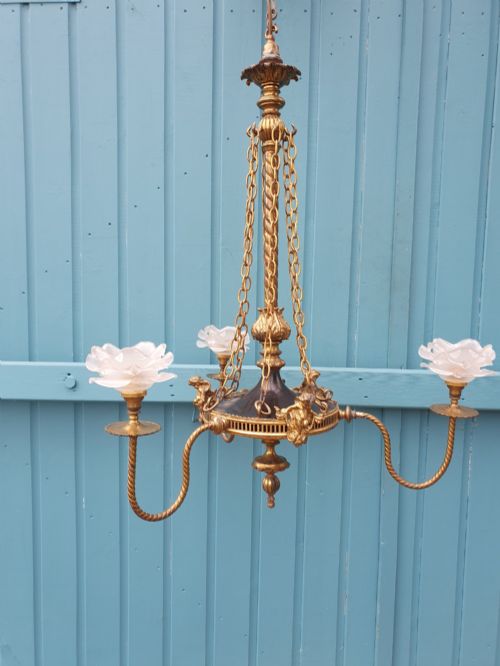
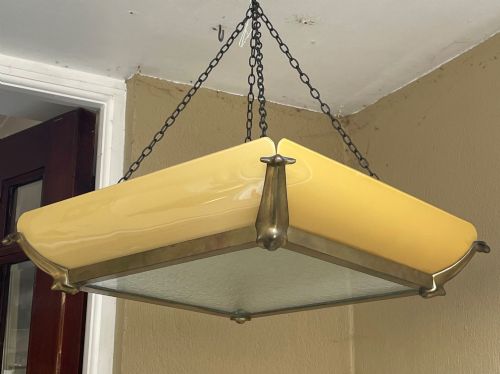
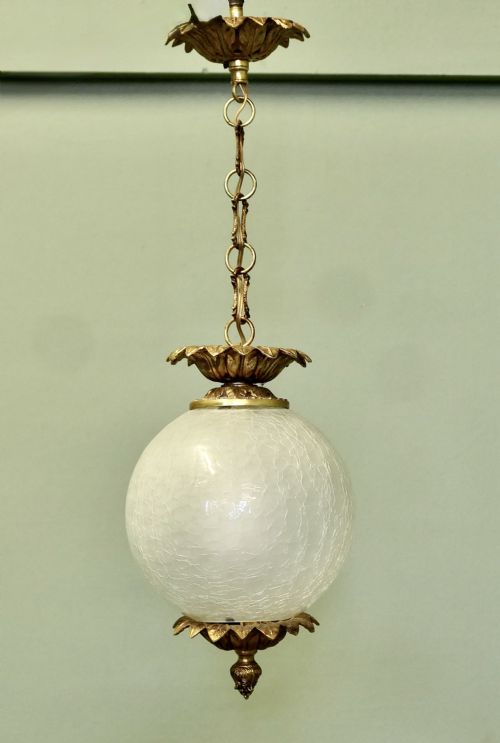
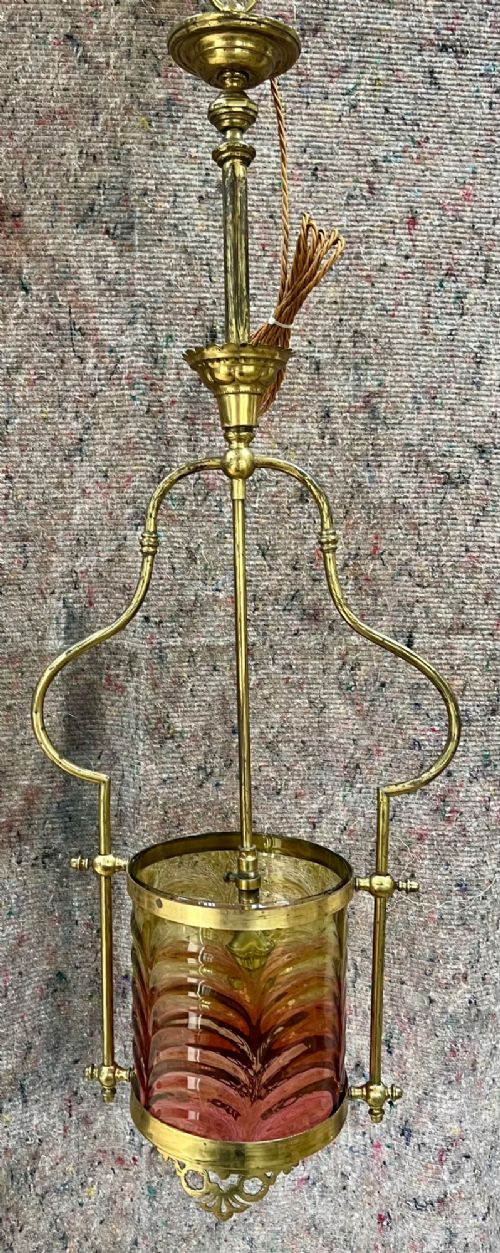
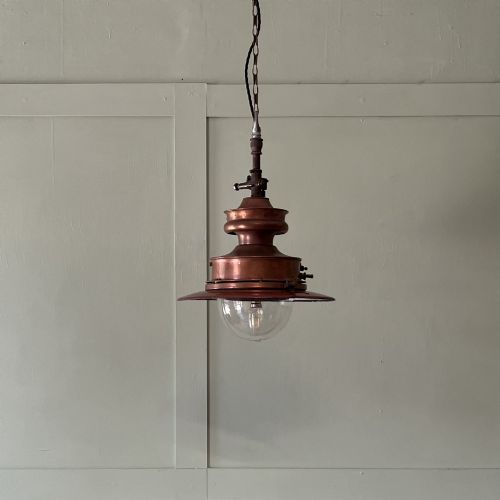
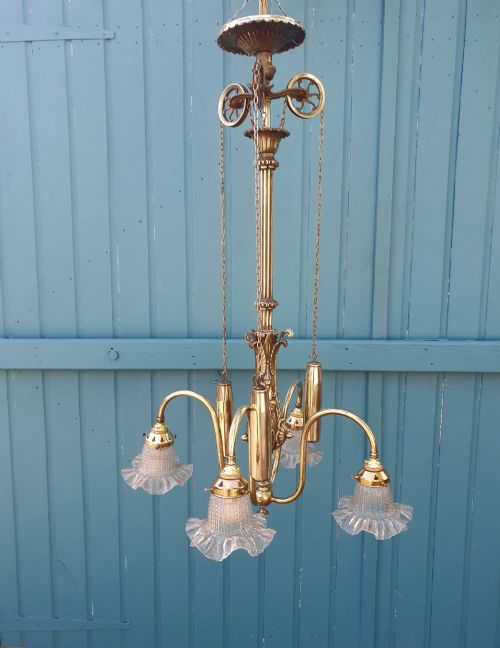
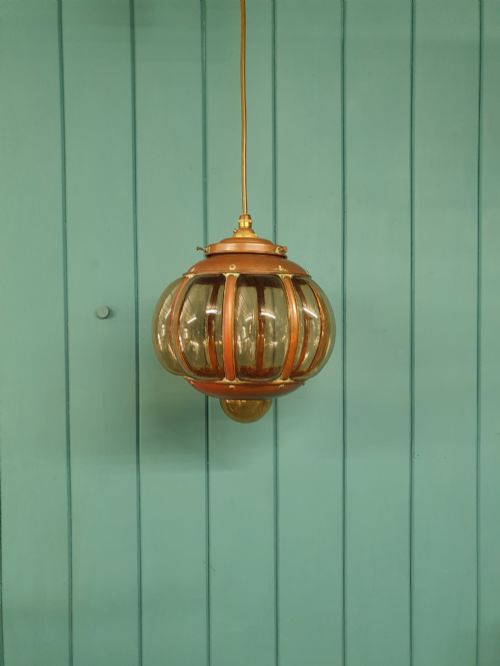
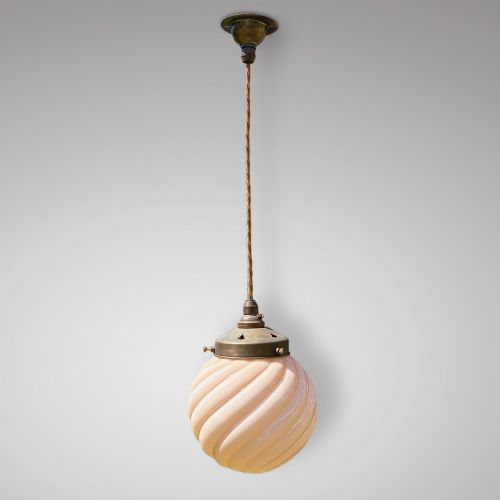
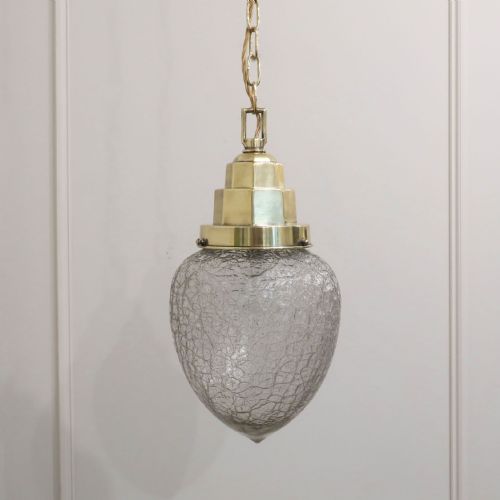
When you search for a brass shade hanging lamp, you find ceiling fixtures designed to cast light directly downward over tables, hallways, and work spaces. These pieces combine metal work with glass elements, spanning pendant lights, multi-arm chandeliers, and enclosed lanterns.
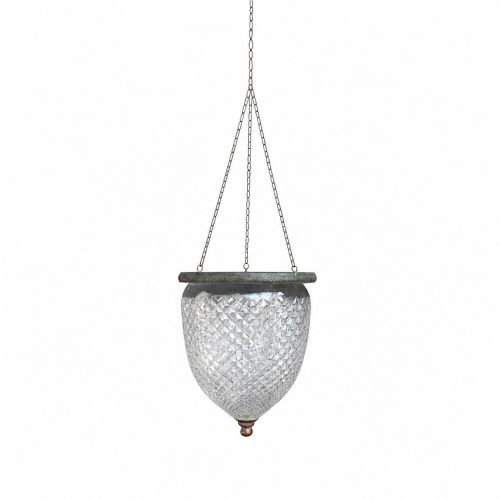
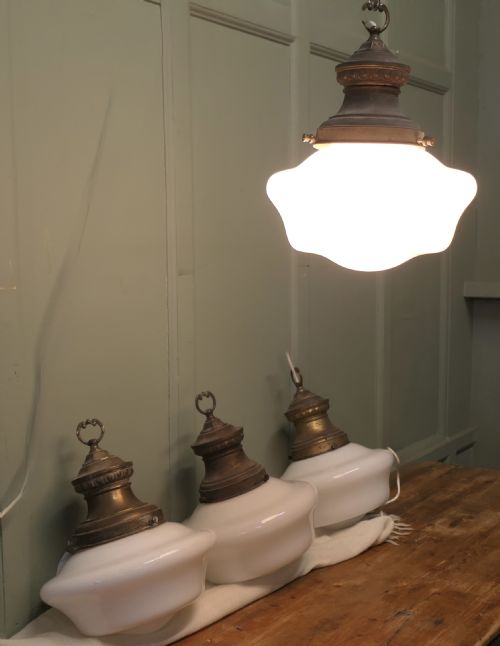
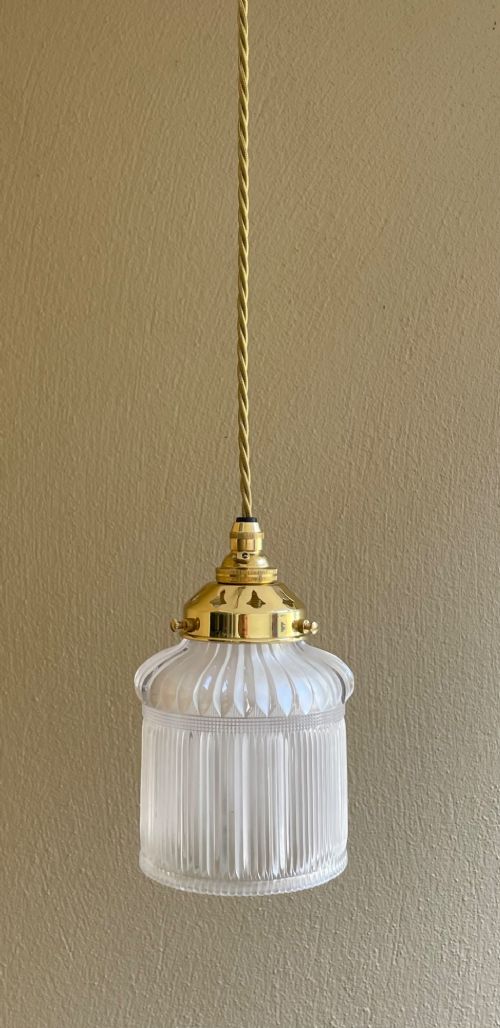
The selections on this page draw from the nineteenth century through the mid twentieth century, encompassing Victorian, Edwardian, Art Deco, and Industrial eras. You will frequently encounter single pendants and lanterns featuring brass components paired with opaline, frosted, or cut glass shades.
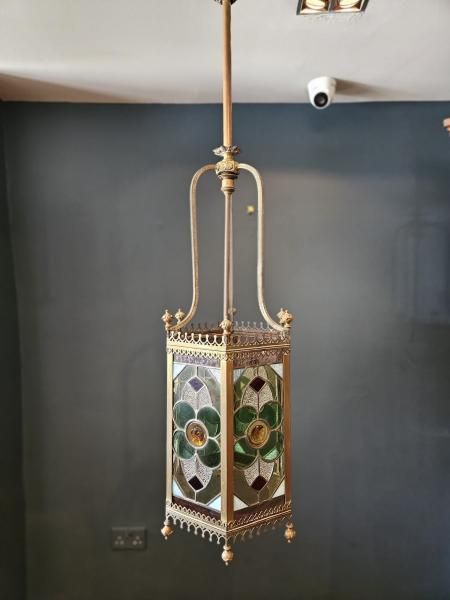
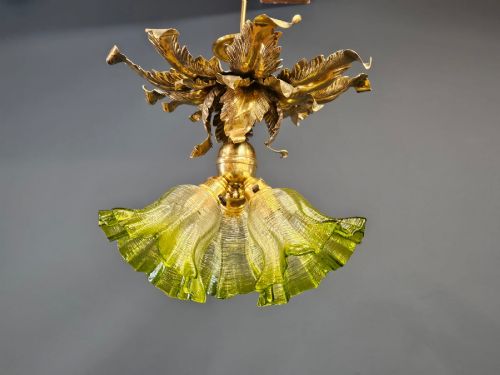
Origins range across English, French, and wider European workshops, showing forms from simple schoolhouse shades to ornate pierced metal frames and prismatic glass bowls. Each piece reflects the lighting technology and interior fashion of its specific decade.
How they were made
Makers constructed these fixtures using spun or cast brass and copper paired with blown, moulded, or cut glass. Metal components were often pierced, hand-hammered, or polished to achieve specific surface textures suited to Victorian and Arts and Crafts interiors.
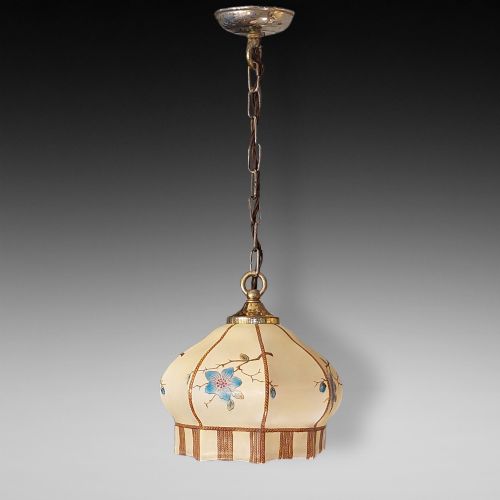
Glass shades were produced through techniques such as acid etching, hand painting, or prismatic moulding, exemplified by specialised pieces designed to diffuse illumination evenly. Structural frames incorporated soldered joints, brass chains, and rise and fall pulley mechanisms to suspend the weight safely.
Early twentieth century pharmacies apparently required exceptionally large glass pendant lights to illuminate their nocturnal compounding sessions.
What varies in quality
Quality rests upon the weight and thickness of the brass or copper frame, alongside the clarity and integrity of the glass shade. Finer examples display crisp casting details, hand-finished piercing, and original matching components rather than assembled replacement parts.
The sophistication of the glasswork dictates the upper tier of the range, from standard pressed panes to complex prismatic Holophane or hand-painted globes. Harmony between the metal mount and the shade indicates a more considered original design.
The Brass Shade Hanging Lamp Glossary
- Plafonnier
- A ceiling light that mounts directly flush or hangs very close to the ceiling surface. These fixtures often feature a glass bowl held within a metal rim.
- Holophane
- A type of scientific ribbed glass designed to direct and diffuse light efficiently while reducing glare. Collectors prize these pieces for their distinct optical patterns.
- Rise and fall
- A mechanical pulley system utilising counterweights that allows the pendant height to be adjusted up and down. This mechanism was popular in Edwardian billiard and dining room settings.
- Opaline glass
- A milky, opaque glass that softens bulb glare into a gentle glow. It appears frequently in Art Deco and early twentieth century pendants.
- Lantern
- An enclosed hanging light fitted with glazed panels within a metal frame. They were traditionally used in hallways, porches, and vestibules.
Brass Shade Hanging Lamp: Frequently Asked Questions
Where should I hang a brass pendant?
These fixtures suit dining tables, kitchen islands, and high ceilinged hallways where downward illumination is needed. Ensure adequate clearance below the lowest point of the shade for foot traffic.
For general room lighting, consider multi-arm chandeliers or ceiling lights that distribute a wider spread of ambient light across the space.
How do I date a hanging lamp?
Dating relies on stylistic markers, such as the geometric lines of Art Deco or the heavy ornamentation of Victorian designs. Materials like opaline glass and specific brass casting techniques also point to particular decades.
Wiring methods and ceiling attachments often provide additional clues, though many antique fixtures have received modern electrical updates for safety.
Are these lights ready to wire?
Most antique lighting requires professional rewiring to meet current electrical standards before installation in a modern home. Standard lamp holders are typically fitted inside the original brass or glass shades.
Consult a qualified electrician to check the weight capacity of your ceiling box and ensure the hanging chain supports the fixture safely.
How do I clean brass and glass?
Dust metal components gently with a soft dry cloth to preserve aged patinas rather than polishing them to a bright shine. Glass shades can be removed and washed in warm soapy water.
Avoid harsh chemical cleaners on antique brass finishes, as these can strip away historical surface oxidation and character.