
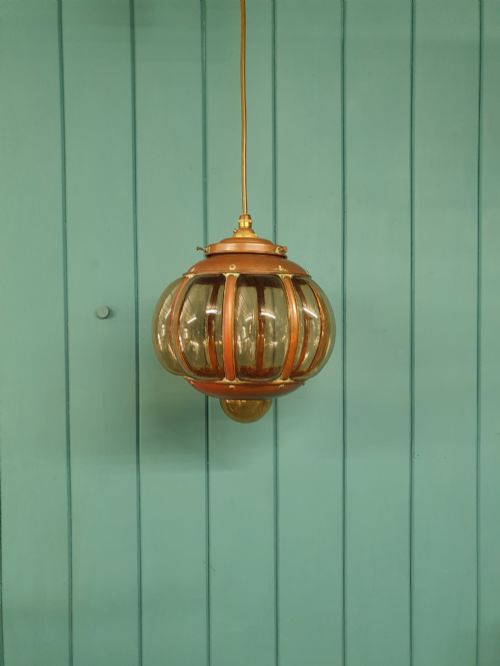
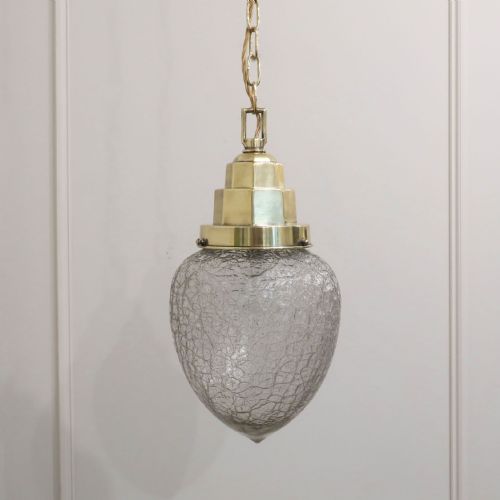


Retro Brass Ceiling Lamp
A retro brass ceiling lamp brings distinct period character and warm illumination to a room, drawing the eye upwards with its polished metal and textured glass.
Retro Brass Ceiling Lamp
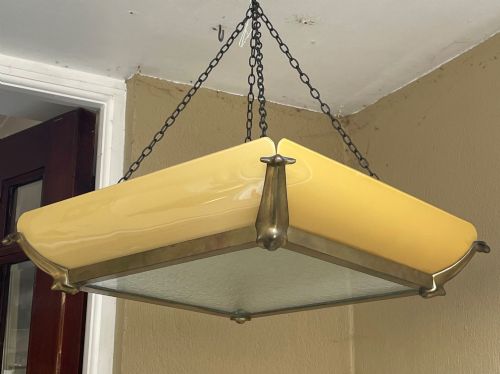
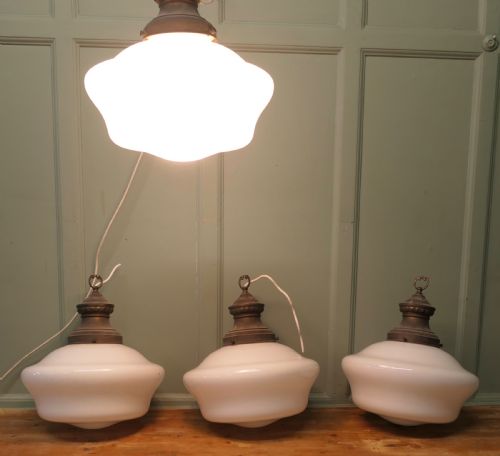
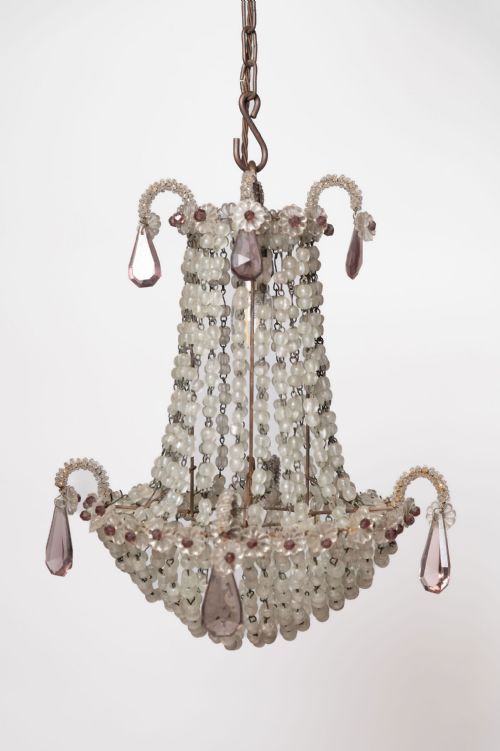
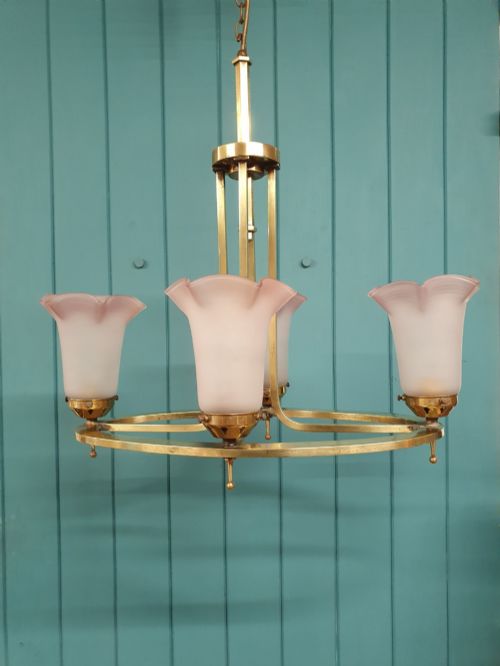
The most common form encountered on this page is the Art Deco pendant light from the 1930s, often combining a brass mount with moulded or opaline glass shades. Industrial designs and Italian Venetian styles also appear, offering varied silhouettes from simple spheres to multi-light chandeliers.
Materials and construction methods
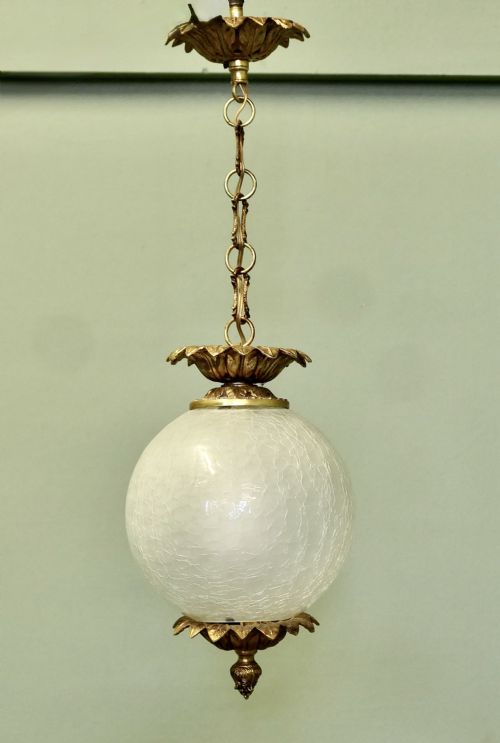
These lamps rely heavily on brass for their structural mounts, galleries, and chains, paired with various forms of glass for the diffusers. Makers utilised opaline, frosted, crackle, and beaded glass to soften the light emitted from the bulbs.
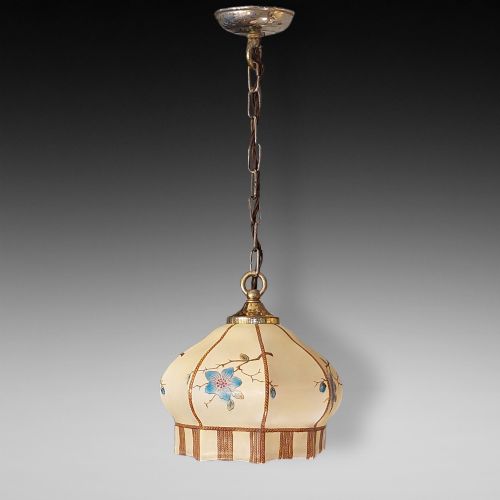
Techniques range from spun brass components to hand-painted glass shades and intricate prismatic glass mouldings. Metal elements were frequently left with their natural metallic finish or patinated over decades of use.
Listings feature brass and glass lighting predominantly from the 1920s and 1930s, alongside Edwardian and nineteenth-century examples.
Distinguishing quality in period lighting
Quality in a retro brass ceiling lamp rests upon the weight and gauge of the metalwork, alongside the clarity and finish of the glass shade. Heavier cast brass mounts and thick, uniform glass indicate superior manufacturing standards compared to lighter, pressed alternatives.
The sophistication of the design details, such as hand-painted motifs or specialised prismatic ribbing, separates standard utility lighting from finer decorative pieces produced in smaller workshops or by notable makers.
Holophane Lighting·Jefferson Light
The Retro Brass Ceiling Lamp Glossary
- Opaline glass
- A milky, semi-translucent glass that diffuses light evenly while reducing glare. It was widely used in pendant lights during the early twentieth century.
- Pendant light
- A hanging light fixture suspended from the ceiling by a cord, chain, or metal rod. These fixtures serve as central overhead illumination in rooms with standard ceiling heights.
- Plafonnier
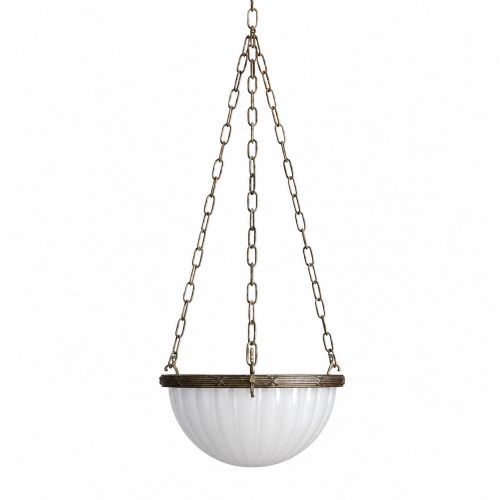
- A flush or semi-flush ceiling light designed to sit close to the ceiling surface. This French term typically describes bowl-shaped glass shades held by a brass frame.
- Prismatic glass
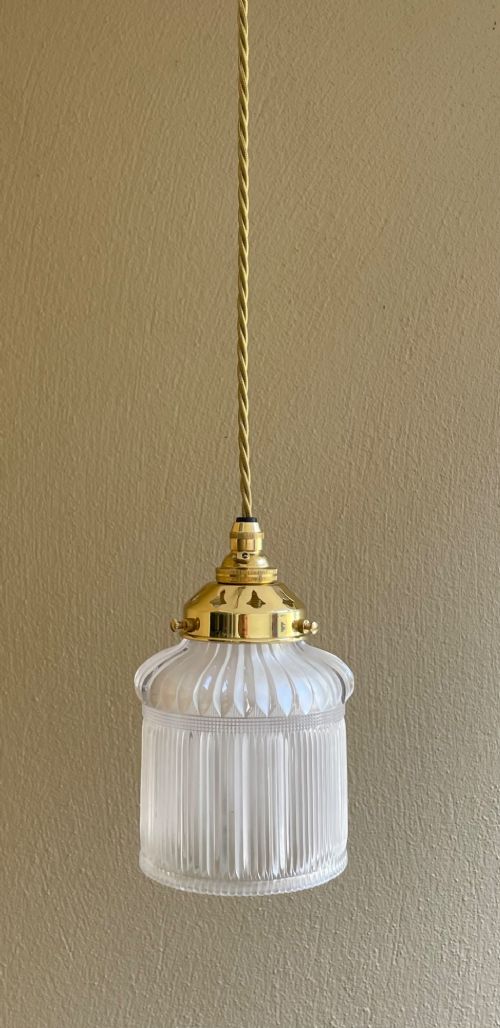
- Glass moulded with geometric ribs or patterns designed to refract and scatter light efficiently. Holophane lighting famously utilised this technique to maximise illumination.
Retro Brass Ceiling Lamp: Frequently Asked Questions
How do I hang a vintage brass pendant?
Hanging a vintage pendant involves securing a suitable ceiling hook or bracket to a joist and connecting the internal wiring to your mains supply. Most of these fixtures rely on a matching brass canopy to cover the ceiling connection point.
It is advisable to consult a qualified electrician to ensure the vintage wiring is safely integrated and capable of supporting the weight of the metal and glass shade.
What rooms suit a 1930s glass ceiling light?
A 1930s glass ceiling light suits hallways, kitchens, and smaller bedrooms where direct yet diffused overhead illumination is required. Their compact profile allows them to fit comfortably in spaces with lower ceilings without dominating the room.
The combination of brass and textured glass also adds subtle focal interest to period properties and modern interiors alike.
How do I clean antique brass and glass?
Cleaning antique brass requires a soft cloth and a gentle touch to preserve the natural patina accumulated over the decades. Avoid harsh chemical polishes that strip away the aged character of the metal.
Glass shades can be removed and washed in warm soapy water, provided they are handled carefully and dried thoroughly before being reattached to the metal mount.
Are these lamps compatible with modern bulbs?
Many vintage fixtures accommodate standard modern screw or bayonet LED bulbs, provided the physical dimensions fit within the enclosed glass shade. It remains important to check the internal lamp holder and adhere to recommended wattage limits.
Using low-heat LED alternatives helps protect fragile vintage glass and old internal wiring from excessive thermal stress during prolonged use.