


Brass Reading Table Lamp
A brass reading table lamp provides focused, adjustable illumination through metal articulation and sturdy bases.
Brass Reading Table Lamp
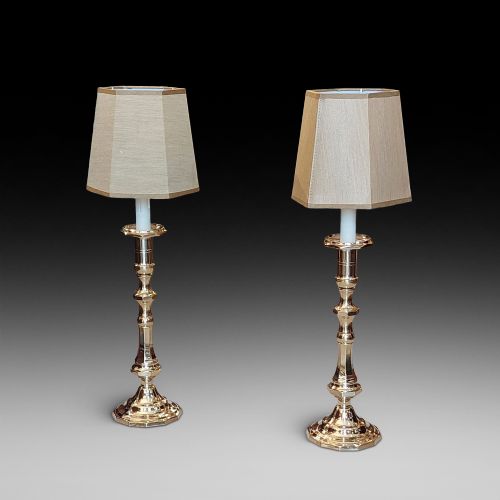
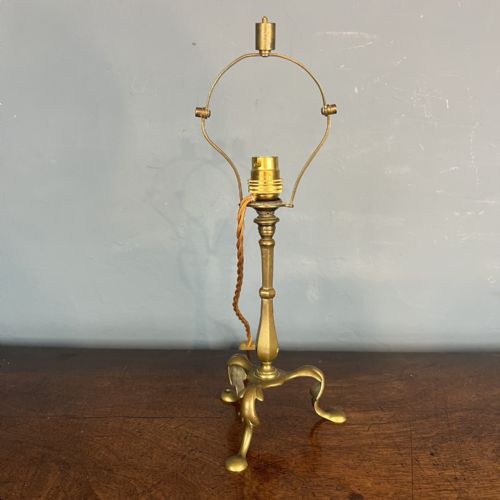
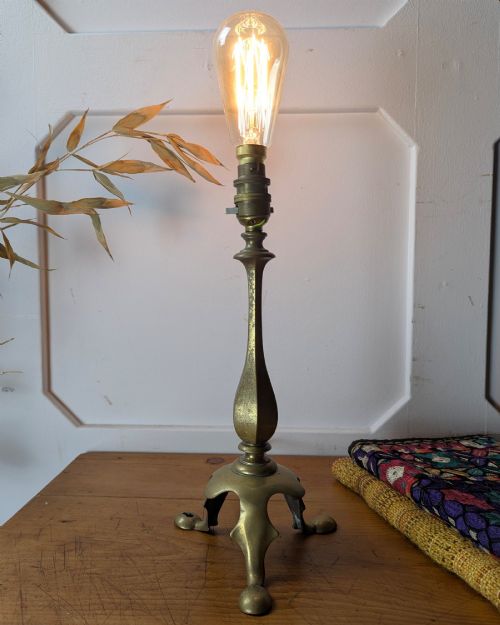
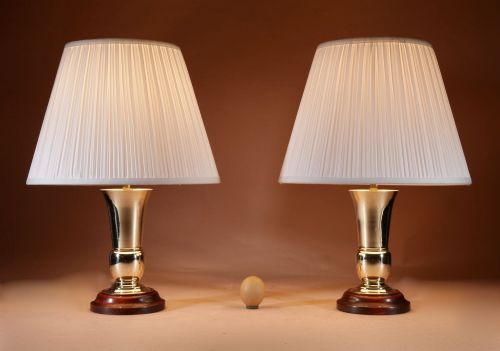
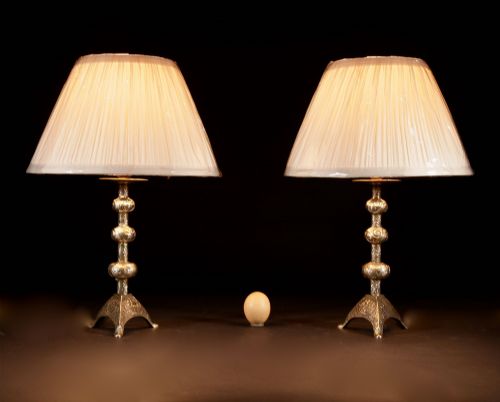
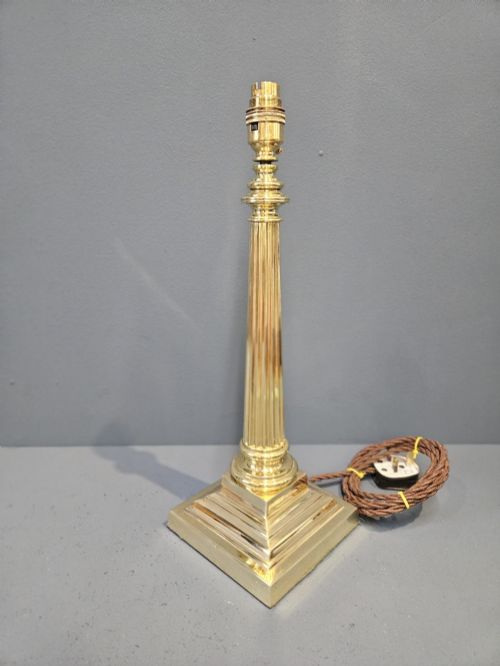
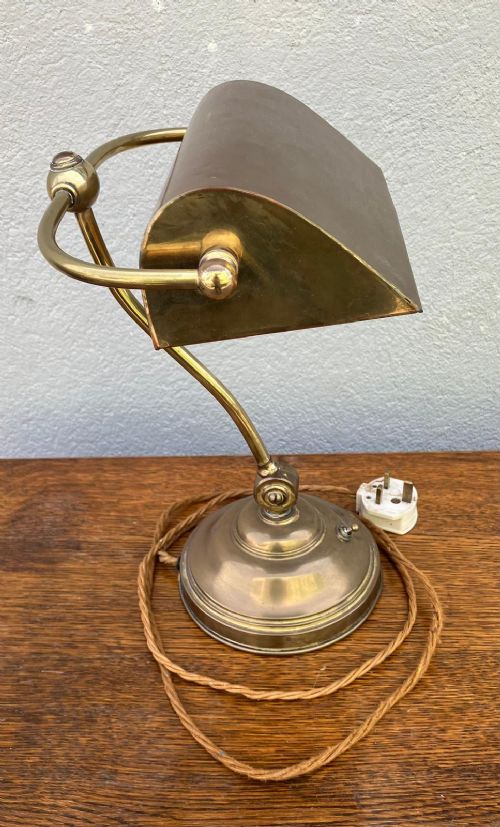
A brass reading table lamp combines functional task lighting with period metalwork spanning the Victorian, Edwardian, and early twentieth-century eras. Collectors encounter standard column forms, adjustable desk designs, and converted oil lamps originating from English, French, and continental workshops.
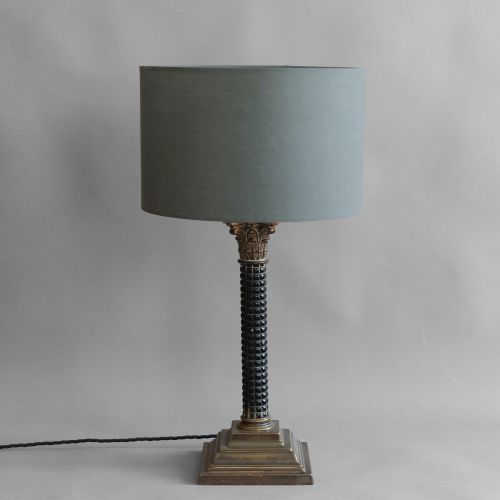
The selection ranges from neoclassical Corinthian column pillars to flexible industrial arms and specialised student or Pullman lamps. Edwardian and Victorian iterations dominate the available styles, often paired with glass, silk, or fabric shades.
How They Were Made
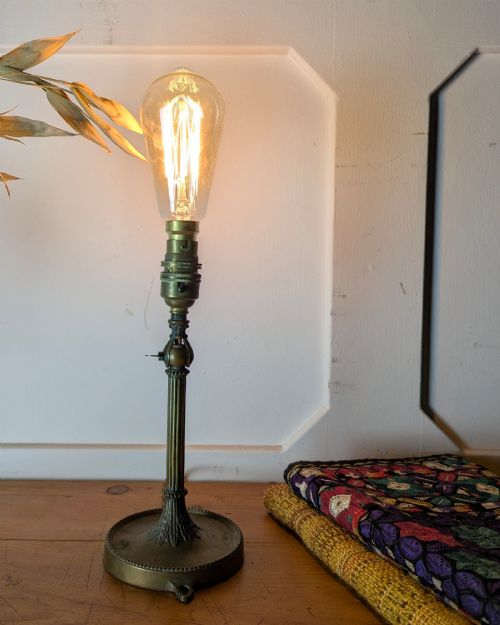
Craftsmen utilised cast and spun brass, gilt bronze, ormolu, and patinated copper, frequently combining these metals with marble, onyx, glass, and mahogany elements. Structural integrity relied on weighted bases, threaded brass components, and articulated joints designed for height and angle adjustments.
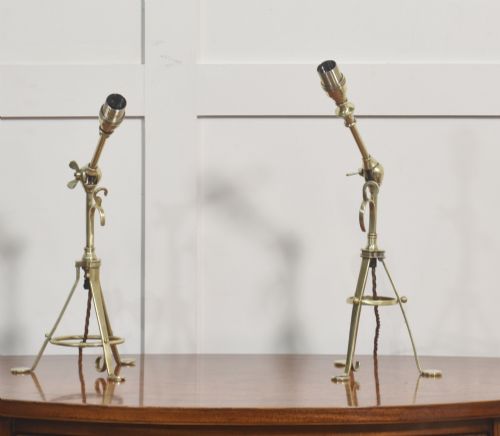
Surface finishing involved polishing, lacquering, or applying patination to achieve varied metallic tones. Many examples integrate mechanical sliding mechanisms, screw keys, and hinged arms for directional task lighting.
What Varies In Quality
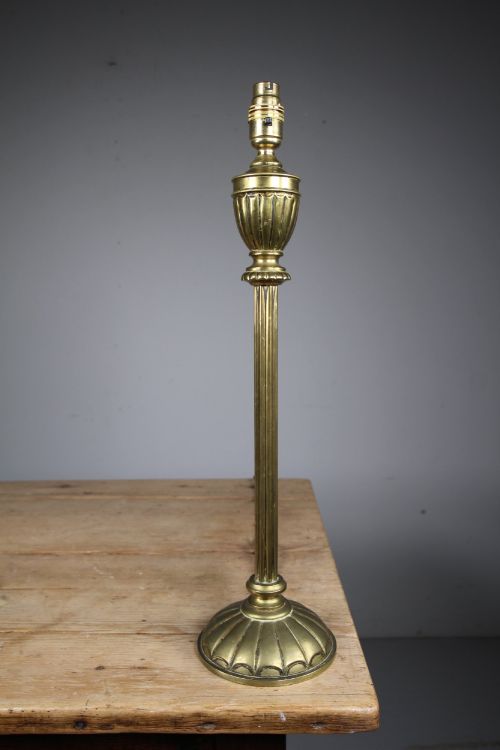
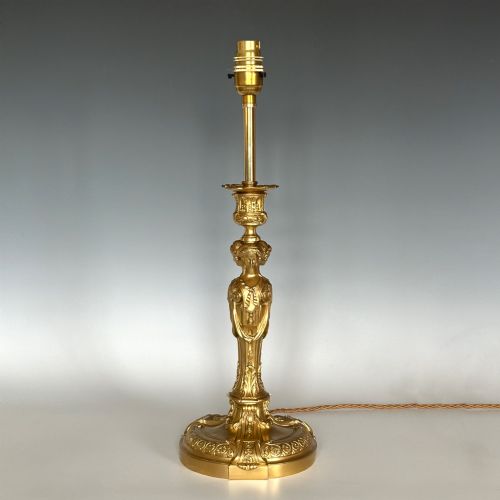
Superior examples display crisp casting detail in architectural motifs such as fluted columns, Corinthian capitals, and neoclassical mounts. Heavy gauge brass and well-engineered adjustable joints distinguish high-grade desk and reading lamps from lighter commercial productions.
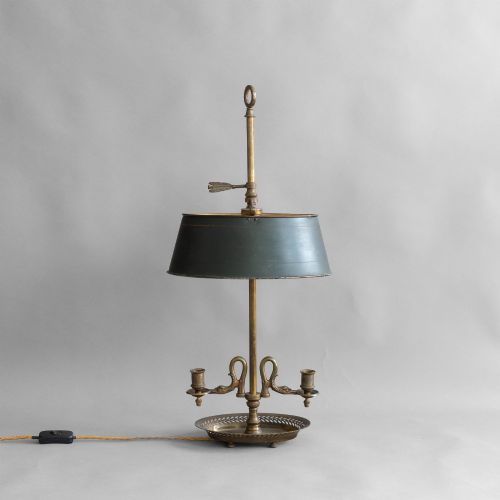
The integration of original decorative shades, such as green tole, patterned glass, or silk, alongside intact functional implements and maker markings, elevates the standing of an individual piece.
W.A.S. Benson·Wild and Wessel·Dugourc
The Brass Reading Table Lamp Glossary
- Ormolu
- Gilded bronze applied to decorative metalwork and lamp mounts. The technique creates a rich gold-coloured surface finish typical of nineteenth-century French pieces.
- Corinthian Column
- An architectural pillar form featuring ornate acanthus leaf capitals. This classical style appears frequently on Victorian and Edwardian table lamp shafts.
- Slider Mechanism
- An adjustable stem design allowing the upper shaft of a lamp to move vertically. This feature enables direct height control on reading and desk lamps.
- Tole
- Painted or lacquered sheet metal used traditionally for lamp shades. Green tole shades are commonly found on adjustable reading lamps.
Brass Reading Table Lamp: Frequently Asked Questions
How do I adjust a brass reading lamp?
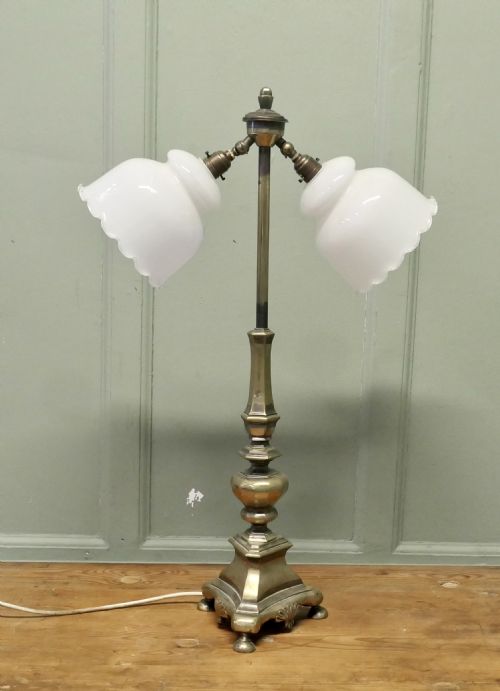
Many period reading lamps utilise sliding central columns or articulated lateral arms secured by small thumb screws. Loosening the mechanical joint allows you to alter the height or angle before tightening it back into position.
Care should be taken with older brass threads and wiring joints when adjusting articulated arms. Gentle handling preserves the original tension mechanisms without straining the metalwork.
Are these lamps safe for modern use?
Most antique lamps originate from eras predating modern electrical standards and frequently require rewiring to meet current safety codes. Many pieces listed by dealers have already been updated with contemporary flex and plugs while retaining their original brass components.
Buyers intending to use these lamps should check the status of the internal wiring and bulb holders. Consulting a qualified electrician ensures the vintage metalwork safely accommodates modern electrical loads.
How do I clean antique brass?
Dusting with a dry soft cloth is generally sufficient for maintaining patinated or lacquered brass surfaces. Harsh chemical polishes can strip the historic patination and damage the original protective coatings applied by makers.
Unlacquered brass will naturally darken over time through oxidation. Allowing this ageing process preserves the authentic character and depth associated with nineteenth-century metalwork.
What is a Pullman lamp?
A Pullman lamp is a compact, directional light fixture originally designed for use in railway carriages or maritime cabins. These pieces typically feature secure wall or desk mounting capabilities and robust brass construction built to withstand motion.
Domestic interiors soon adopted these practical designs for small desks and reading corners. Their space-saving articulated arms made them popular throughout the Edwardian period.