
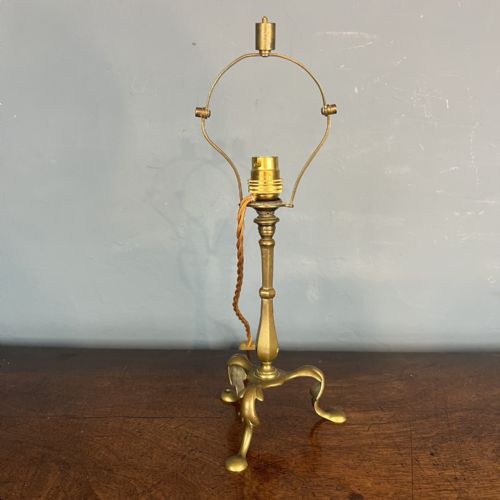
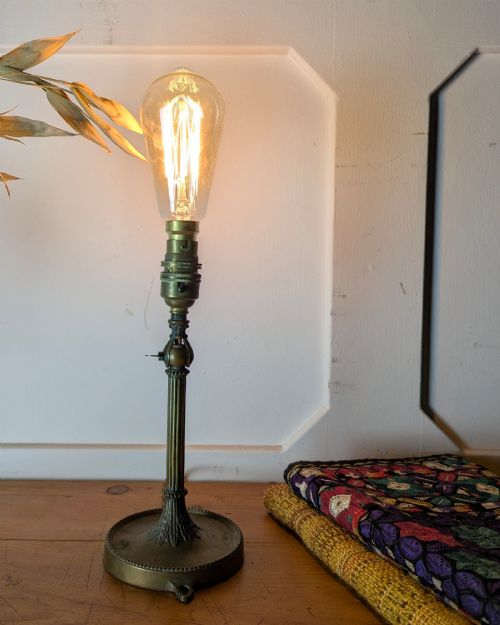
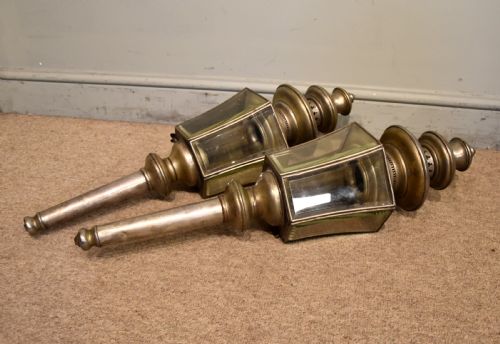


Brass Carriage Lamp
A brass carriage lamp brings solid metalwork and period illumination into a room, offering functional historical design for everyday modern interiors.
Brass Carriage Lamp
When you search for a brass carriage lamp, you are looking at utilitarian lighting designed for travel, coaching, and railway transit that now serves as striking interior decor. These pieces originate primarily from the nineteenth and early twentieth centuries, spanning the Victorian and Edwardian eras.
The versions you are most likely to meet on this page include Pullman carriage table lamps, railway wall lights, and pairs of coaching lanterns. They take the form of table lamps, wall sconces, and hanging lanterns built to endure motion and the elements.
Makers adapted these transport fittings for domestic use, utilising brass alongside iron, steel, and glass to create functional illumination. Their robust construction and utilitarian origins give them a distinct industrial and maritime character.
Materials and construction
Makers constructed these lamps primarily from brass, often pairing it with cast iron, steel, and copper to ensure durability during travel. Metal components were frequently finished with nickel plating for added protection and lustre.
Glass elements, including clear panes and opaline shades, were integrated into the metal frames to shield flames or bulbs from draughts. Gimbal mechanisms allowed certain lamps to swivel, keeping the light level despite the movement of a ship or train.
Brass Carriage Lamp Retail Price Guide 2026
Typical asking prices for brass carriage lamp among the pieces listed under this phrase on Sellingantiques today, from the lower quarter to the upper quarter. They describe what is for sale here now, not the wider market.
Some travel lamps included gimbals so the flame stayed upright while the train rattled through the night.
Assessing quality and craftsmanship
The distinction between standard utility items and finer examples rests in the heaviness of the casting and the crispness of the metalwork. Superior pieces display substantial brass weight and precise assembly rather than thin, pressed sheet metal.
Design complexity also separates the range, with plain coaching lanterns sitting at the simpler end and Arts and Crafts or French Empire styles showing more decorative ambition. Intricate brackets, jewelled glass details, and signed maker components elevate a piece above standard issue.
Veritas Lamp Works·Daris
The Brass Carriage Lamp Glossary
- Gimbal
- A pivoted support that allows a lamp to remain level regardless of motion. You find these on pieces designed for ships and trains.
- Opaline
- A type of milky, translucent glass used for lamp shades to diffuse light evenly. It softens the illumination while adding a distinct period texture.
- Coach lamp
- A heavy-duty exterior lantern originally mounted to horse-drawn carriages. They feature sturdy metal frames built to withstand wind and weather.
- Pullman lamp
- A specialised light fixture created for railway carriages. These are frequently adapted for table or wall mounting in domestic interiors.
- Wall sconce
- A light fixture fixed to a wall using a decorative bracket. Many carriage lamps are converted to this format for home use.
Brass Carriage Lamp: Frequently Asked Questions
How were carriage lamps originally powered?
Original carriage lamps relied on oil or candle burners enclosed behind glass panes to project light forward during travel.
Many surviving examples have since been safely converted to electricity for modern home use.
Can these lamps be mounted on walls?
Many of the pieces listed function as both table lamps and wall lights, depending on their original mounting brackets.
Wall sconce adaptations are common for railway and Pullman designs.
What is a Pullman lamp?
A Pullman lamp is a specific lighting fixture designed for luxury railway carriages on historic train lines.
These pieces often feature brass and glass construction suited to compact spaces and motion.
How do I date a brass lamp?
Dating relies on stylistic markers from periods like the Victorian, Edwardian, and Arts and Crafts eras.
Materials such as heavy cast iron frames and nickel plating also point to nineteenth and early twentieth-century manufacturing methods.