
Arts Crafts Brass Lighting
Arts crafts brass lighting brings functional metalwork into domestic spaces, offering period illumination designed with structural honesty.
Arts Crafts Brass Lighting
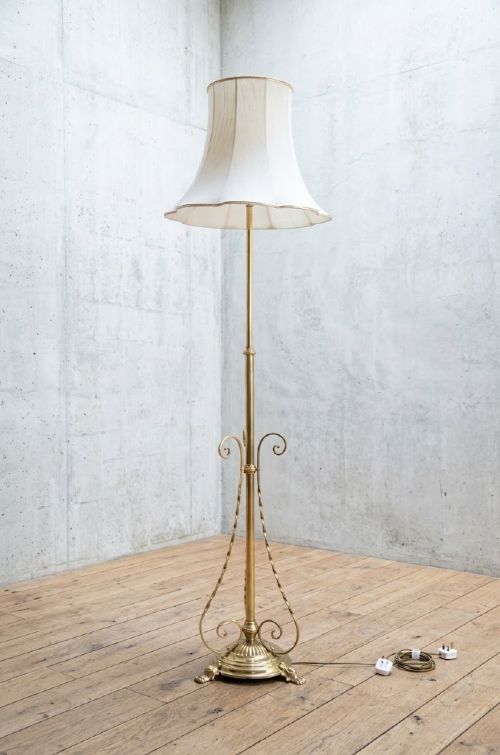
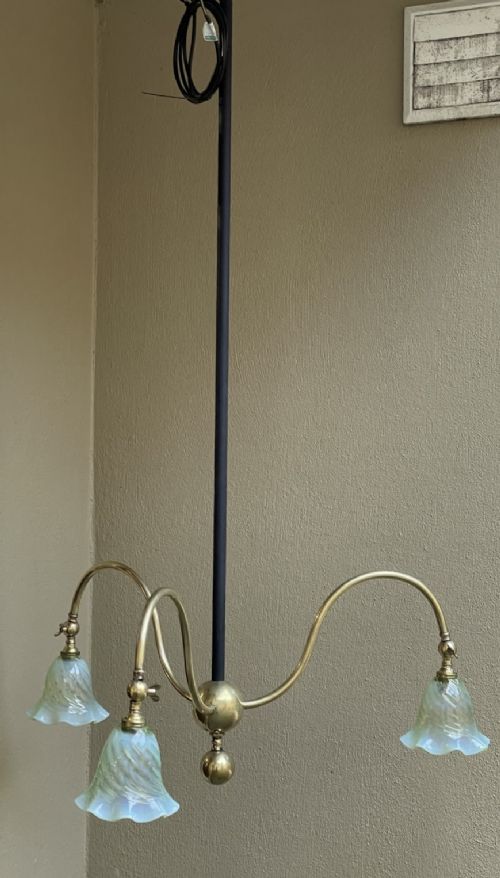
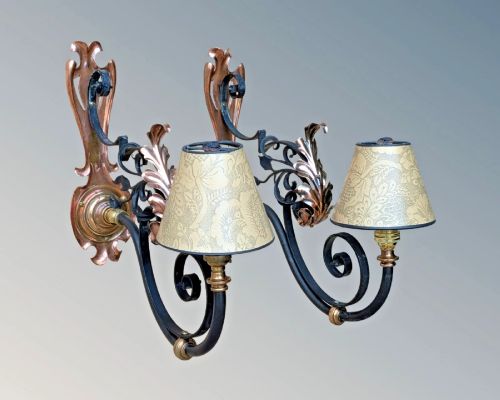
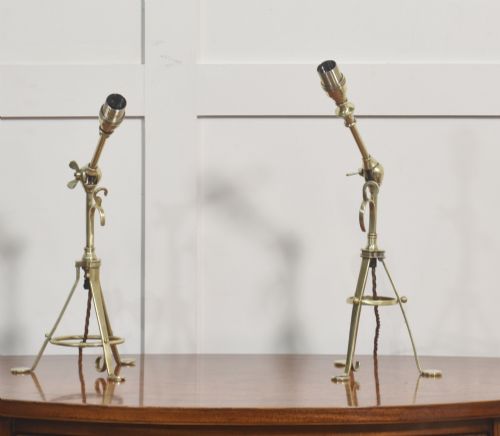
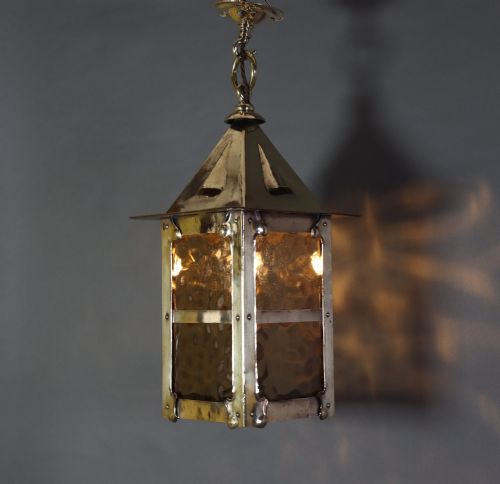
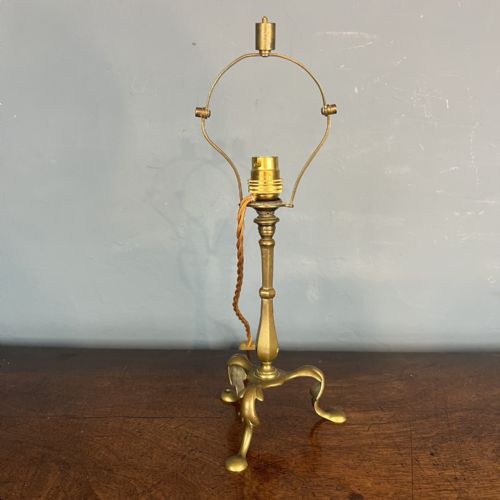
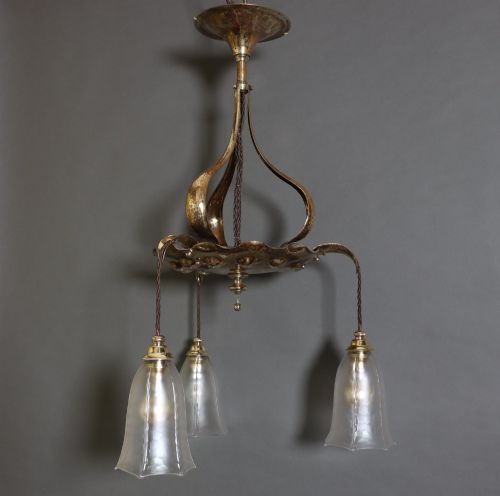
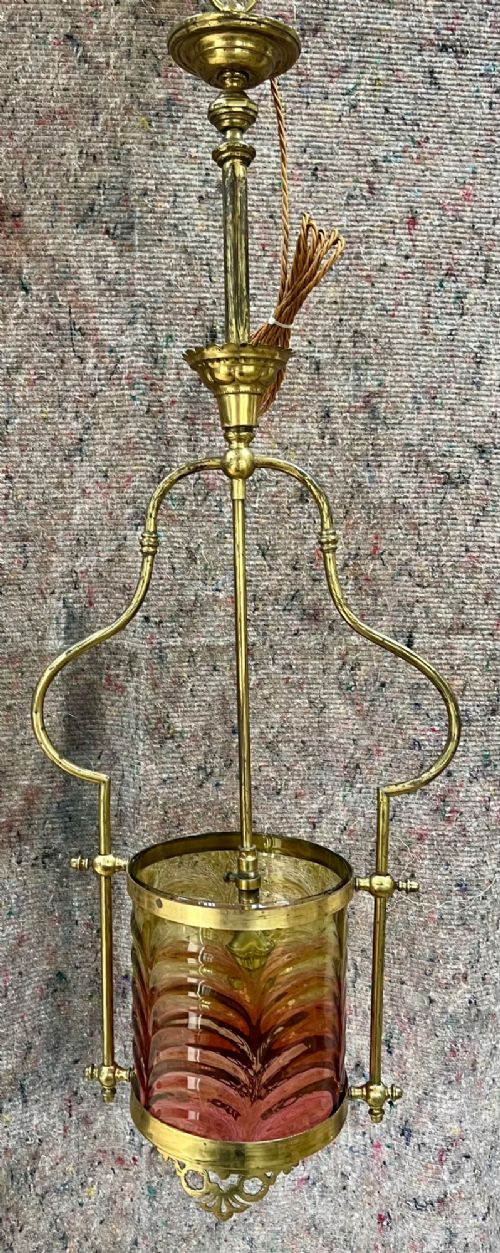
Arts crafts brass lighting comprises practical domestic illumination spanning floor lamps, ceiling lights, table lamps, wall lights, and hall lanterns. These pieces emerge predominantly from the late nineteenth century and the early decades of the twentieth century, aligning with the Edwardian period and broader European design movements.
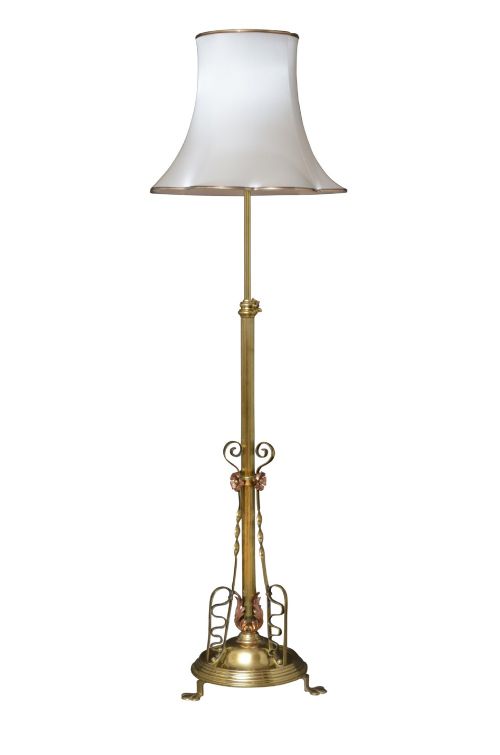
The version most commonly encountered in these listings is the adjustable brass standard lamp or table lamp, often paired with copper, glass, or wrought iron elements. Makers and designers of the period adapted these forms for domestic interiors, producing items that balance utility with straightforward metal construction.
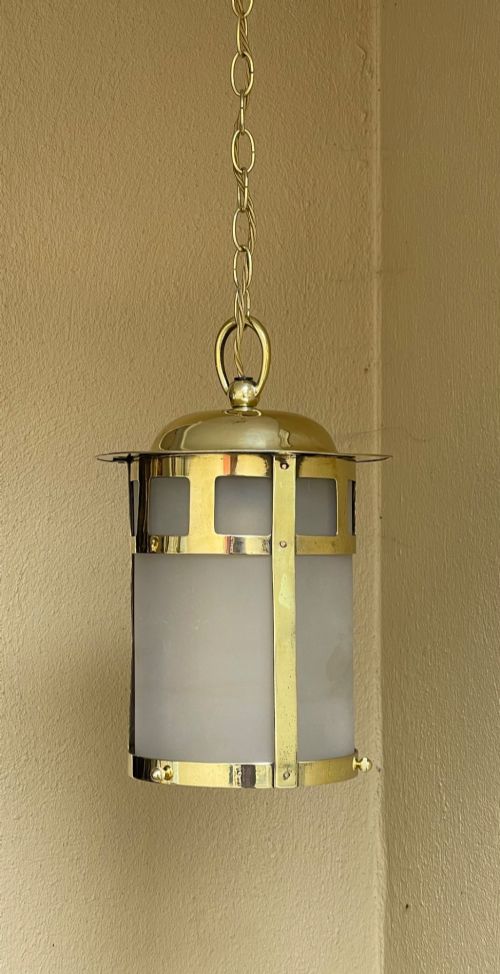
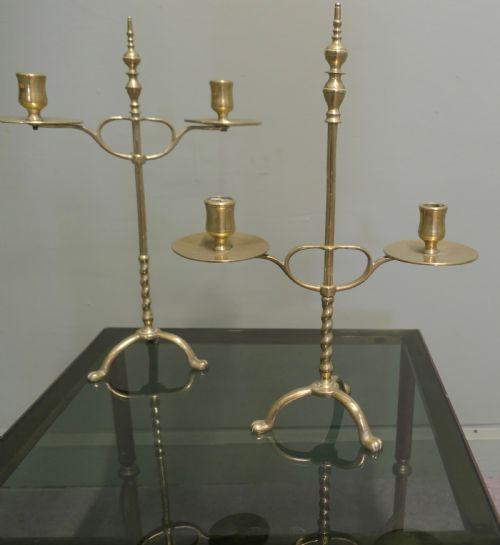
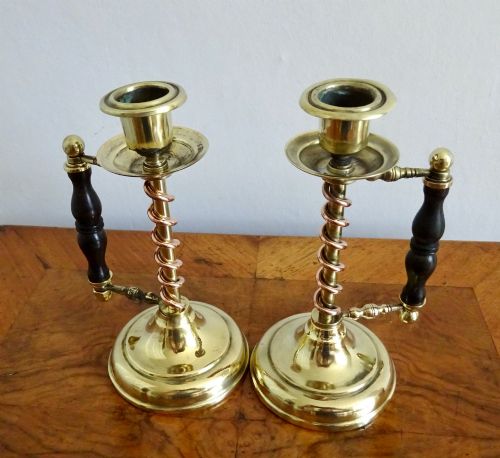
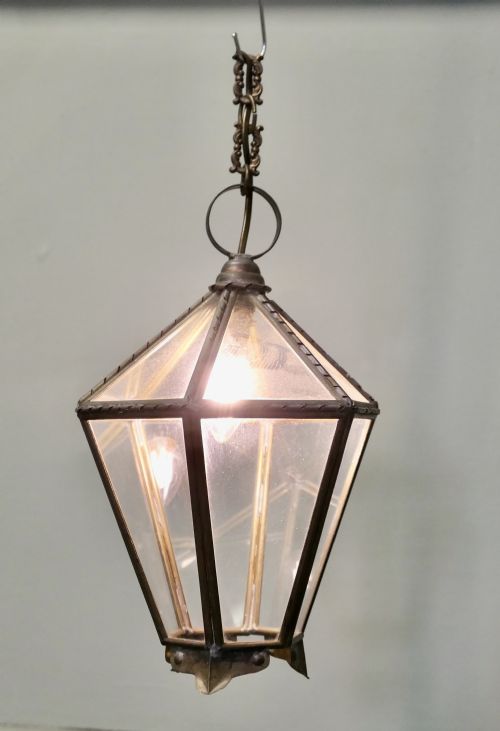
Alongside standard lighting, the selection includes hanging lanterns and candlesticks influenced by continental styles such as Jugendstil, the Amsterdam School, and Art Nouveau. These variations demonstrate how British and European workshops interpreted the aesthetic priorities of the era.
Material Execution and Design Integrity
Quality separates objects by the integrity of their mechanical adjustments and the weight of the gauge metal employed in their construction. Pieces exhibiting thoughtful proportion and uncompromised structural joints stand apart from simpler commercial iterations.
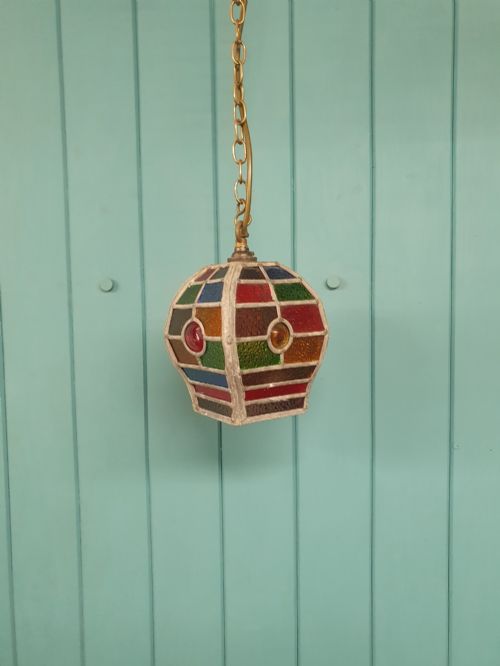
The nuance of hand-applied patination and the subtlety of hammered surfaces distinguish finer workshop output from routine production. The integration of secondary materials like leaded stained glass or mixed metals further defines the upper tier of surviving examples.
Some reading lamps were built sturdy enough for railway carriages, proving that even a train commuter needed proper illumination.
W.A.S. Benson·Voysey·Dr Christopher Dresser
The Arts Crafts Brass Lighting Glossary
- Pricket candlestick
- A candleholder featuring a central spike upon which the candle is mounted rather than a socket. This form appears frequently in ecclesiastical and secular continental metalwork.
- Pullman lamp
- A specialised adjustable reading or berth light originally designed for railway carriage use. These compact fixtures utilise articulated arms to direct illumination precisely where needed.
- Standard lamp
- A tall floor-standing lamp designed to illuminate a room from a vertical post. In this period, they often incorporate height-adjustable mechanisms and heavy weighted bases.
- Chamberstick
- A low portable candleholder fitted with a saucer base and a loop handle. They allowed individuals to carry a flame through domestic spaces before electric lighting.
- Amsterdam School
- An architectural and design movement originating in the Netherlands characterised by expressive masonry, traditional craftsmanship, and dynamic metalwork forms. It shares affinities with contemporaneous British design.
Arts Crafts Brass Lighting: Frequently Asked Questions
How do I date arts crafts brass lighting?
Dating relies on identifying manufacturing techniques, stylistic markers, and mechanical patents associated with the late nineteenth and early twentieth centuries. Structural methods such as hand-riveting and specific patination styles help anchor pieces within the Edwardian period.
Examining wiring channels, switch types, and maker attribution provides further chronological context. Many examples bridge Victorian ornamentation and the cleaner lines of the 1920s.
Were these lights originally electrified?
Many surviving pieces were originally designed for oil, gas, or candlelight before being converted to electricity during the twentieth century. Adaptations were frequently made to accommodate standard domestic wiring without altering the primary metal frame.
Inspecting internal fittings reveals whether electrical components are later additions or period-appropriate modifications. Original oil or gas burners are sometimes retained as decorative elements.
How should I clean patinated brass?
Patinated surfaces require minimal intervention to preserve the oxidation and historic finish accumulated over a century. Dusting with a dry cloth or gentle brush is usually sufficient for routine maintenance.
Avoid abrasive metal polishes that strip away the authentic patination valued by collectors. Preserving the surface layer maintains the visual depth of the metalwork.
What is the difference between Arts and Crafts and Art Nouveau lighting?
Arts and Crafts lighting emphasises visible construction, utilitarian honesty, and simplified geometric or vernacular forms. The aesthetic prioritises the integrity of the material and the evidence of the maker's hand.
Art Nouveau lighting favours fluid, organic lines inspired by natural plant forms and asymmetrical curves. While both movements overlap chronologically, their decorative vocabulary remains distinct.