



Art Nouveau Wall Sconces
Art nouveau wall sconces bring fluid, organic illumination to an interior, defined by whiplash curves and natural motifs.
Art Nouveau Wall Sconces
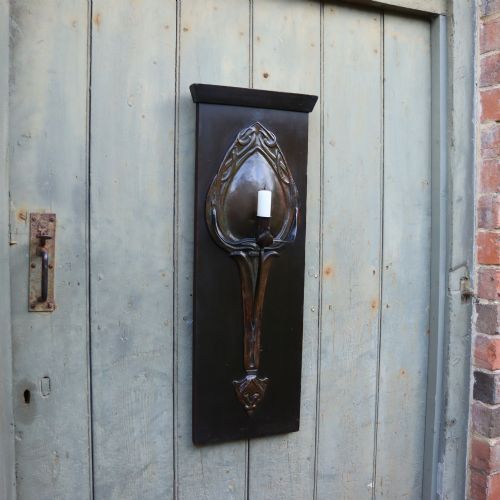
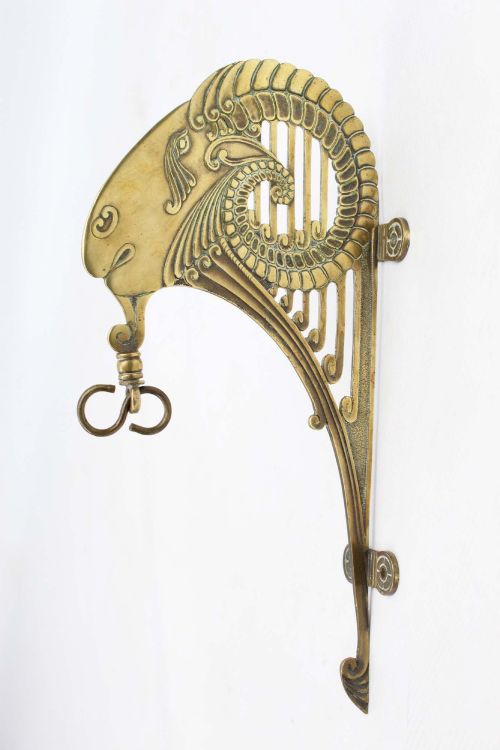
Art nouveau wall sconces are lighting fixtures designed to mount directly onto vertical surfaces, taking the form of wall lights, candle sconces, and night lights. These pieces date from periods including the 1890s, 1900, 1910, the Victorian era, and the 19th century.
The versions most commonly met on this page are French and Dutch examples configured as pairs or sets of wall lights. Forms range from twin-arm and triple-arm brass configurations to single ceramic night lights and elaborate cast bronze designs.
Makers and origins span Dutch Delft production, Liberty output, and French workshops. Stylistic influences incorporate standard Art Nouveau alongside French Art Nouveau, French Chateau, Arts and Crafts, and French Rococo Revival aesthetics.
Materials and construction
The construction relies heavily on cast bronze, brass, silver-plated brass, and patinated metal to form the structural arms and backplates. These metallic elements support specialised glass components, including original Dugué glass shades and cranberry glass inserts.
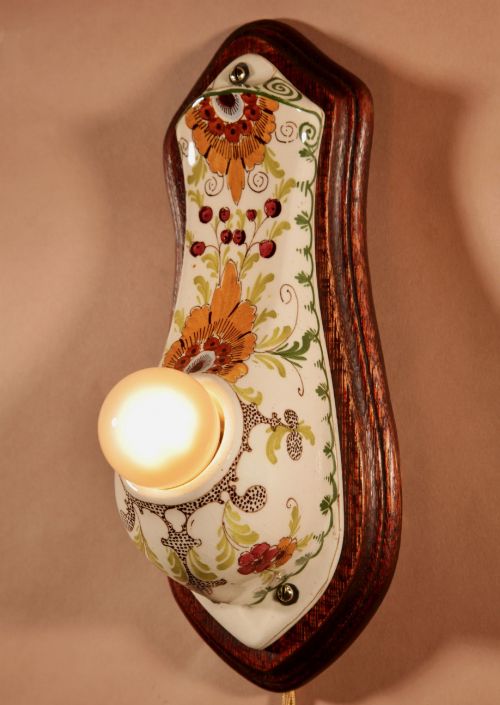
Other examples utilise ceramic elements, such as Dutch Delft or Gouda pottery plates and night lights, sometimes mounted with oak elements. Metal casting and hand-finishing allow for the characteristic sinuous lines and ornate floral or cherubic detailing seen across the pieces.
Art Nouveau Wall Sconces Retail Price Guide 2026
Typical asking prices for art nouveau wall sconces among the pieces listed under this phrase on Sellingantiques today, from the lower quarter to the upper quarter. They describe what is for sale here now, not the wider market.
The listings span the 1890s, 1900, 1910, the Victorian era, and the 19th century, utilising brass, glass, metal, ceramic, oak, silver-plated brass, patinated metal, and cast bronze.
Assessing quality
Quality rests upon the crispness of the metal casting and the integrity of the original components, such as specialised glass shades by makers like Dugué. Hand-chased bronze or brass exhibits deeper relief and more fluid transitions than simpler commercial stampings.
The presence of matching pairs or complete sets rather than single survivors elevates the stature of a fixture. Furthermore, the harmonious integration of ceramic bodies, like Delft pottery plates, with metal mounts dictates the refinement of the finished piece.
Liberty·Dugué
The Art Nouveau Wall Sconces Glossary
- Art Nouveau
- A stylistic movement spanning the late 19th and early 20th centuries characterised by organic forms, plant tendrils, and asymmetrical whiplash lines. This aesthetic rejected historic revivalism in favour of dynamic, nature-inspired design.
- Wall Sconce
- A decorative lighting fixture fixed to a wall that directs illumination outwards and upwards into a room. These fixtures historically held candles or gas burners before conversion to electricity.
- Cranberry Glass
- A type of transparent pinkish-red glass produced by adding gold chloride to the molten glass batch. It appears frequently in Victorian and Art Nouveau lighting shades.
- Patinated Metal
- Metal surfaces treated with chemical solutions or heat to produce a controlled, aged coloration and finish. This treatment accentuates the sculptural relief of cast bronze and brass backplates.
- Delft
- Tin-glazed earthenware originating from the Netherlands, traditionally painted in blue and white or polychrome palettes. It is found on ceramic night lights and wall-mounted plaque assemblies.
Art Nouveau Wall Sconces: Frequently Asked Questions
Can I convert candle sconces to electricity?
Converting candle sconces to electricity is possible, but purists often prefer to keep them in their original candle-burning configuration. Adding wiring alters the original fabric of the piece and can diminish historical integrity.
If conversion is necessary for daily use, reversible methods that avoid drilling through structural cast metal are strongly recommended.
How do I clean brass and bronze sconces?
Cleaning should be limited to dusting with a soft, dry cloth to preserve the historical surface and patinated metal finishes. Avoid using harsh chemical polishes that strip away the aged appearance accumulated over the decades.
Glass shades can be removed and washed gently in warm soapy water, provided they are handled with extreme care.
What is the difference between art nouveau and arts and crafts?
Art Nouveau focuses on sinuous, organic lines, asymmetrical floral motifs, and fluid, plant-like movement. Arts and Crafts emphasises visible hand-craftsmanship, traditional construction methods, and simpler, sturdier forms.
While both movements reacted against mass production, Art Nouveau embraces decorative elaboration whereas Arts and Crafts highlights utility and honest materials.