




Brass Mounts Mantel Clock
A brass mounts mantel clock brings domestic timekeeping together with heavy gilt metalwork, uniting functional precision and sculptural presence on a shelf or surface.
Brass Mounts Mantel Clock
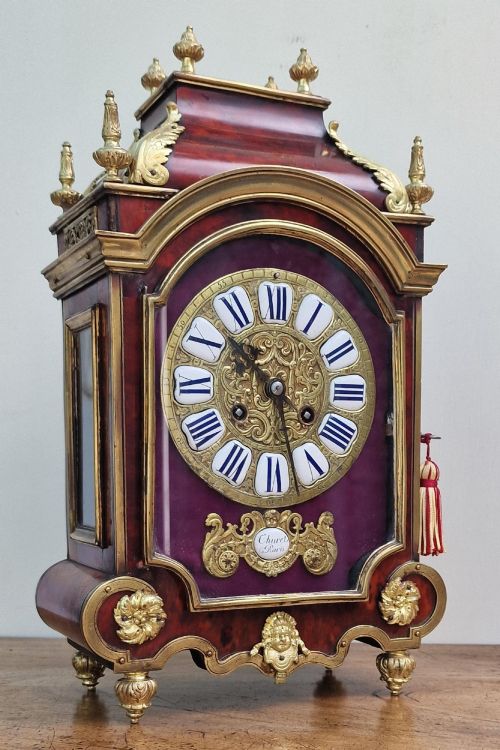
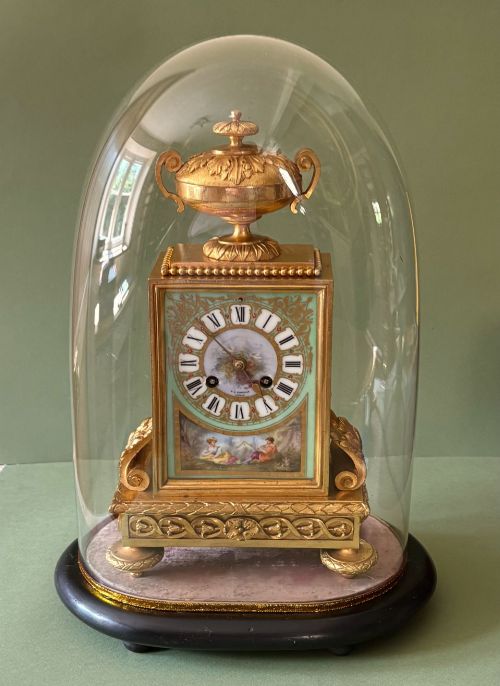
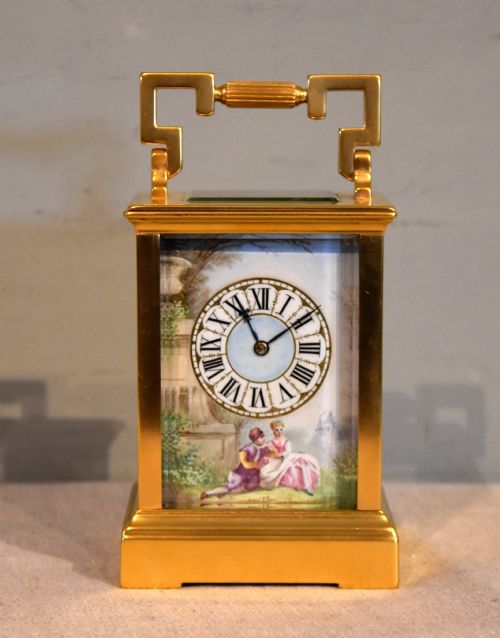
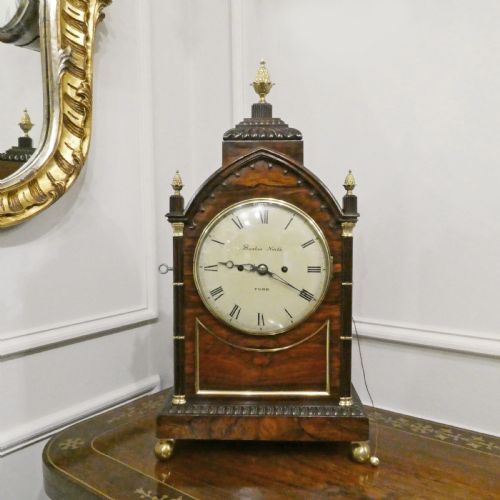
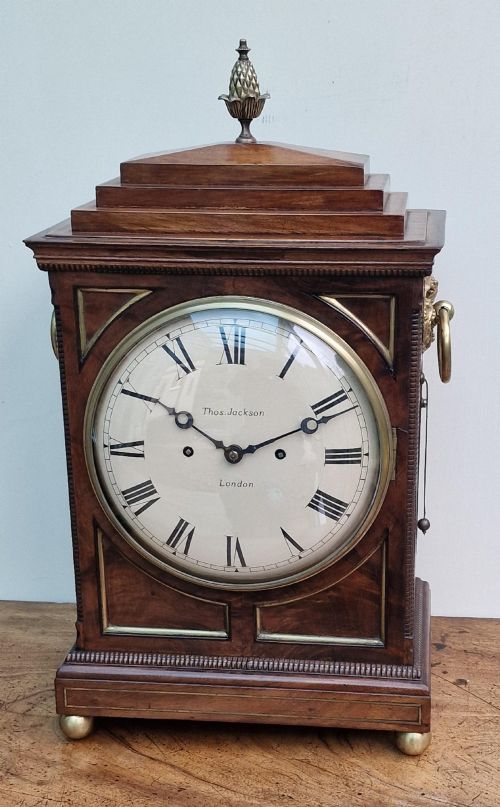
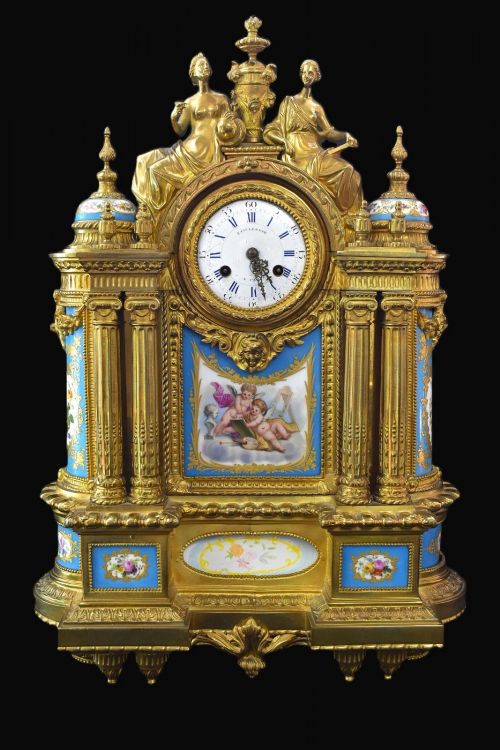
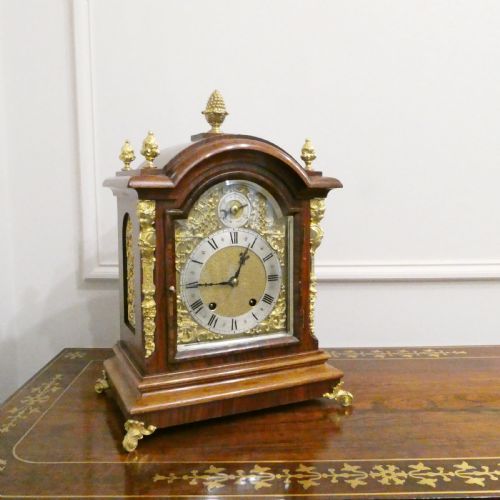
A brass mounts mantel clock presents time enclosed in timber, marble, porcelain, or tortoiseshell, finished with decorative metal fitments around the dial, feet, or corners. The search phrase covers domestic timepieces designed to sit on a mantelpiece, table, or bracket, drawing from periods spanning the seventeenth century through to the Edwardian era.
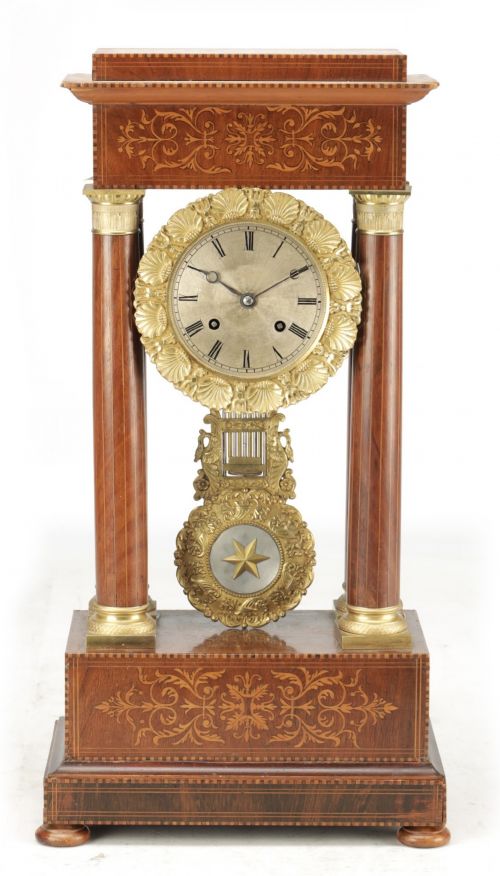
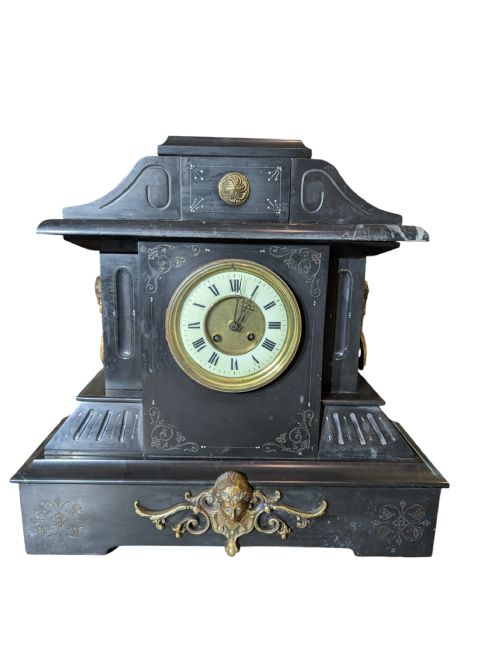
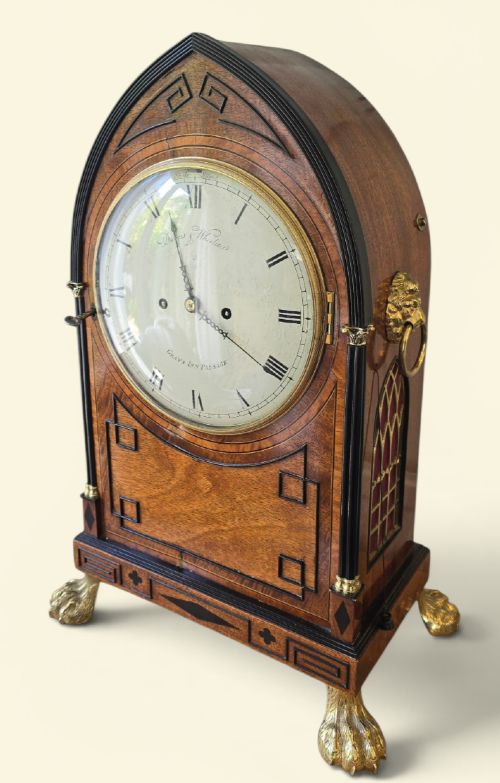
Most examples encountered on this page originate from nineteenth-century France or Britain, taking the form of architectural wooden cases, bracket clocks, or decorative French architectural and lyre-shaped designs. These pieces range from restrained George III mahogany and rosewood table clocks to ornate Victorian and Napoleon III ormolu-mounted models.
The casing materials show considerable variety, shifting from ebonised wood, mahogany, and burr walnut to intricate Boulle marquetry, red shell, and heavy white or black marble. Metal mounts unify these diverse bodies, appearing as cast brass, gilt bronze, and ormolu detailing that frames the glass bezels and accentuates the structural lines of the clock.
Materials and construction methods
Clockmakers and cabinetmakers constructed these housings using dense hardwoods such as mahogany, ebony, rosewood, and oak, frequently applying veneers of tortoiseshell or kingwood alongside brass inlay. Metalworkers cast the mounts in brass or bronze before applying fire-gilding or ormolu finishes to achieve a bright, durable lustre that contrasted against the dark timber or polished marble bodies.
Dials incorporated white enamel chapters, engraved silvered brass plates, or inset porcelain plaques, protected behind bevelled glass panes fitted within hinged bezels. Movements utilised brass gear trains and springs for eight-day or chiming functions, housed securely within heavy wooden or marble shells designed to stabilise the mechanical beat.
Mystery mantel clocks suspend their swinging pendulums from invisible or seemingly magical linkages, confounding anyone who tries to spot how the mechanism keeps time.
Distinctions in manufacture and finish
The standard of the brass mounts dictates much of the visual character, separating finely chased, heavy ormolu and gilt bronze from simpler, flat-stamped brass pressings. Crispness in the casting of foliage, scrollwork, and figural details indicates superior workshop output during the fabrication process.
Cabinetwork precision marks another division, seen in the alignment of mitred veneers, the execution of Boulle tortoiseshell marquetry, and the selection of solid mahogany or burr walnut over secondary pine carcases. Signed movements by noted makers in London, Paris, or provincial centres add documentary weight to the physical architecture of the clock.
Barber and North of York·Thomas Jackson·Desbois and Wheeler·Etienne Lenoir·Schneckenburger·Francis Perigal·Turner of London·John Witherston·John Pepys·John Bull of Bedford·Henry Jones·Des Granges·Paul Philip Barraud·Lenzkirch
The Brass Mounts Mantel Clock Glossary
- Ormolu
- A technique of applying finely ground high-carat gold to a bronze object, creating a rich golden finish used extensively on decorative mounts. This surface treatment requires skilled mercury gilding or modern electroplating to achieve its characteristic depth.
- Boulle
- An elaborate form of marquetry employing tortoiseshell and brass inlaid in contrasting patterns, named after the cabinetmaker André-Charles Boulle. Pieces utilising this technique display complex floral or geometric scrolling across the entire wooden case.
- Bracket clock
- A portable table clock historically designed to sit upon a matching wall bracket or a heavy surface, usually featuring a carrying handle on top. These domestic timepieces frequently incorporate striking or musical gear trains.
- Garniture
- A decorative set comprising a central clock accompanied by matching side pieces such as urns, vases, or candelabra. Such matched groupings were placed together on a mantelpiece to create a unified interior arrangement.
- Portico clock
- A mantel clock designed in the architectural style of a classical portico, featuring vertical columns supporting a horizontal entablature around the central pendulum. This neoclassical form gained popularity during the early nineteenth century.
Brass Mounts Mantel Clock: Frequently Asked Questions
How do I wind an antique mantel clock safely?
Wind the clock using the appropriate key provided with the movement, turning it gently until resistance increases without forcing the spring past its limit. Take care not to overwind older mechanisms, as this can strain the internal brass mainsprings.
Keep the clock on a level surface away from direct heat sources and drafts to ensure the pendulum maintains an even beat. Consulting a professional horologist for periodic cleaning preserves the accuracy of the gear train.
What is the difference between a bracket clock and a mantel clock?
Bracket clocks originated as portable spring-driven timepieces with arched or pad tops and carrying handles, built to rest on dedicated wall brackets or tables. Mantel clocks generally describe a broader category of shelf-standing timepieces developed later in various architectural styles.
Many bracket clocks feature intricate chiming or musical movements housed within dense wooden cases. Mantel clocks frequently utilise marble, porcelain, or ebonised wood alongside prominent ormolu mounts.
How can I tell a French ormolu clock from an English one?
French clocks of the nineteenth century often rely on ornate cast ormolu mounts, porcelain panels, and striking movements designed with distinct bell or gong configurations. English bracket clocks tend toward more austere mahogany, rosewood, or ebony cases with engraved silvered brass dials and fusee movements.
Examining the backplate of the movement often reveals maker signatures, serial numbers, or French foundry stamps. These inscriptions clarify the workshop origin and regional manufacturing practices of the piece.
What does a striking movement do?
A striking movement sounds the hours and sometimes the half-hours using an internal bell, gong, or series of tuned rods connected to the gear train. This acoustic feature allowed owners to hear the time passing without needing to view the dial directly.
Some advanced models include quarter-chiming or musical capabilities governed by auxiliary gear cylinders. These complex mechanisms require precise adjustment by a specialist to maintain proper synchronization.