


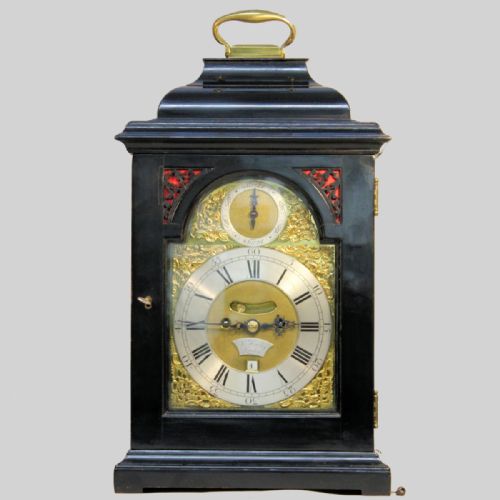


Georgian Verge Clock
A georgian verge clock brings mechanical precision and period presence into a room, driven by the rhythmic pulse of its early escapement.
Georgian Verge Clock
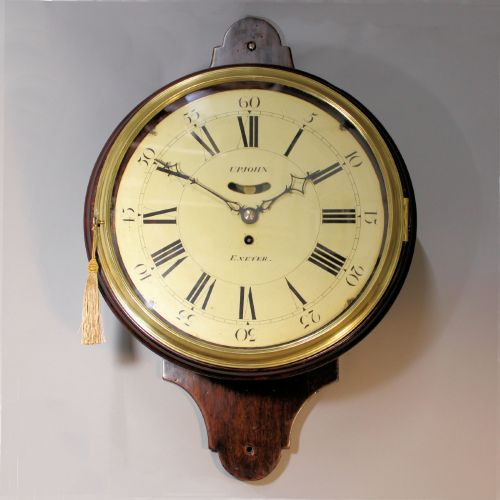
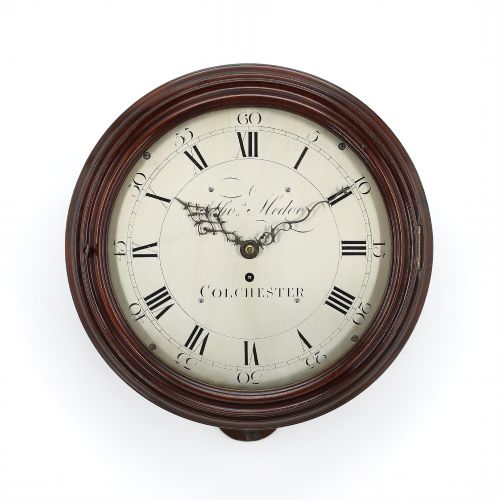
When you search for a georgian verge clock, you encounter timepieces predominantly housed in table or bracket formats, alongside occasional wall clocks and lantern clocks. These pieces span the eighteenth century and the start of the nineteenth century, reflecting the dominant styles of the period.
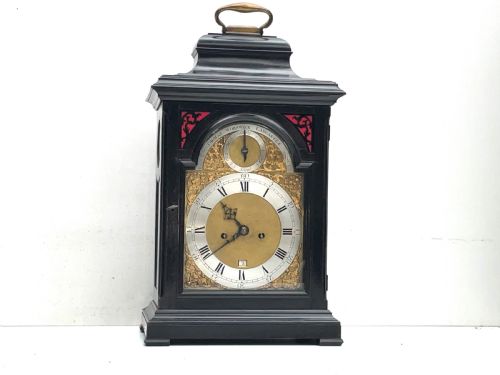
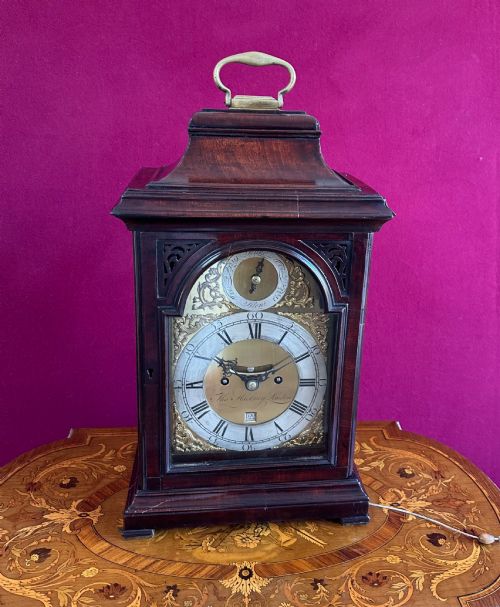
The bracket and table clock versions are the forms you meet most often on this page. They typically feature architectural wooden cases enclosing mechanical movements designed to keep domestic time and sound the hours.
Materials and construction
Cases are built from dense timbers such as mahogany and ebonised wood, occasionally incorporating brass mounts and glass panels to protect the dial. The internal mechanisms combine brass, steel, and iron components.
The movements rely on the verge escapement, an early regulating device paired with a balance spring or pendulum. Dials are constructed from painted metal or silvered metal to display the hours.
Listings feature mahogany and ebonised wood cases housing verge movements.
Distinctions in craftsmanship
Quality separates through the execution of the casework and the crispness of the movement. Well-proportioned timber cases with bell-top designs reflect superior cabinet-making standards.
The precision of the engraving on the dial and the original state of the internal verge escapement determine the standing of an individual piece.
Thomas Hedge of Colchester·Windmills and Bennet·William Barrow·Andrew Marchant·John Taylor·Isaac Hurley·Peter Debaufre·John Rapton·Thomas Percival·George Cooper·Gravell and Tolkien·Robert Brown·Richard Young·George Borrett·Thorowgood of London·John Richardson·Bartholowmew Devis·William Pearce·Bullock of London·Charles Bayles
The Georgian Verge Clock Glossary
- Verge escapement
- An early mechanical regulator utilising a crown wheel and a verge axle with pallets. This mechanism controls the release of power in the gear train.
- Bracket clock
- A portable table clock designed to sit on a bracket, shelf, or table. Many examples incorporate carrying handles on top.
- Bell-top
- A distinctive case shape featuring a stepped or domed upper section resembling the profile of a bell. This silhouette is common in eighteenth-century bracket clocks.
- Fusee
- A conical pulley used to equalise the pull of the mainspring as it unwinds. It ensures consistent power delivery to the movement.
- Silvered metal
- A metallic dial surface treated with a silver compound to create a bright, legible background for black numerals.
Georgian Verge Clock: Frequently Asked Questions
How do I wind a bracket clock?
Insert the winding key into the designated arbour on the dial face and turn it gently until resistance is felt. Avoid over-winding the mechanism to protect the spring.
Ensure you support the clock case firmly during the process. Most movements require winding at regular intervals to maintain accurate timekeeping.
Where should I place a table clock?
Position the clock on a stable, level surface away from direct sunlight, draughts, and damp areas. A sturdy chest of drawers or a dedicated wall bracket provides an ideal location.
Keeping the piece level ensures the verge escapement beats evenly. Uneven placement causes the mechanism to stop running.
What is a quarter repeating movement?
A quarter repeating mechanism sounds the hours and the most recent quarter-hour on bells when activated by a cord or lever. This function allowed owners to check the time in the dark.
It represents a higher level of clockmaking complexity. Many bracket clocks from the period incorporate this feature.