




Brass Mounted Wall Barometer
These brass mounted wall barometers combine practical weather observation with fine period cabinet-making, offering traditional domestic utility.
Brass Mounted Wall Barometer
A brass mounted wall barometer is a domestic instrument designed for interior display and atmospheric pressure reading. The selection spans George III, Georgian, Victorian, Edwardian, and 1920s eras, reflecting diverse regional workshops.
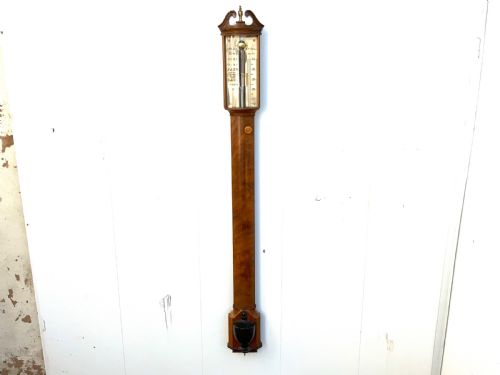
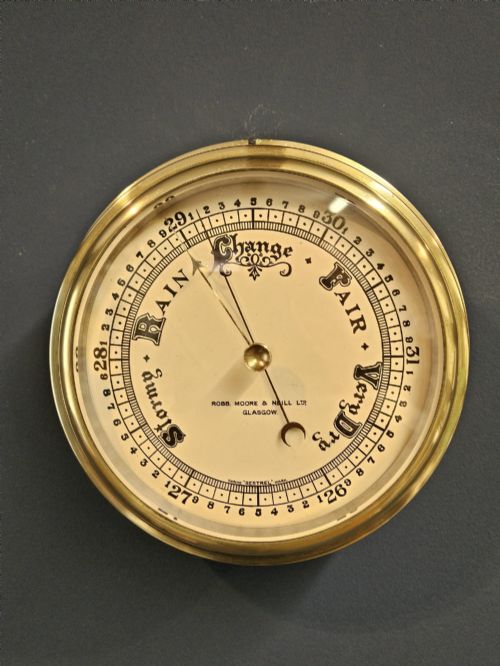
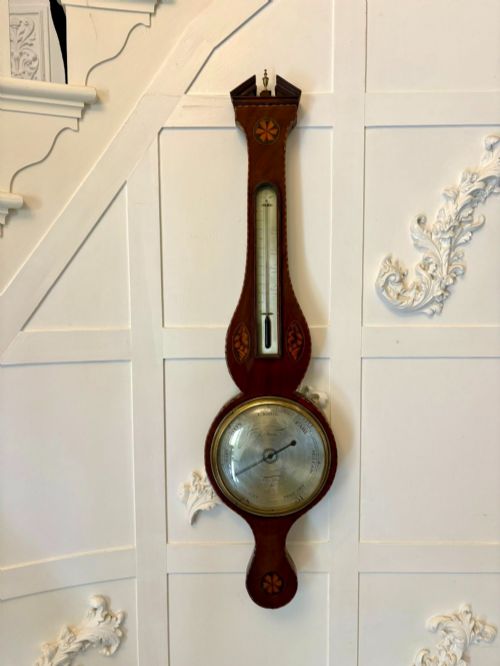
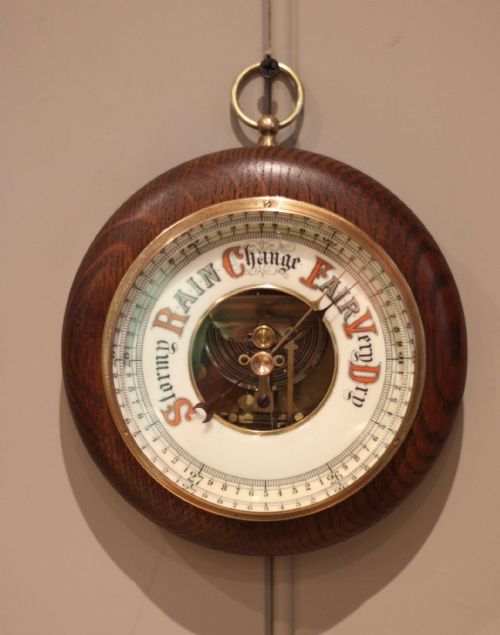
Forms include banjo barometers, stick barometers, circular aneroid models, wheel barometers, and combined barometer hatstands. Certain examples incorporate bone details alongside silvered metal dials.
Cabinet woods such as mahogany, oak, walnut, rosewood, and ebonised timber provide the primary housing for these mechanisms. Stylistic influences range from Black Forest carving to Scandinavian and Continental traditions.
How they were made
Cabinet-makers constructed the wall housings from dense hardwoods like mahogany, walnut, and rosewood, frequently incorporating shell inlay, boxwood stringing, or deep relief carving.
Metalworkers produced the brass mounts, bezels, and cistern covers that protect the sensitive internal mercurial or aneroid movements. Dials were executed in silvered metal or engraved bone, paired with protective glass plates.
One extraordinary combination serves simultaneously for atmospheric readings and hallway hat storage.
What varies in quality
The refinement of the timber selection and the crispness of the carved ornament distinguish standard production from superior examples. Elaborate marquetry, figural carvings in walnut, and detailed dial engraving indicate skilled workshop execution.
Signatures on the silvered metal dials from known London, provincial, or continental makers add significant documentary interest to the instrument. The integration of brass mounts with the primary timber case shows the builder's precision.
Fagioli of Clerkenwell London·Bate of London·Antoine Redier·Sandrino of Liverpool·Negretti & Zambra London·Gilbert London·Ciresa of Milan·Corti of Exeter·Malacrida of Dublin·George Dollond of London
The Brass Mounted Wall Barometer Glossary
- Aneroid barometer
- An instrument measuring atmospheric pressure without liquid, using a flexible metal box. It relies on internal spring expansion rather than a column of mercury.
- Stick barometer
- A tall, narrow wall instrument showing barometric pressure on a vertical scale. It typically houses a mercurial tube within a solid timber trunk.
- Banjo barometer
- A domestic wall instrument featuring a round dial at the top and a wider body below. It is often configured as a wheel barometer with hygrometer and thermometer additions.
- Barograph
- A recording meteorological instrument that draws pressure changes onto a revolving drum. These mechanical devices provide a continuous graphical record of weather shifts.
Brass Mounted Wall Barometer: Frequently Asked Questions
What is a stick barometer?
A stick barometer is a tall, narrow wall-mounted instrument that uses a vertical column of mercury to register atmospheric pressure.
These pieces showcase linear grain patterns in timbers such as mahogany or rosewood, making them suitable for narrow wall spaces.
How do aneroid and mercurial barometers differ?
Mercurial barometers rely on liquid metal in a glass tube to indicate pressure changes, while aneroid versions use a sealed metal capsule.
Aneroid mechanisms avoid liquid altogether, utilising mechanical linkages to move the needle across a circular dial.
Where were these barometers placed?
These instruments were hung in halls, libraries, and principal rooms where household members checked the weather before travelling.
Their decorative wood cases and brass mounts meant they functioned as ornamental furnishings as well as practical tools.
How can I date a wall barometer?
Dating relies on the casework style, dial design, and timber choice, alongside any maker signatures engraved on the metal plate.
Georgian examples tend to feature linear mahogany or inlay, while Victorian and Edwardian models show heavier carved decoration or circular aneroid formats.