
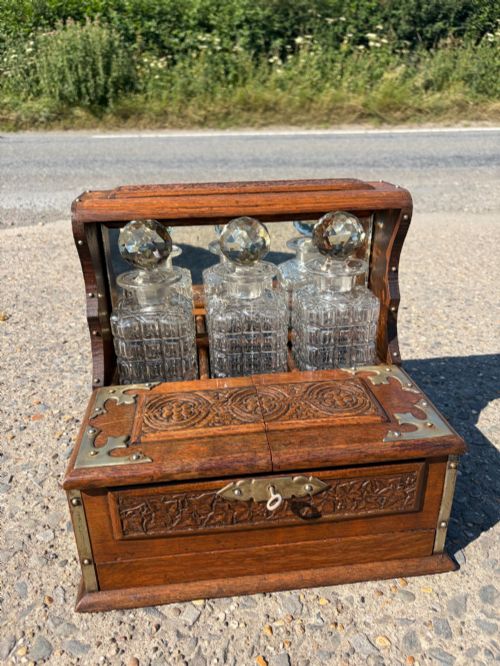
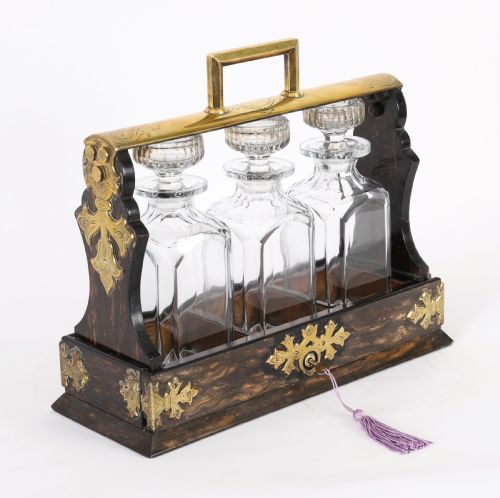


Brass Mounted Glass Decanter
A brass mounted glass decanter delivers practical service with solid period hardware, securing spirits safely inside heavy vessels.
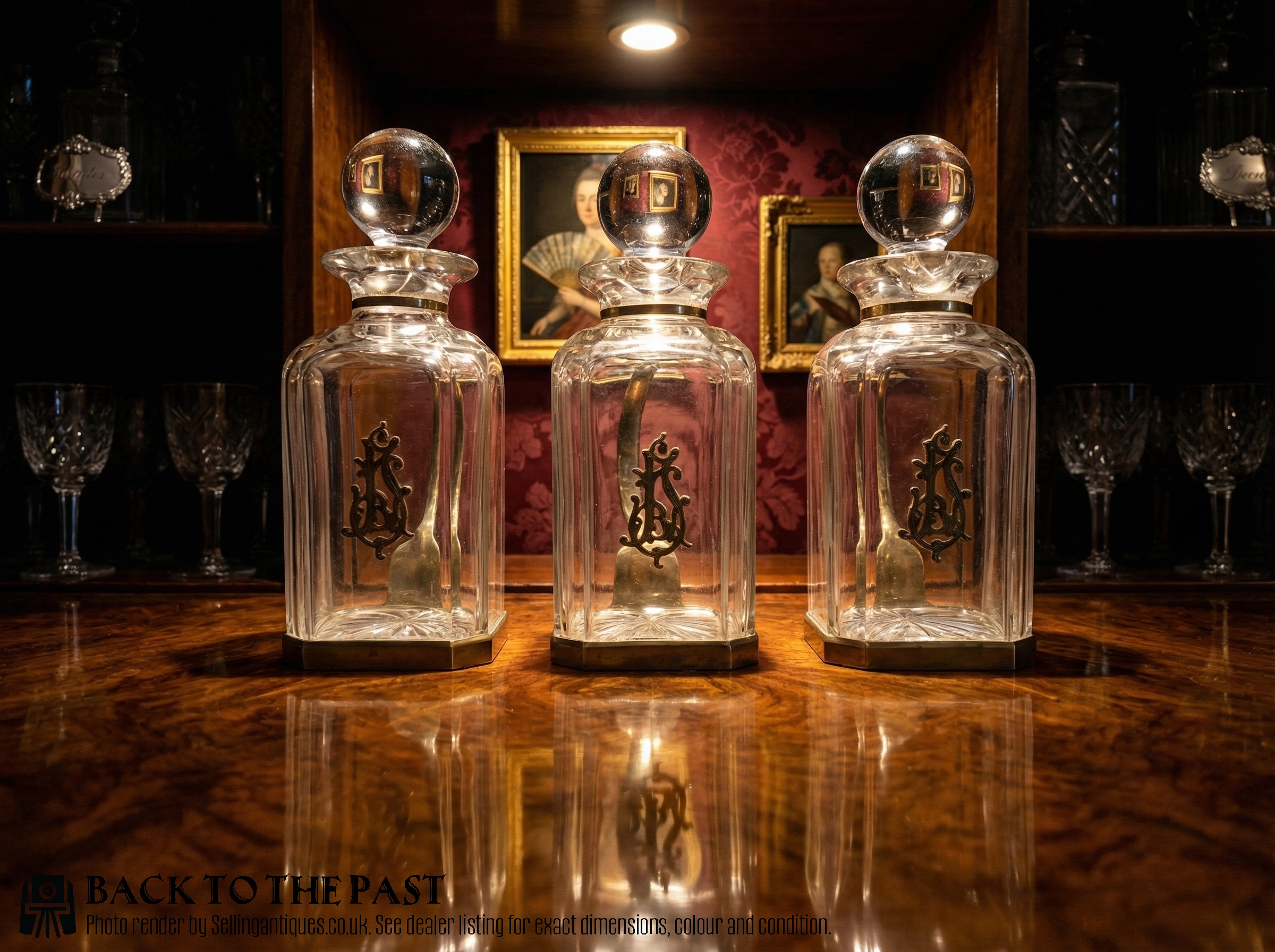
Brass Mounted Glass Decanter
A brass mounted glass decanter encompasses a variety of secure drinking vessels and serving pieces, frequently encountered as part of a tantalus or fitted box. These items span from the Georgian era through the Victorian period and into the Edwardian years, representing domestic hospitality and portable luxury.
The selections on this page include tantalus sets holding cut crystal decanters, combination game compendiums, and claret jugs. Oak and coromandel wood frequently form the housing, accented by substantial metal mounts that secure the contents against unauthorized access.
How they were made
Makers combined heavy glass and crystal vessels with structural timbers like oak and coromandel, securing the assemblies with cast brass framework and locks. Cut glass and overlay techniques created decorated surfaces on the bottles, while internal partitions kept multiple bottles or glasses stable during transport.
Joinery and metal casting formed the backbone of these pieces, utilising functional hinges, lock plates, and carrying handles. Timber surfaces received fine polishing to reveal natural grain, while glass elements underwent cutting or overlay coloration such as green glass over clear crystal.
Victorian hosts kept spirits locked in a tantalus specifically to keep the decanter stoppers safe from thirsty but light-fingered staff.
What varies in quality
The distinction between standard examples and superior pieces rests on the complexity of the housing and the quality of the materials. Fitted interiors that combine games compendiums, jewellery compartments, or multiple cut crystal decanters represent a higher tier of production than simple single-bottle stands.
Metalwork execution also dictates the grade of the piece, with substantial cast brass mounts and fully functioning locking mechanisms marking superior craftsmanship. The clarity of the cut glass and the choice of exotic timbers like coromandel further elevate the standing of an item.
The Brass Mounted Glass Decanter Glossary
- Tantalus
- A locking drink cabinet that holds decanters securely in place so the stoppers cannot be removed without a key. This mechanism prevents servants or guests from accessing the spirits while displaying the bottles clearly.
- Coromandel
- A dense, heavily figured tropical hardwood imported from Asia, often used for luxury boxes and veneer work during the nineteenth century. Its rich dark grain makes it highly prized by collectors.
- Cut Crystal
- Glass containing lead oxide that is hand-cut with geometric or floral patterns to increase its brilliance and weight. It forms the standard material for fine nineteenth-century decanters.
- Claret Jug
- A pouring vessel specifically designed for serving red wine, typically featuring a glass body fitted with metal mounts, a hinged lid, and an integral handle.
- Ormolu
- Gilded bronze applied to decorative objects, furniture, and ewers, providing a bright metallic finish that mimics solid gold.
Brass Mounted Glass Decanter: Frequently Asked Questions
How do tantalus locks work?
A tantalus utilises a metal retaining bar that passes directly over the glass stoppers of the decanters, locking into place at the side of the wooden frame. This physical barrier stops anyone from lifting the stoppers or removing the bottles from the stand.
To release the bottles, the user inserts a key into the lock mechanism, which pivots the metal bar upward and frees the vessel necks.
What is a games compendium?
A games compendium is a multi-functional box or cabinet that houses equipment for various tabletop pastimes, such as cards, dominoes, or boards, alongside other household luxuries.
In many period examples, these compendiums are integrated directly beneath or beside a decanter set to combine hospitality with entertainment.
How should I clean my decanter?
Glass decanters require gentle hand washing in warm water with mild detergent to preserve the clarity of the material and any historic residue or cut facets.
Harsh abrasives and sudden temperature changes must be avoided to protect the integrity of antique glass and any applied metal collars.
How do I date an oak tantalus?
Dating relies on examining the style of the timber housing, the complexity of the brass hardware, and the manufacturing methods visible inside the joints.
Late Victorian and Edwardian examples often feature heavy quarter-sawn oak and robust locking bars, whereas earlier Georgian pieces employ different cabinetmaking techniques and joinery.