



Brass Mounted Floral Desk
A brass mounted floral desk brings together rich marquetry and metalwork to anchor a room.
Brass Mounted Floral Desk
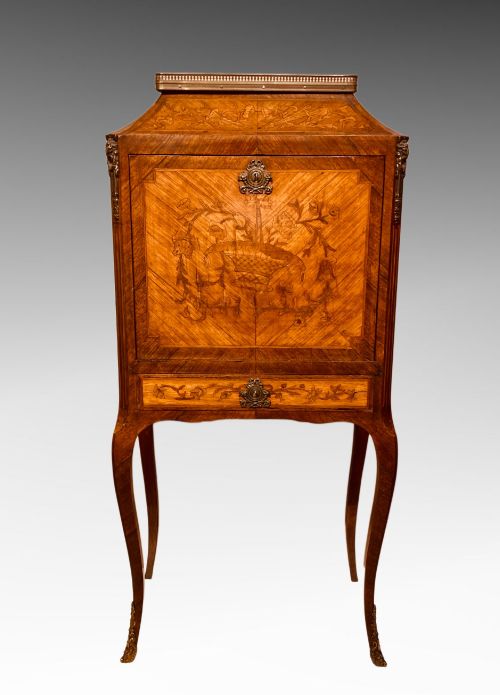
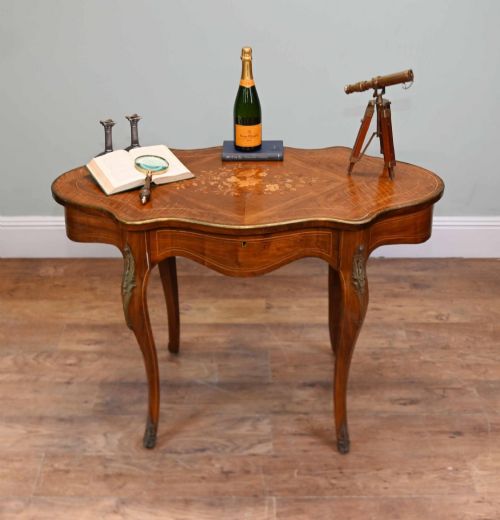
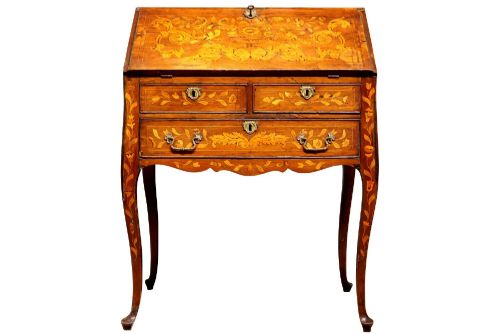
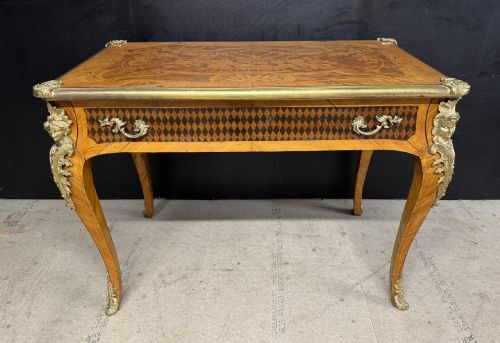
A brass mounted floral desk brings together intricate wood marquetry and metal mounts across writing surfaces, bureaux, and tables. Pieces listed under this search phrase span the nineteenth century, including Victorian examples and specific years such as 1800, 1860, 1870, 1880, 1900, and 1920.
The forms seen include writing desks, bureaux, centre tables, and dressing tables reflecting Louis XV revival, Napoleon III, and Dutch rococo styles. Buyers encounter various formats designed for writing and display, each incorporating floral motifs into the timber surface.
Materials and construction
Cabinetmakers used walnut, rosewood, fruitwood, and kingwood as the primary timbers for these surfaces. Fruitwood inlay and marquetry techniques formed the floral and foliate patterns across the tops and panels.
Mounts in brass and ormolu were cast and applied to edges, corners, and legs to frame the timber and protect vulnerable areas. Silver inlay also appears on specific nineteenth-century pieces alongside porcelain and bronze elements.
Brass Mounted Floral Desk Retail Price Guide 2026
Typical asking prices for brass mounted floral desk among the pieces listed under this phrase on Sellingantiques today, from the lower quarter to the upper quarter. They describe what is for sale here now, not the wider market.
The listings show nineteenth-century pieces spanning the Victorian era, utilising walnut, rosewood, fruitwood, and kingwood with brass and ormolu mounts.
Judging quality in marquetry and mounts
Quality rests on the precision of the floral marquetry and the crispness of the cast brass or ormolu mounts. Finer pieces demonstrate tight joins in the timber inlay and deeply chased metalwork that follows the contours of the design.
The choice of underlying wood and the complexity of the revival style dictate the standing of an individual piece. Better examples maintain balanced proportions and integrated metal mounts that complement rather than overwhelm the floral imagery.
The Brass Mounted Floral Desk Glossary
- Marquetry
- Decorative patterns formed by the insertion of pieces of veneer into a master wood matrix. This technique creates the floral designs seen on nineteenth-century surfaces.
- Ormolu
- Gilded bronze used for mounts and decorative accents. It provides a bright metallic contrast to dark timbers like rosewood and walnut.
- Bureau plat
- A flat-topped free-standing writing table with drawers in the frieze. These tables often feature elaborate floral inlay and brass mounts.
- Poudreuse
- A combination dressing table and writing desk featuring a folding top and internal compartments. These pieces date predominantly to the Victorian period.
Brass Mounted Floral Desk: Frequently Asked Questions
What is a bureau de dame?
A bureau de dame is a small ladies writing desk designed for light correspondence and private papers. They frequently incorporate sloped writing flaps and internal compartments.
These pieces typically date from the nineteenth century and reflect French revival styles featuring floral marquetry and metal mounts.
How do I care for rosewood furniture?
Rosewood requires stable humidity and protection from direct sunlight to prevent the timber from fading and drying out. Regular dusting with a dry cloth maintains the polished surface.
Avoid liquid polishes and wax buildups that can dull the fine marquetry and affect the brass mounts over time.
What distinguishes Napoleon III pieces?
Napoleon III furniture embraces eclectic revivals of earlier French styles, particularly Louis XV and Louis XVI. These items often feature heavy ornamentation, exotic veneers, and gilt bronze mounts.
Cabinetmakers of this era combined traditional marquetry techniques with innovative framing methods to create decorative centre tables and writing desks.
Are centre tables meant for the middle of a room?
Centre tables are finished on all four sides so they can stand away from walls in the middle of a space. They serve multiple purposes as display surfaces or writing tables.
Nineteenth-century examples frequently combine floral marquetry tops with elaborate underframes and brass mounts.