




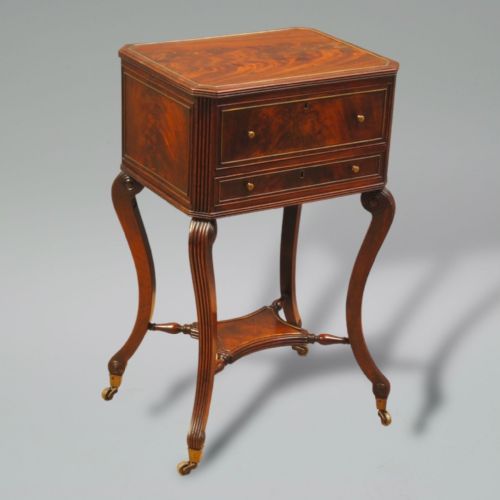

Brass Mounted End Table
A brass mounted end table brings together rich timber and metal detailing to anchor a sitting room or bedside.
Brass Mounted End Table
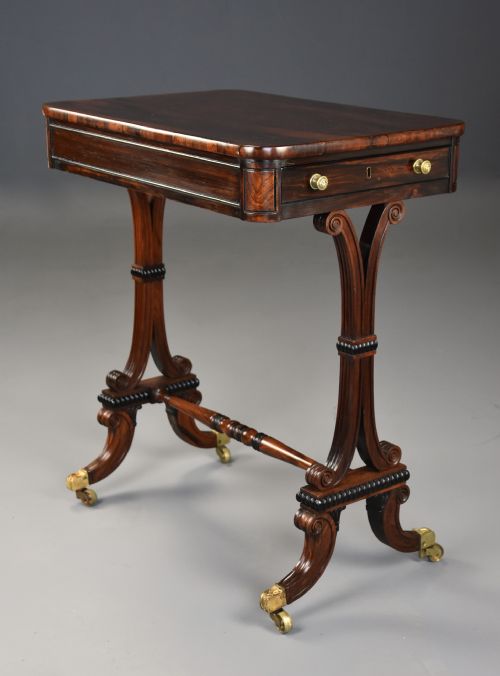
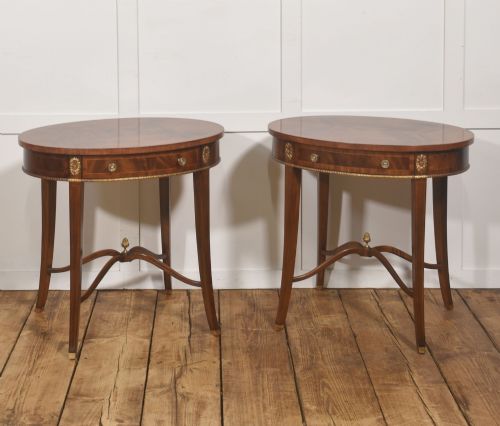
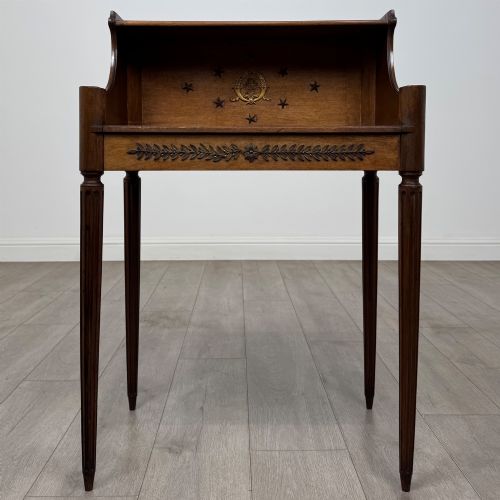
When you search for a brass mounted end table, you are looking at compact pieces designed for occasional use beside seating or beds. The selection spans the nineteenth century through to the Edwardian period and the 1930s.
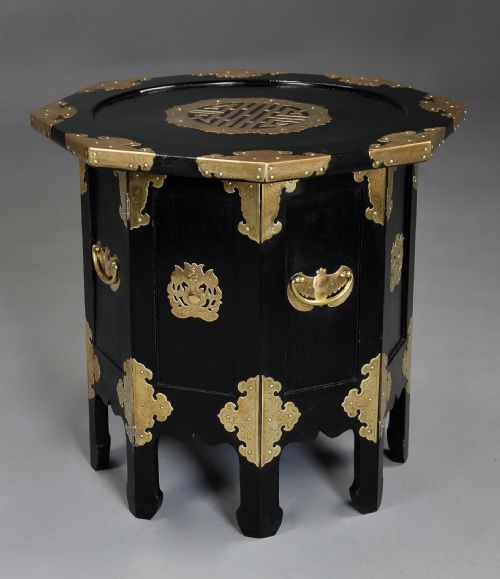
The forms you are most likely to encounter include side tables, lamp tables, and kidney-shaped bedside cabinets. Many draw on French Louis XV and Louis XVI revival styles, alongside Oriental lacquer and ebonised designs.
Materials and construction
Construction relies on timber carcases of mahogany, rosewood, kingwood, and satinwood, often enhanced by marquetry and inlay. Marble tops appear frequently on lamp and side tables.
Metalwork is integral, utilising brass mounts, ormolu, and gilded bronze to accent edges, legs, and corners. Ebonised wood and lacquer provide alternative finishes across the periods.
Brass Mounted End Table Retail Price Guide 2026
Typical asking prices for brass mounted end table among the pieces listed under this phrase on Sellingantiques today, from the lower quarter to the upper quarter. They describe what is for sale here now, not the wider market.
Listings include pieces from the nineteenth century, the Edwardian era, and the 1930s, constructed in mahogany, kingwood, rosewood, and marble.
Assessing quality
Quality rests in the crispness of the brass and ormolu mounts and the precision of the timber marquetry. Heavier use of figured veneers and marble inserts elevates the work.
Proportion and the handling of revival styles dictate the overall standard, distinguishing simple utilitarian furniture from pieces finished for formal reception rooms.
The Brass Mounted End Table Glossary
- Ormolu
- Gilded bronze applied as a decorative mount to furniture. It provides a bright metallic contrast against dark woods like mahogany and rosewood.
- Kingwood
- A dense, heavily figured exotic timber favoured in cabinet making. It often appears in contrasting marquetry panels on French style tables.
- Marquetry
- The art of applying pieces of veneer to a structure to form decorative patterns. Craftsmen use various coloured woods to create pictorial or geometric designs.
- Ebonised
- Wood treated to resemble ebony, typically through staining or painting. This finish creates a dark, uniform surface seen on Oriental style occasional tables.
- Kidney shaped
- A curved, asymmetrical tabletop design popular in bedside and lamp tables. This form allows the furniture to fit snugly against seating or beds.
Brass Mounted End Table: Frequently Asked Questions
Where should I place an end table?
These pieces suit positions beside armchairs, sofas, or beds where a small surface is useful for lamps or books. Their compact footprints make them adaptable for smaller corners.
Because they often feature decorative timber and metal mounts, placing them in well-lit areas allows the grain and metalwork to catch the light.
How do I care for marble tops?
Marble surfaces require regular dusting with a soft cloth and immediate wiping of spills to prevent staining. Avoid acidic cleaners that can etch the polished stone.
Using coasters under glasses helps protect the vintage surface from rings and moisture damage over time.
What is the difference between an occasional table and a bedside table?
Occasional tables are generally designed for living spaces to hold lamps or decorative items, featuring open frames or simpler lower shelves. Bedside versions often incorporate enclosed cabinets or drawers for concealed storage.
Both share similar compact proportions and decorative mounts, making their placement interchangeable depending on your room layout.
How can I tell the period of a table?
Dating relies on combining the wood types, construction methods, and stylistic revival influences visible in the piece. Nineteenth-century examples often lean heavily into French Louis styles.
Later Edwardian and 1930s pieces can feature simpler lines or distinct lacquer work while maintaining traditional brass mounts.