




Brass Mounted Coromandel Box
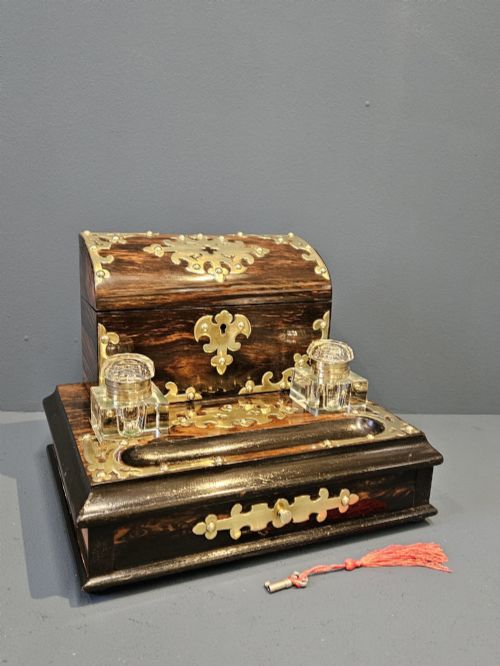
A brass mounted coromandel box brings rich timber and bright metalwork together to organise your desk or parlour.
Brass Mounted Coromandel Box
A brass mounted coromandel box is a substantial nineteenth-century container designed for writing, correspondence, or entertaining. You will frequently encounter stationary boxes, writing slopes, tea caddies, and decanter boxes across these Victorian examples.
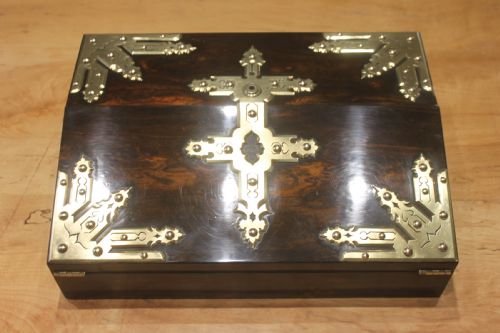
The material displays deep grain patterns paired with brass straps, corners, and mounts. Makers adapted these exotic woods into dedicated caskets, cabinets, and tantalus sets during the nineteenth century.
Materials and Technique
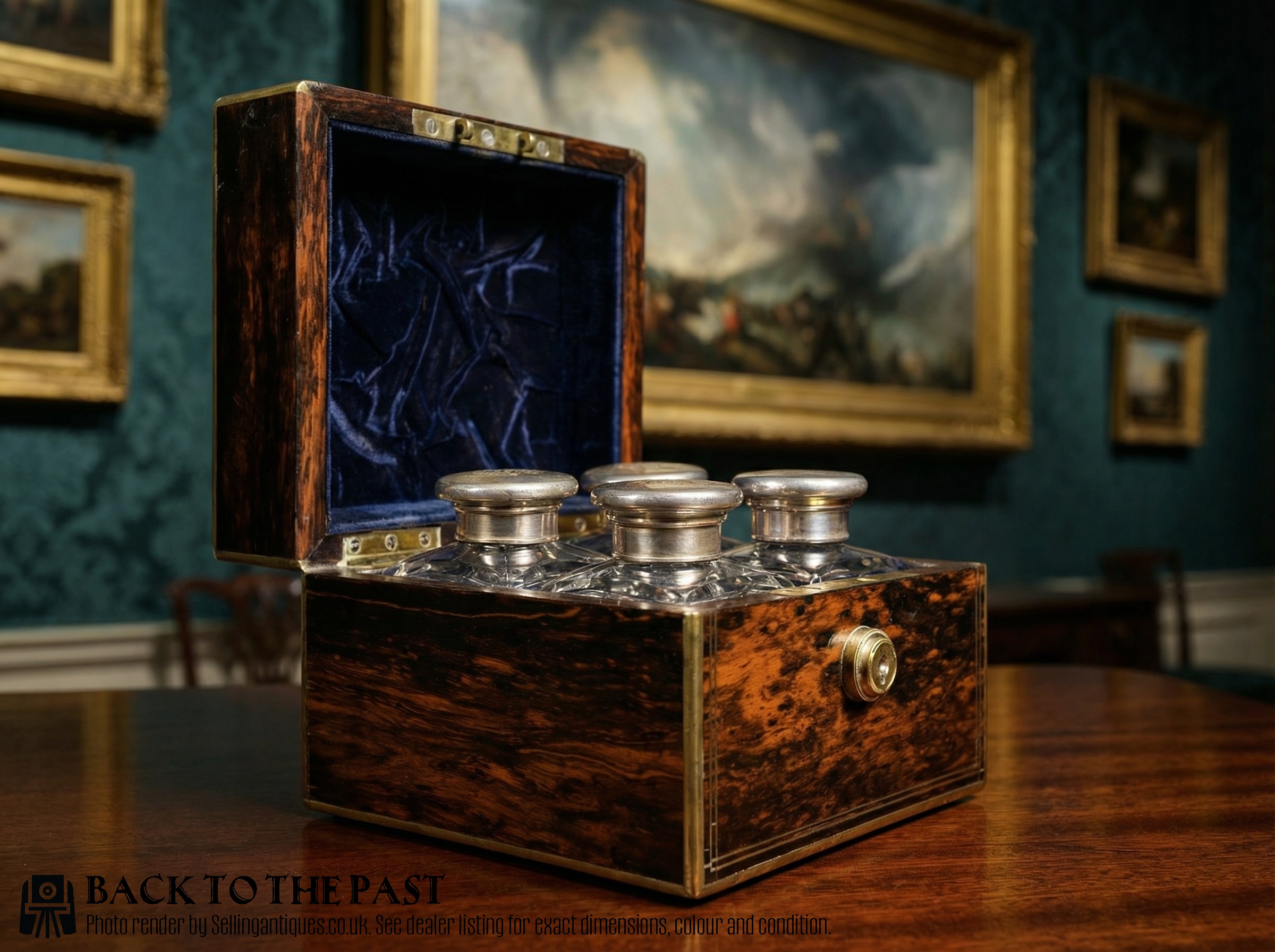
Craftsmen utilised dense coromandel wood as the primary carcass, often lining the interiors with velvet or incorporating fitted glass and cut crystal bottles. Brass mounts, or occasionally ormolu, reinforce the edges and secure the heavy timber lids.
Joinery techniques included fitted compartments, drop-front panels, and locking mechanisms to hold inkstands, stationery, or bottles securely in place.
Listings feature nineteenth-century examples spanning the Victorian period, including Gothic revival styles and specialised pieces incorporating malachite, glass, and velvet.
Design and Execution
Quality rests in the selection of the timber grain and the precision of the brass mounts fitted to the box. Better examples incorporate complex internal fittings such as multi-bottle decanter frames, games compartments, or matched inkwells.
Maker signatures on locks, hinges, or inlaid plaques elevate particular pieces, as do elaborate Gothic revival architectural details and heavy cast brass ornamentation.
Briggs 27 Piccadilly London·Houghton and Gunn·Mechi and Bazin·Parkins and Gotto London
The Brass Mounted Coromandel Box Glossary
- Coromandel wood
- A dense, heavily figured tropical hardwood showing dark brown and black stripes against a lighter fawn background. It was favoured by nineteenth-century cabinet makers for luxury luxury boxes.
- Writing slope
- A portable desk with a hinged sloping lid that opens to reveal a writing surface, pen trays, and internal compartments for paper and ink.
- Tantalus
- A locking beverage cabinet fitted with exposed decanters, designed to display the contents while preventing unauthorised access to the bottles.
- Stationery box
- A desk accessory featuring tiered slots or vertical dividers specifically arranged to hold envelopes, writing paper, and letters.
- Ormolu
- Gilded bronze mounts applied to furniture and boxes for decorative accent during the nineteenth century.
Brass Mounted Coromandel Box: Frequently Asked Questions
What is a coromandel box used for?
These boxes served specific domestic tasks in Victorian homes, functioning as portable writing desks, stationary holders, tea caddies, or spirit cabinets.
Interior fittings such as velvet linings, inkstands, and cut crystal decanters dictated whether the box belonged on a drawing room table or a library desk.
How do I date a coromandel box?
Dating relies on the structural style, such as Victorian Gothic revival architectural elements, alongside maker stamps on the brass hardware or locks.
Most examples originate from the nineteenth century, with specific decades indicated by the complexity of the internal mechanisms and brass mount designs.
Are the glass bottles original?
Many boxes retain their fitted cut crystal or glass decanters, scent bottles, and inkwells, which match the interior compartments precisely.
Checking the fit within the velvet or wooden frames helps confirm if the glassware belongs to the original manufacture of the piece.
How do I care for coromandel wood?
The dense timber requires stable room conditions away from direct heat sources and strong sunlight to prevent the grain from drying out.
Gentle dusting with a dry cloth protects the polished surface and maintains the lustre of the brass mounts without damaging the wood.