





Victorian Coromandel Slope
These Victorian coromandel slopes are dense, richly figured writing boxes built to hold correspondence and stationery in the nineteenth century.
Victorian Coromandel Slope
A victorian coromandel slope is a portable writing box typically constructed during the nineteenth century, most frequently appearing in standard sloping forms alongside stationery cabinets and drop-front boxes. These objects were designed for correspondence, featuring hinged lids that open to reveal writing surfaces and internal compartments.
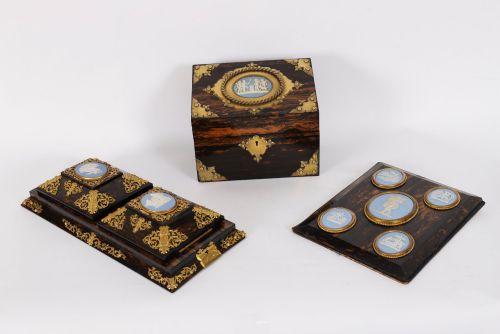
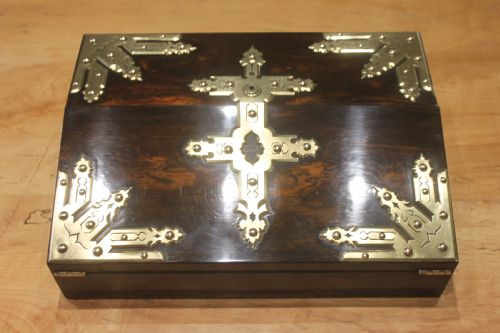
The pieces listed on this page span several decades of the Victorian era, including Gothic Revival and Anglo-Indian variants. Alongside traditional writing boxes, buyers encounter desk accessories and cutlery boxes sharing the same dense timber.
How they were made
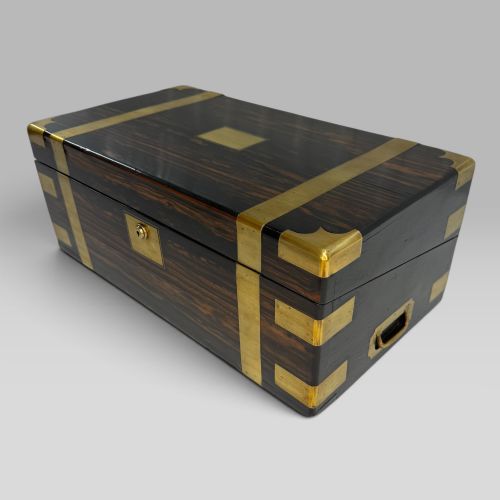
Constructed primarily from coromandel wood, these pieces rely on the timber's heavy density and intricate grain patterns for their visual impact. Makers frequently combined this dark wood with brass banding, mother of pearl, and abalone inlay to accent the exterior surfaces.
Internal architecture often incorporates secret drawers, fitted glass inkwells, and silver plate mounts. Ebony and walnut appear alongside coromandel in multi-material boxes, demonstrating complex cabinetmaking techniques of the period.
Victorian Coromandel Slope Retail Price Guide 2026
Typical asking prices for victorian coromandel slope among the pieces listed under this phrase on Sellingantiques today, from the lower quarter to the upper quarter. They describe what is for sale here now, not the wider market.
Listings feature nineteenth-century pieces incorporating brass, mother of pearl, abalone, and glass alongside coromandel wood.
What varies in quality
Quality rests upon the selection of the coromandel veneer and the precision of the brass or mother of pearl inlay. Pieces displaying deeply figured grain and complex internal mechanisms such as concealed drawers command greater attention.
The reputation of the maker and the integration of specialised locking systems differentiate standard production boxes from exceptional examples.
Briggs 27 Piccadilly London·Houghton and Gunn·Mechi and Bazin·Lund of London
The Victorian Coromandel Slope Glossary
- Coromandel wood
- A dense and heavy timber imported from Asia, characterised by rich brown and black striping. It was heavily utilised for high-end Victorian luxury boxes.
- Writing slope
- A portable box with a slanted lid that opens to provide an inclined surface for writing. Internal compartments typically store paper, pens, and inkwells.
- Secret drawers
- Concealed compartments built into the interior of writing boxes, often accessed by removing secondary panels or releasing hidden spring catches.
- Bramah lock
- A high-security patented lock mechanism commonly found on quality nineteenth-century boxes, operated by a specialised cylindrical key.
- Stationery cabinet
- A vertical desk accessory designed to hold writing paper and envelopes upright, often featuring a drop front or tambour door.
Victorian Coromandel Slope: Frequently Asked Questions
What is a Victorian coromandel slope?
A Victorian coromandel slope is a portable desk made from dense exotic timber, featuring a sloping lid that opens for writing.
These boxes contain fitted compartments for inkwells, pens, and paper, often including hidden drawers.
How do I use a writing slope today?
A writing slope functions as a decorative desk organizer or a secure container for modern stationery and letters.
The sloping lid provides a solid writing surface when placed on a modern table.
What materials are used on these boxes?
These boxes are built from coromandel wood, an Asian timber known for dark contrasting grain.
Makers embellished the wood with brass binding, mother of pearl inlay, and glass or silver-plated accessories.
How can I tell the age of a slope?
Dating relies on materials, construction methods, and maker marks associated with the nineteenth century.
Stylistic shifts like Gothic Revival details or specific brass hardware help narrow the decade of manufacture.