
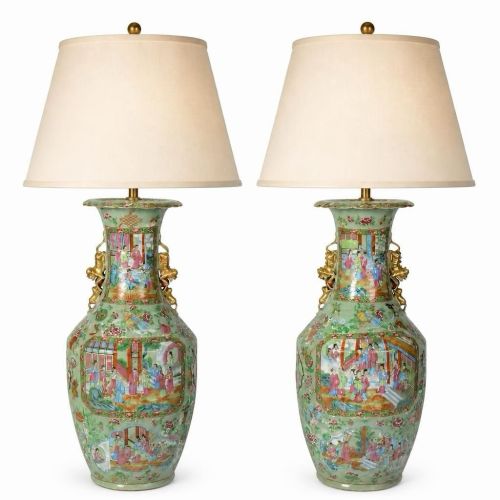
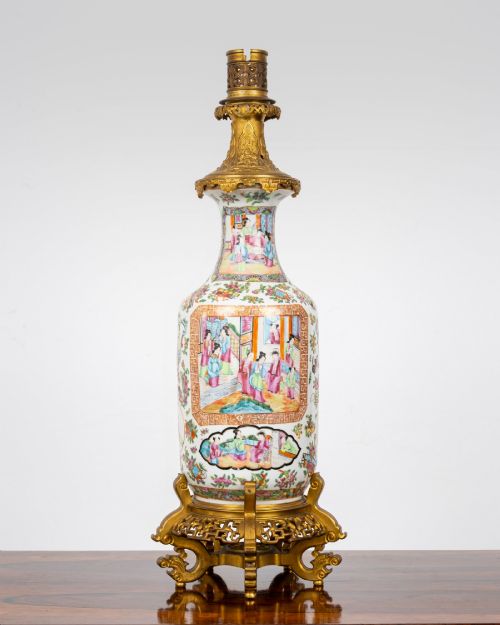


Brass Mounted Chinese Lamp
A brass mounted chinese lamp brings together hand-painted porcelain and metalwork, offering soft illumination and distinct character to a room.
Brass Mounted Chinese Lamp
A brass mounted chinese lamp typically begins life as a nineteenth century porcelain vessel, later converted for domestic lighting. Buyers seek these pieces for their decorative presence and historical integration of Eastern ceramics with European metalwork.
The selections span blue and white ginger jars, celadon vases, and polychrome vessels decorated in the Famille Verte or Rose palettes. Many examples arrive as matched pairs, though single monumental display pieces also appear.
Vessels are mounted with brass, gilt bronze, or ormolu to secure electrical fittings and create stable table lamp bases. These mounts often reflect French nineteenth century taste applied to imported porcelain bodies.
Materials and Craftsmanship
The body of each lamp relies on hard-paste porcelain, crackleware, or cloisonne enamel formed in China during the nineteenth century or earlier. Potters shaped baluster vases, ginger jars, and octagonal vessels before applying detailed hand-painted glazes and enamels.
Metalworkers then fitted custom brass or gilt bronze collars, bases, and neck mounts to secure the ceramic without causing damage. Fabric and silk shades complete the structure, often paired with modern re-wiring to ensure safe operation.
Several heavy vases hide their conversion roots so thoroughly that they still look ready to store imperial spices.
Distinctions in Quality
Quality rests upon the crispness of the hand-painted ceramic decoration and the integrity of the porcelain body. Finer examples display precise brushwork in palettes like Famille Verte or Rose, alongside well-balanced proportions.
The execution of the metal mounts dictates much of the visual success. Finely cast brass or gilt bronze mounts that complement the contours of the vase elevate the piece above simpler conversions.
The Brass Mounted Chinese Lamp Glossary
- Famille Verte
- A porcelain palette dominated by green enamels, popular in Chinese ceramic decoration. This style frequently appears on nineteenth century vases converted into lamps.
- Cloisonne
- A technique where metal wire is soldered to a base to create cells, which are then filled with enamel paste and fired. It produces intricate, multi-coloured decorative surfaces.
- Ormolu
- Gilt bronze mounted or applied to decorative objects, originating from French manufacturing traditions. It provides a bright golden finish to the metal collars of the lamp.
- Ginger Jar
- A high-shouldered storage jar with a domed lid, commonly adapted for domestic lighting. These vessels form a robust and symmetrical base for a table lamp.
- Celadon
- A pale green or grey-green jade-like glaze applied to porcelain. This finish is characteristic of early nineteenth century pieces.
Brass Mounted Chinese Lamp: Frequently Asked Questions
How do I choose the right shade?
Select a fabric or silk shade that balances the visual weight of the ceramic base and allows adequate light diffusion.
Ensure the colour tone of the shade complements the hand-painted motifs on the porcelain without competing with them.
Can the original vase be damaged?
Reputable conversions use secure brass mounts designed to grip the neck or base without drilling or cracking the porcelain.
Careful mounting preserves the structural integrity and historical value of the underlying ceramic vessel.
How do I identify a nineteenth century piece?
Examine the weight and texture of the porcelain, alongside the style of hand-painted enamels and the casting quality of the brass mounts.
Comparison with documented Qing dynasty and export wares helps confirm the period of manufacture.