



Brass Mounted Casket Box
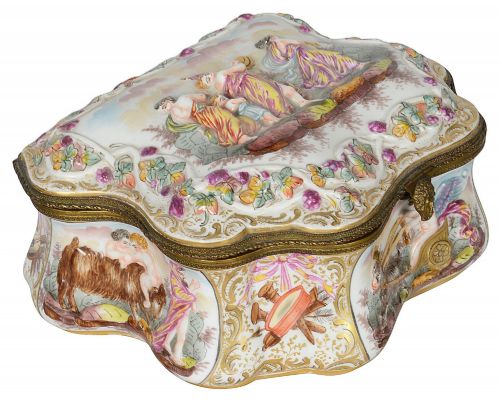
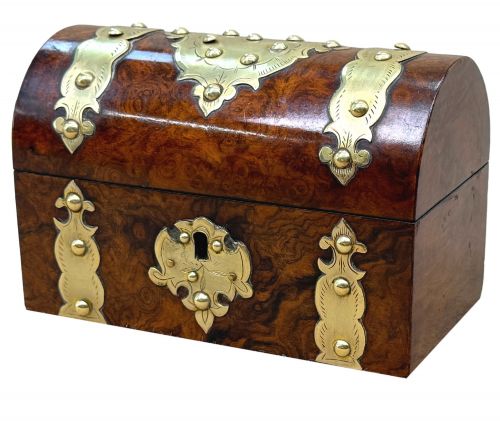
A brass mounted casket box brings heavy timber and bright metal together to hold correspondence, trinkets and stationery on a desk.
Brass Mounted Casket Box
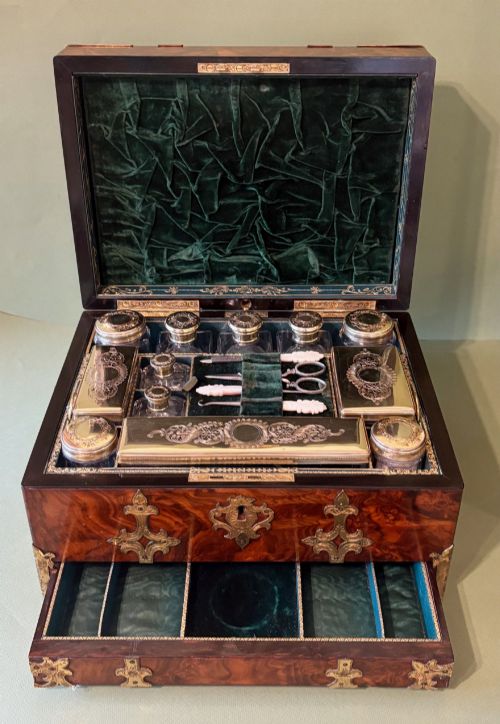
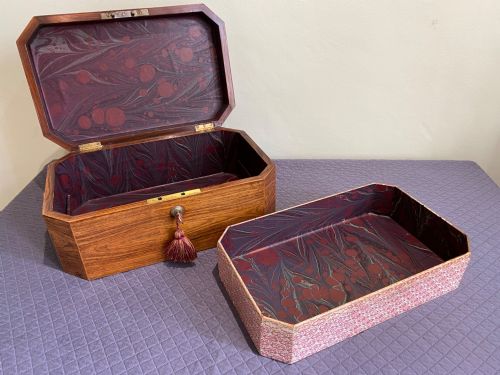
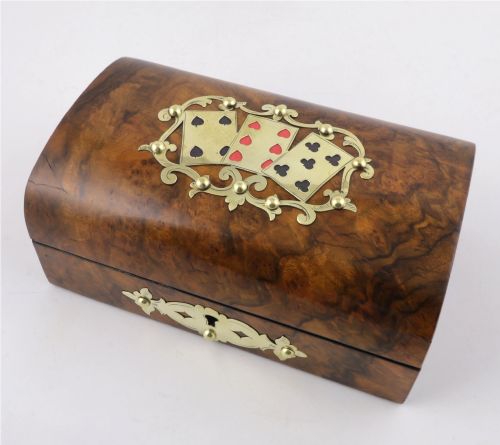
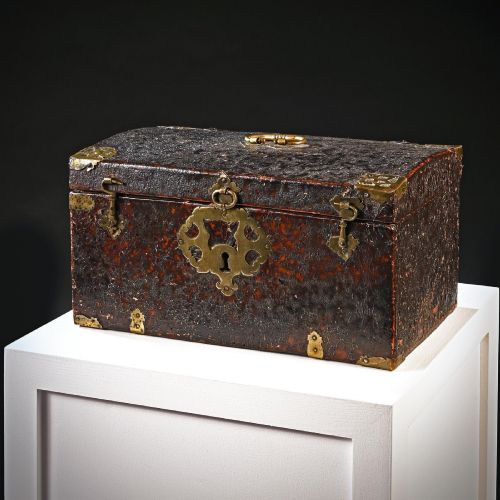
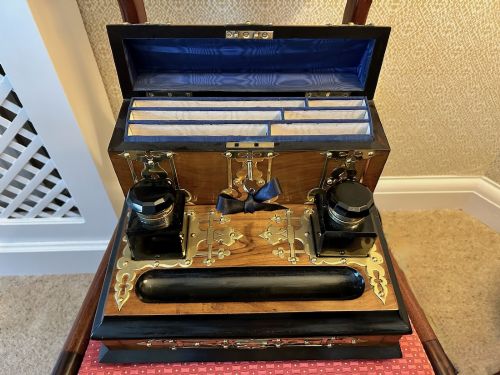
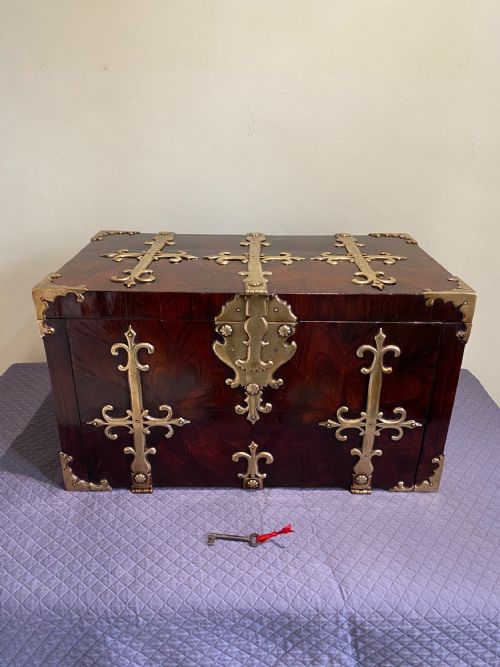
A brass mounted casket box takes many forms across the centuries, appearing as stationery boxes, jewellery caskets, writing slopes and games boxes. Buyers searching this phrase meet domestic containers built for specific duties, ranging from simple 17th century leather travelling trunks to elaborate Victorian walnut stationary cabinets.
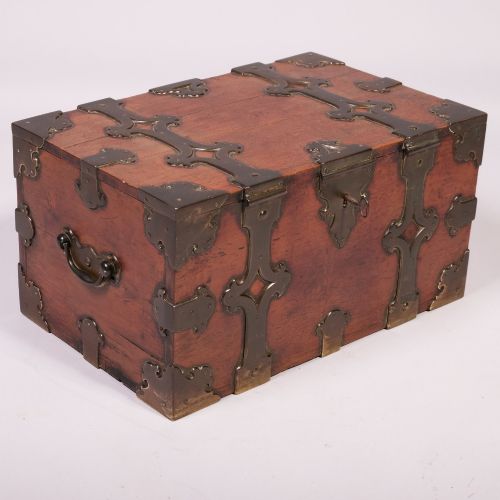
The majority of pieces encountered here date from the 19th century and the Victorian era, utilising dense woods mounted with brass straps, hinges and escutcheons. Alongside these utilitarian and decorative receptacles, earlier Georgian and 18th century examples surface alongside pieces displaying Regency, Gothic Revival and Art Nouveau tendencies.
Materials and construction
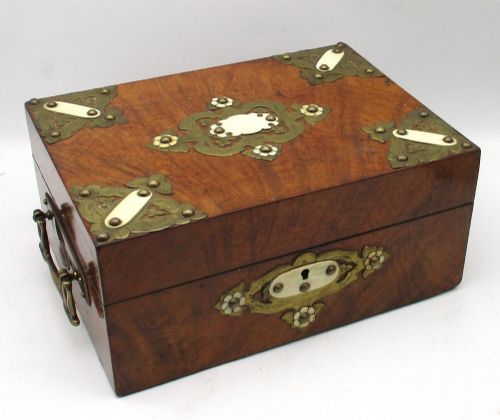
Cabinet makers constructed these caskets from substantial timbers including walnut, burr walnut, mahogany, coromandel, rosewood and oak, often over pine carcases. Veneers were laid carefully across surfaces to highlight dramatic grain patterns before being fitted with brass mounts.
Metalwork played a structural and decorative role, with brass bands, straps and corners screwed or pinned into the timber to reinforce joints and edges. Locks, handles and escutcheons were cast or engraved, securing the lids and drawers of each container.
Secret compartments hidden behind false panels meant nobody got into the diary without a crowbar or the right press of a hidden peg.
Assessing quality
Quality rests in the selection of timber veneers and the precision of the brass work fitted to the exterior. Dense burr walnut, coromandel and amboyna indicate superior workshops, whilst plain woods serve simpler domestic duties.
The integration of the hardware dictates the standard of execution, showing whether brass mounts sit flush into recessed channels or merely lie upon the timber surface. Fitted interiors lined in leather, silk or velvet also separate standard boxes from luxury receptacles.
The Brass Mounted Casket Box Glossary
- Casket box
- A covered container for storing valuables, documents or domestic items. These objects often feature secure locks and reinforced corners.
- Stationery box
- A desktop cabinet designed to hold writing paper, envelopes and ink. They frequently incorporate tiered interiors and sloping lids.
- Escutcheon
- A protective plate surrounding a keyhole. On these pieces, brass escutcheons often anchor the locking mechanism to the wooden body.
- Ormolu
- Gilded bronze or brass applied to furniture and boxes for decoration. This material provides bright metallic contrast against dark timbers.
- Burr walnut
- Timber taken from walnut tree growths, yielding intricate swirling grain patterns. It was favoured for high-status Victorian boxes.
Brass Mounted Casket Box: Frequently Asked Questions
What is a brass mounted casket box?
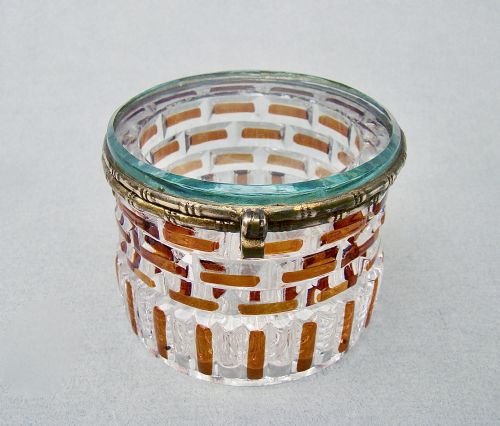
It is a lidded container fashioned from wood, leather or glass and strengthened with brass hinges, bands and locks. These boxes served various rooms in the house for safekeeping.
Craftsmen built them to hold jewellery, stationery, playing cards and medical bottles. The metal mounts protected vulnerable corners during travel and daily use.
How do I date a wooden box?
Dating relies upon observing the timber species, construction methods and the style of the brass hardware. Regency and Victorian boxes often display distinct veneer choices and lock designs.
Earlier pieces from the 17th and 18th centuries utilise solid woods and heavier iron or brass strapwork. Examining internal paper linings and hinges helps narrow down the decade of manufacture.
Where were these boxes used?
They sat on writing desks, dressing tables and parlour sideboards in homes of substance. Travelling examples accompanied owners on coaches and ships.
Stationery boxes remained in libraries and studies, while jewellery caskets stayed in bedrooms. Their portable nature allowed them to move between private and public family spaces.
How do I clean the wood and brass?
Maintenance requires gentle dusting with a dry cloth to protect fragile veneers and polish. Harsh chemical cleaners strip historical finishes from the timber.
Brass mounts benefit from careful cleaning with a soft cloth to avoid staining adjacent wood surfaces. Natural wax preserves the sheen of both metal and polished timber.