




Antique Leather Casket Box
An antique leather casket box is a portable repository for valuables, prized for tactile surfaces and period craftsmanship.
Antique Leather Casket Box
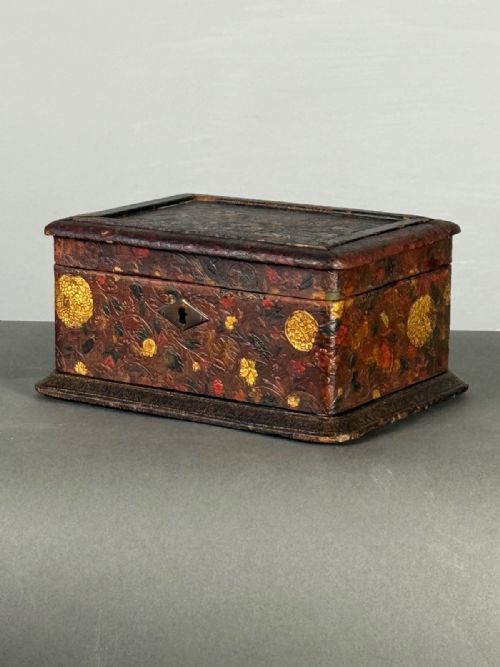
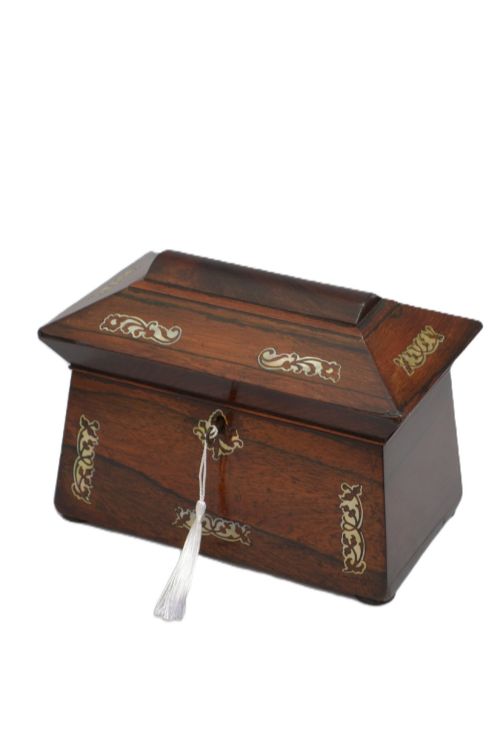
An antique leather casket box encompasses receptacles designed for jewellery, letters, scent bottles, and travel, spanning from the seventeenth century through the twentieth century. The selection leans heavily towards nineteenth-century examples, including Regency wood and leather boxes and fully fitted Victorian jewellery cases.
Buyers encounter diverse formats, ranging from diminutive trinket boxes and faux book caskets to larger trunks, chests, and travelling sets equipped with glass bottles. Origins bridge England and France, utilising traditional forms like the chasse or dome-topped caskets.
Construction utilises wood cores or metal frames beneath exterior hides, creating sturdy containers suited for dressing tables and writing desks. These pieces reflect the domestic habits and travel requirements of past eras.
Materials and construction
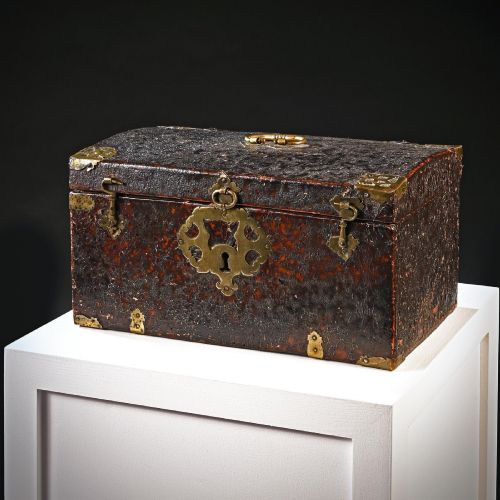
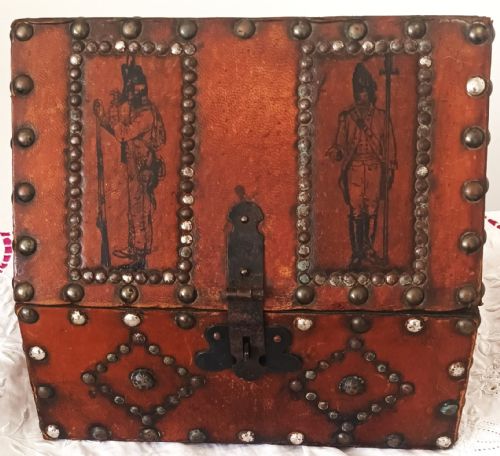
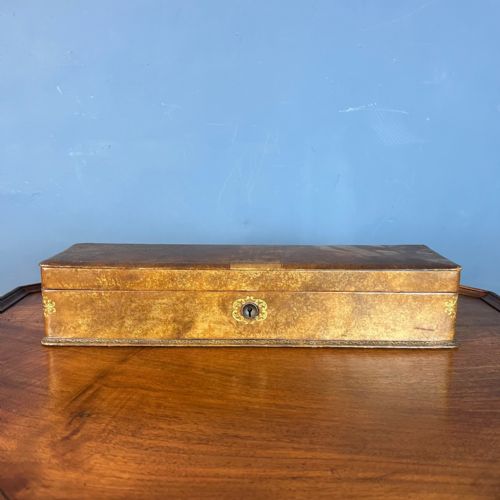
Artisans built these caskets using wood or metal foundations covered in leather, crocodile skin, or pig's skin, often applying gold leaf and tool work for surface decoration. Exterior hides are secured with brass mounts, gilt-brass mounts, or bronze hardware.
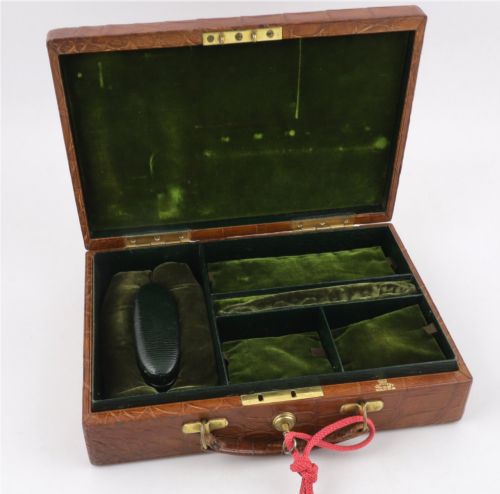
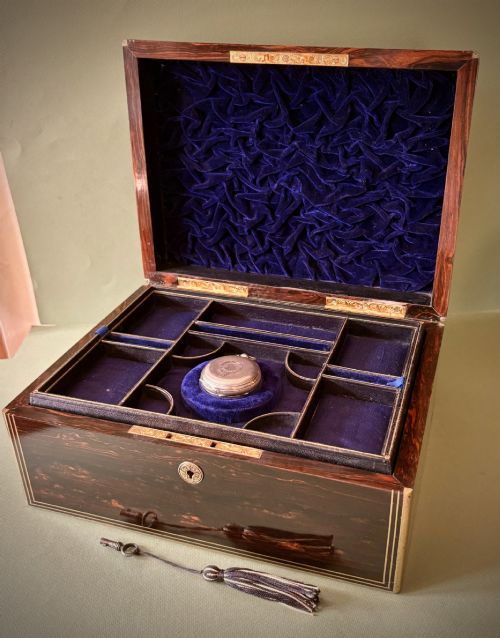
Interiors frequently feature linings of velvet and fitted compartments designed to hold watches, cufflinks, sewing implements, or perfume bottles. Structural details include rosette-shaped brass mounts, claw and ball feet, and engraved identification plates.
The inventory spans the seventeenth century through to Art Deco pieces from the nineteen-twenties and nineteen-fifties.
Assessing quality
Quality rests upon the preservation of the exterior leather and the intricacy of the tooling, whether gold leaf, embossing, or fine reptile skins. Superior examples retain their original internal fittings, velvet linings, and matching glass bottles without replacement.
Hardware integrity defines the tier of a piece, distinguishing boxes with substantial brass mounts, bronze details, and working locks from simpler containers. The cohesion of period details, from claw and ball feet to bespoke engraving, marks superior workshop production.
Susse Freres Paris·J C Vickery
The Antique Leather Casket Box Glossary
- Chasse
- A reliquary-style box with a pitched roof shape, adapted in Georgian and later periods for domestic use as a casket.
- Russia-leather
- A traditional leather finish treated with birch oil, imparting a distinct scent and durable red or brown surface frequently seen on Regency work-boxes.
- Tooled leather
- Leather decorated by pressing heated metal tools into the surface, often enhanced with gold leaf application.
- Writing slope
- A portable desk box featuring a hinged writing surface that folds down, often combined with compartments for jewellery and sewing.
- Travelling box
- A robustly constructed container designed for journeys, featuring secure locks and fitted interiors to protect glass bottles and valuables.
Antique Leather Casket Box: Frequently Asked Questions
What were antique leather casket boxes used for?
These boxes served domestic and travel purposes, safeguarding precious items such as jewellery, writing instruments, sewing gear, and perfume bottles.
Owners kept them on dressing tables, writing desks, or packed them inside luggage during journeys to protect fragile personal belongings.
How do I identify a Regency period box?
Regency boxes often exhibit classical proportions, specific hide treatments like red Russia-leather, and characteristic brass feet or mounts.
They frequently date from the early nineteenth century and may include internal compartments for writing or sewing.
Are crocodile leather boxes authentic antiques?
Yes, genuine nineteenth and early twentieth-century boxes utilise real crocodile, alligator, or pig skin over sturdy wood frames.
These pieces reflect the luxury goods market of the Victorian and Edwardian eras, complete with original silk or velvet linings.
How should I care for antique leather?
Maintain the material by keeping it away from direct sunlight and extreme humidity fluctuations to prevent the hide from drying or cracking.
Avoid heavy modern chemical cleaners and consult a specialist for advice on preserving historic leather and gold tooling.