

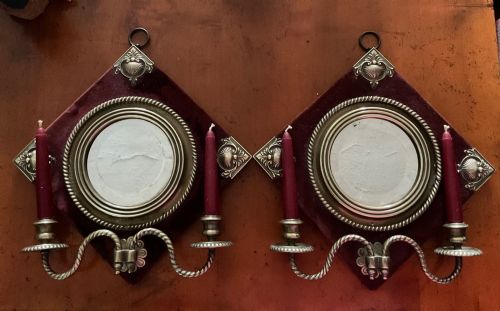


Brass Mirror Wall Sconces
Brass mirror wall sconces catch light and throw it across a room, combining reflective glass with metal work across periods from the eighteenth century onward.
Brass Mirror Wall Sconces
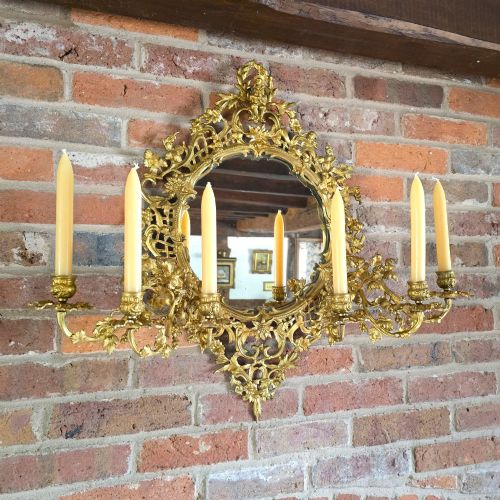
Brass mirror wall sconces combine reflective surfaces with candle or lamp holders, functioning simultaneously as decorative wall lights and mirrors. When you browse for brass mirror wall sconces, you encounter forms ranging from simple Victorian brass frames to elaborate French ormolu girandoles.
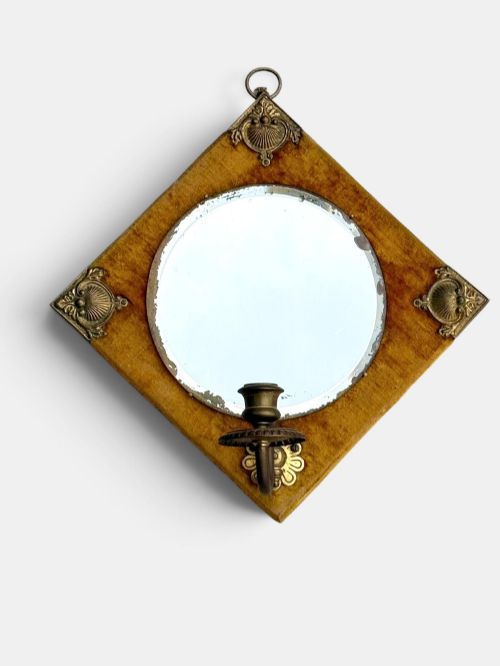
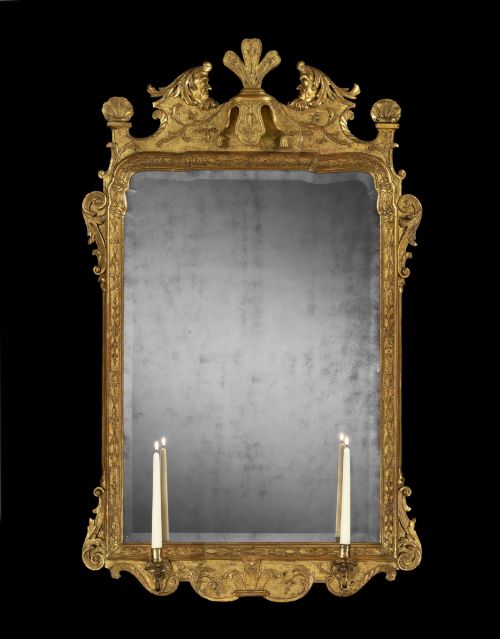
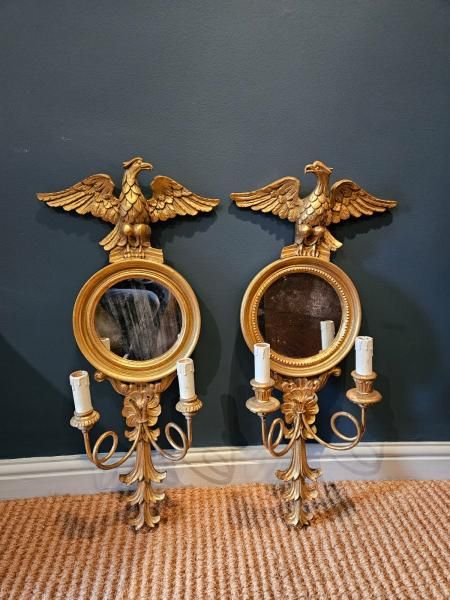
The selection includes matched pairs and single pieces spanning the Victorian and Edwardian eras, alongside earlier eighteenth century George I examples and nineteenth century French designs. Materials extend beyond brass to incorporate glass, giltwood, gilt bronze, velvet, wood, and metal.
Stylistic variation is wide, taking in French Rococo Revival, Regency, Arts and Crafts, Chinoiserie, and Anglo-Indian aesthetics. Many pieces feature integrated candle branches, known as girandoles, designed to multiply the illumination within a room.
How they were made
Maker's methods relied on combining cast or beaten brass and bronze with mirrored glass plates, often set into wooden or gilt frames. Metal components were shaped through casting, chasing, and gilding, while backing boards provided structural support for the wall mounts.
Candle arms and girandole branches were securely fixed to the main frame to support the weight of the metal and glass. Reflective plates were cut to fit specific frame shapes, ranging from simple geometric borders to ornate Rococo scrolls and rope twist designs.
Materials documented in the inventory include glass, brass, mirror glass, giltwood, gilt bronze, velvet, wood, and metal.
What varies in quality
Quality rests in the crispness of the metal casting and the depth of the chasing on brass, bronze, and ormolu mounts. Finer examples show sharp detail in decorative motifs like foliage, scrolls, and figures without softness or loss of definition.
The integration of the mirror plate within the frame also dictates the standard of the piece, with heavier backing construction and better preservation of the glass and gilding marking out superior examples from simpler production.
The Brass Mirror Wall Sconces Glossary
- Girandole
- A decorative wall mirror featuring integrated candle sconces designed to reflect and amplify candlelight. These fixtures were often produced in matched pairs during the nineteenth century.
- Ormolu
- Finely ground high-carat gold applied to a bronze base, commonly found on French nineteenth-century lighting and mirrors. This technique gives a bright, durable golden finish.
- Gilt bronze
- Metal cast in bronze and subsequently covered with a thin layer of gold or gilt finish. It offers substantial weight and sharp detail for decorative wall fixtures.
- Aesthetic Period
- A late nineteenth-century design movement that emphasised visual beauty over narrative content, often incorporating diverse cultural influences like Anglo-Indian motifs. Pieces from this time frequently use mixed metals such as brass and copper.
- Rococo Revival
- A nineteenth-century style drawing on eighteenth-century French design, characterised by asymmetrical scrolls, naturalistic foliage, and ornate curving forms. This style appears frequently on girandoles and mirrored wall sconces.
Brass Mirror Wall Sconces: Frequently Asked Questions
How do I hang a heavy brass mirror sconce safely?
Heavy brass and bronze sconces require secure wall fixings, preferably anchored directly into wall studs or masonry rather than plaster alone. Because these pieces carry the weight of metal frames and glass plates, proper load-bearing brackets are essential.
Ensure the mounting hook matches the hanging loop or bracket on the back of the specific piece. Distributing the weight evenly prevents strain on the structural joints of the frame.
Were these sconces meant for candles or electricity?
Original brass mirror wall sconces were designed for candles, with drip pans and branching arms configured to hold wax tapers safely. Many surviving examples retain their authentic candle sockets.
Some pieces have been professionally adapted for electric lighting over time. Check the wiring and fittings of individual listings if you intend to use them as functional electric wall lights.
How do I clean antique brass and mirror glass?
Clean brass surfaces gently with a soft, dry cloth to remove dust without disturbing the aged patina. Avoid harsh chemical polishes that can strip original gilding or historical patination from the metal.
For mirror glass, use a mild glass cleaner applied to a cloth rather than sprayed directly onto the glass. This prevents moisture from seeping behind the plate and damaging the silvering or the surrounding wooden backing.
How can I tell a Victorian sconce from an Edwardian one?
Victorian brass mirror sconces often lean towards heavier ornamentation, incorporating Rococo Revival scrolls, cast brass frames, and rope twist designs. They reflect the mid-to-late nineteenth century taste for ornate decoration.
Edwardian pieces frequently show the influence of the Arts and Crafts movement or simpler vernacular styles. You may notice alternative materials like velvet mounts alongside more restrained brass detailing.