

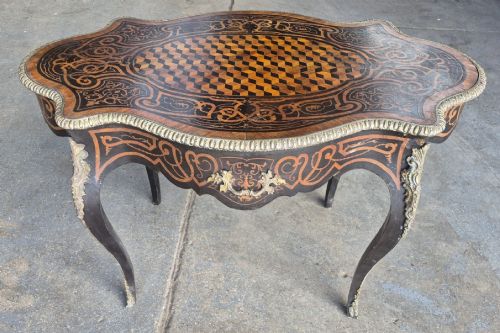
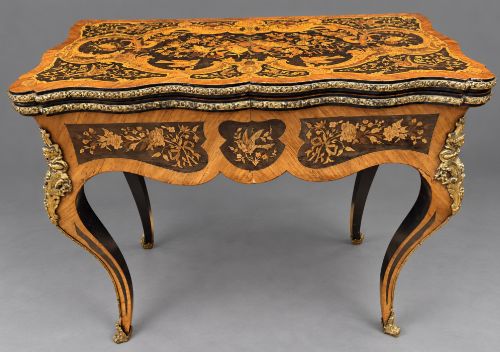
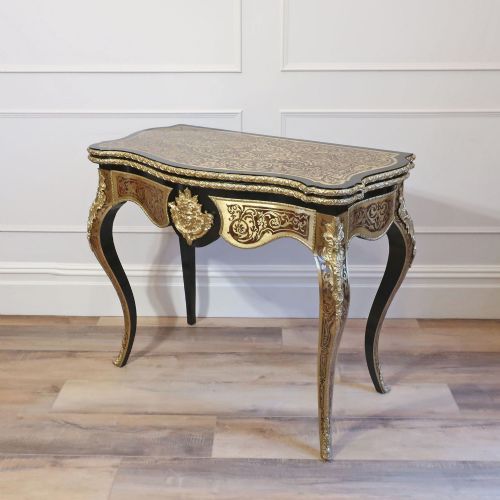
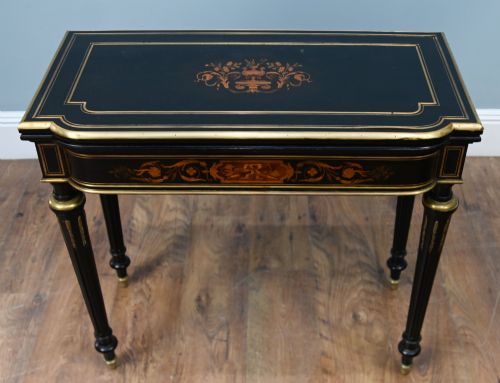
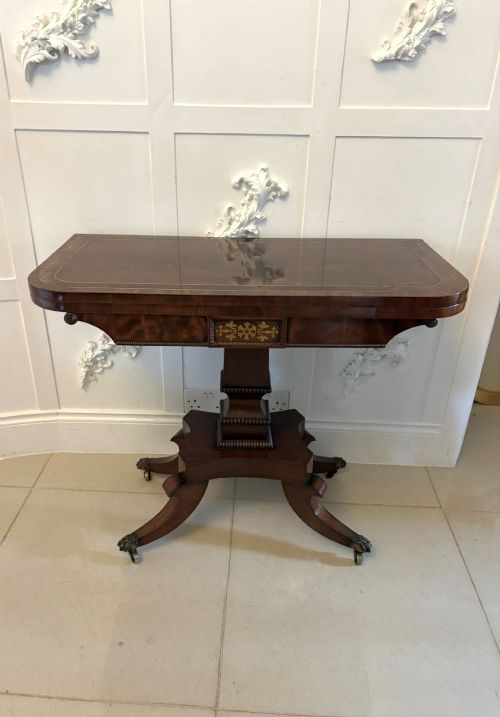

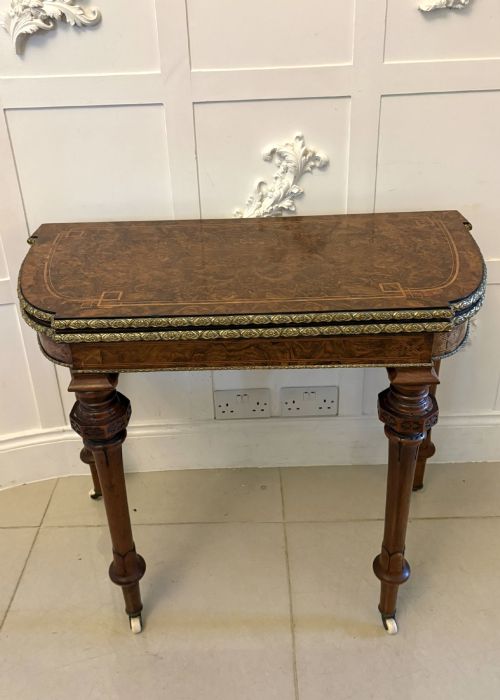
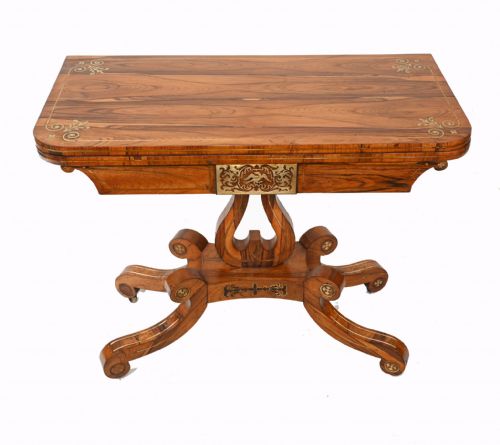


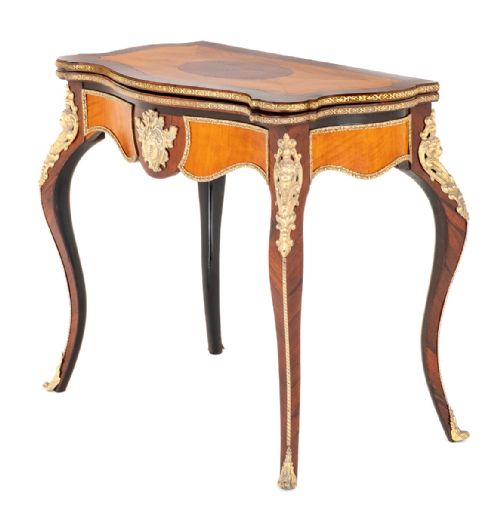

Brass Marquetry Games Table
A brass marquetry games table combines fine timber, polished metal inlay, and a fold-over top designed for cards and social evenings.
Brass Marquetry Games Table
A brass marquetry games table brings together decorative metalwork and rich cabinet woods to create a dual-purpose piece for entertaining. When searching for a brass marquetry games table, buyers encounter folding card tables, console tables, and side tables configured for parlor use.
The selections span the Regency and Victorian eras, alongside Louis XV and Louis XVI Revival styles influenced by French design. Mahogany, rosewood, walnut, kingwood, and burr walnut provide the primary foundations for these inlaid surfaces.
Most examples date from the nineteenth century, including pieces reflecting French Napoleon III production and English Regency cabinet making. These tables function as occasional display surfaces when closed and as playing surfaces when opened.
Materials and construction
Cabinet makers utilised dense hardwoods such as rosewood, walnut, and mahogany as the base structure for folding tops and friezes. Cross-banding and exotic wood veneers frame the primary timber panels to create balanced visual depth.
Brass wire and sheet metal form intricate scrollwork and floral marquetry, often paired with ormolu mounts and gilt bronze accents. Mother-of-pearl detail sometimes supplements the brass inlay to add further contrast against ebonised or polished timber.
Joinery techniques allow the fold-over top to pivot smoothly on hinges, supported by fold-out legs or a rotating mechanism that conceals a small storage well inside the frame.
Brass Marquetry Games Table Retail Price Guide 2026
Typical asking prices for brass marquetry games table among the pieces listed under this phrase on Sellingantiques today, from the lower quarter to the upper quarter. They describe what is for sale here now, not the wider market.
Listings feature nineteenth-century furniture spanning Regency, Victorian, and French Louis XV and XVI revival styles.
Factors determining quality
The precision of the brass inlay work dictates the primary visual standard, noting how cleanly the metal sits flush within the surrounding timber veneer. Finer examples display intricate hand-cut lines and tightly secured brass scrolls that remain level with the polished wood surface.
The choice of underlying timber and veneer selection separates standard production from exceptional cabinet work, particularly where figured rosewood, burr walnut, or kingwood is employed. Heavy grain matching across the fold-over leaves indicates greater care during construction.
The integration of cast ormolu mounts, bronze accents, and structural hinges contributes to the overall stability and finish of the table when opened and closed.
George Bullock·Maison Millet·Edwards & Roberts
The Brass Marquetry Games Table Glossary
- Marquetry
- Decorative patterns formed by fitting thin pieces of wood, brass, or other materials into a veneer background. This technique defines the patterned tops characteristic of nineteenth-century French and English parlour furniture.
- Boulle work
- A specific style of marquetry using brass and tortoiseshell or brass and dark horn inlaid together. Named after French cabinet maker André-Charles Boulle, it appears on nineteenth-century revival side and card tables.
- Ormolu
- Gilt bronze mounts applied to furniture for decorative effect. These cast metal ornaments edge table legs, friezes, and corners on revival pieces.
- Cross-banding
- A border of veneer laid with the grain running perpendicular to the main panel. This method frames the central timber and provides a finished edge to folding table tops.
- Console table
- A table designed to stand against a wall, sometimes adapted with a folding top to serve as a card table. Many nineteenth-century examples combine this wall-mounted profile with drop leaves or swivel tops.
Brass Marquetry Games Table: Frequently Asked Questions
How do you open a games table?
Most folding tables utilise a top leaf that rotates on a central pivot or lifts on hinges to reveal a baize-lined playing surface. The rear legs or frame swing outward to support the weight of the open leaf.
Care should be taken to support the pivoting leaf evenly rather than forcing the mechanism, as nineteenth-century hinges rely on proper alignment to operate smoothly.
What is inside a games table?
Opening the hinged top often reveals a shallow well lined with green baize, felt, or polished wood, originally intended for storing playing cards and counters. Some tables feature small compartments or recessed corners.
When closed, the interior remains entirely hidden beneath the decorative marquetry top, maintaining the appearance of a standard console or side table.
How do I care for brass inlay?
Brass marquetry requires dry dusting with a soft cloth to prevent dust settling in the engraved crevices. Excessive moisture or harsh polishes can damage the surrounding wood veneer and loosen the brass wire.
Maintaining a stable room temperature helps prevent the wood from expanding or shrinking, which keeps the brass inlay sitting flush within the surface.