

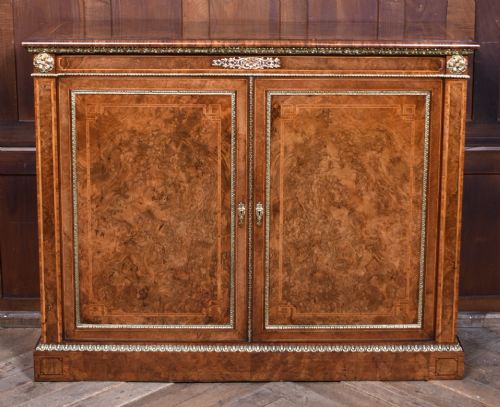
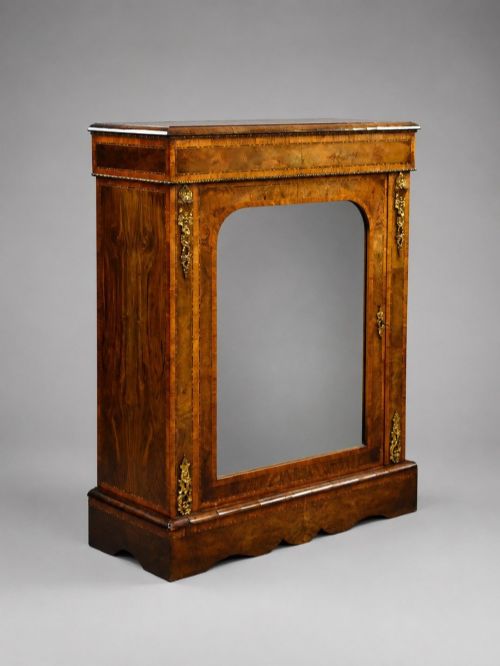


Brass Marquetry Credenza
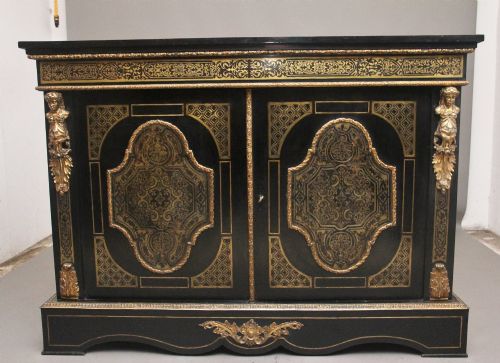
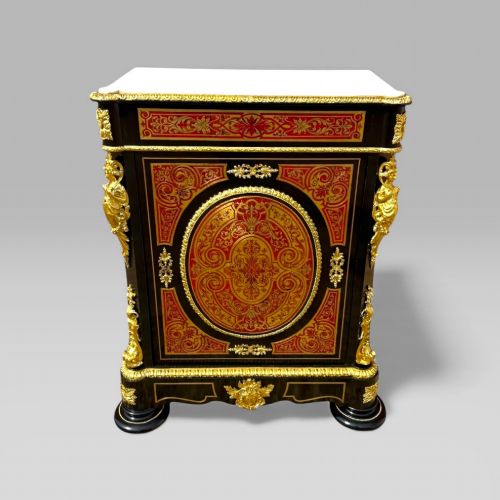
A brass marquetry credenza brings nineteenth-century presence into a room through brass inlay and polished timber.
Brass Marquetry Credenza
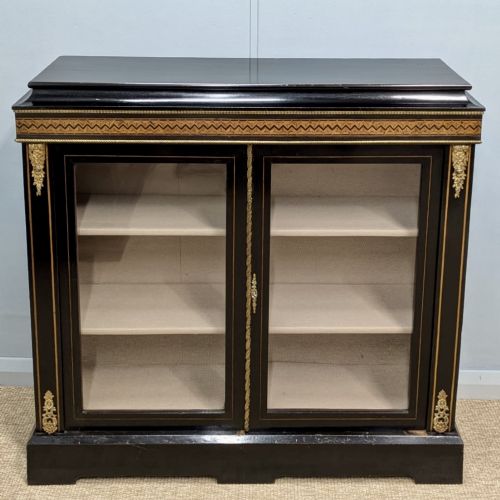
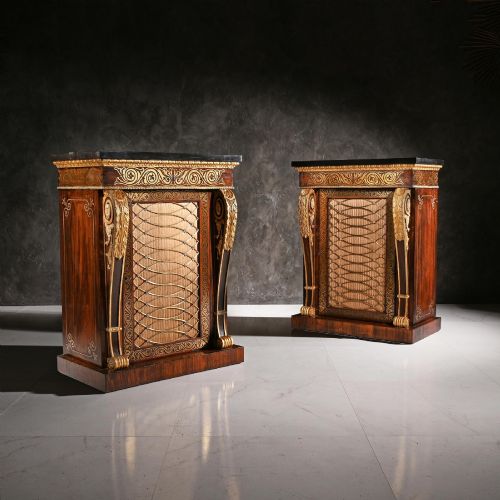
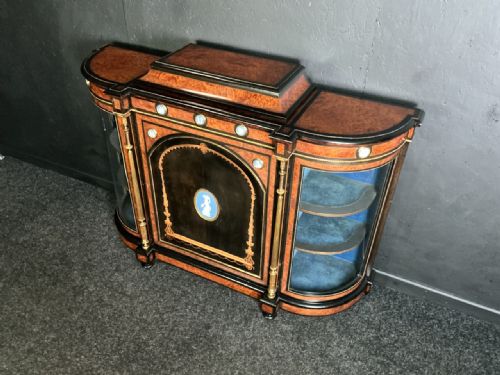
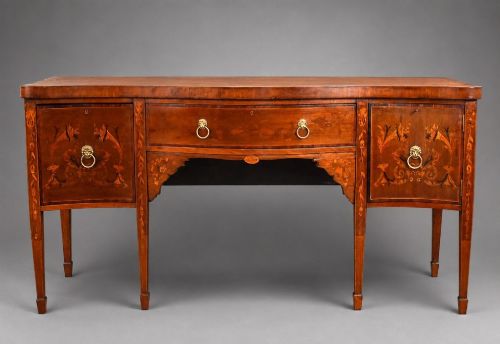
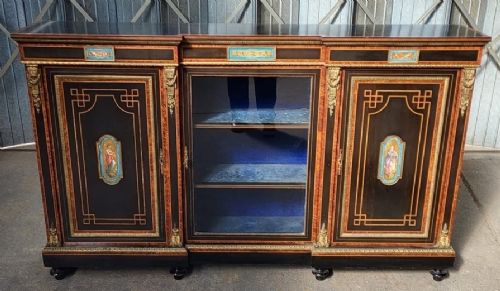
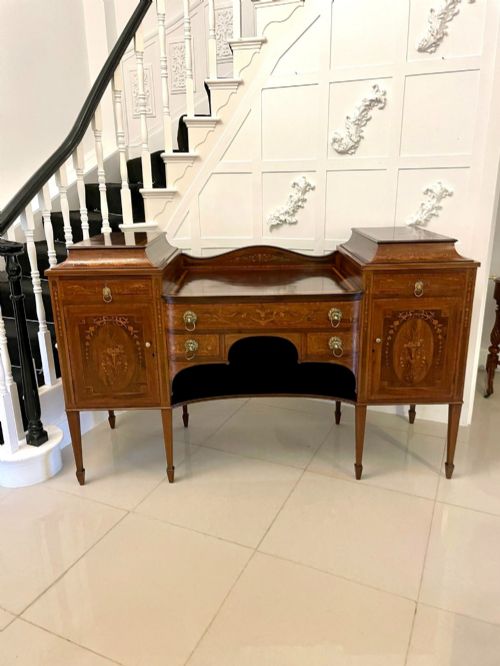
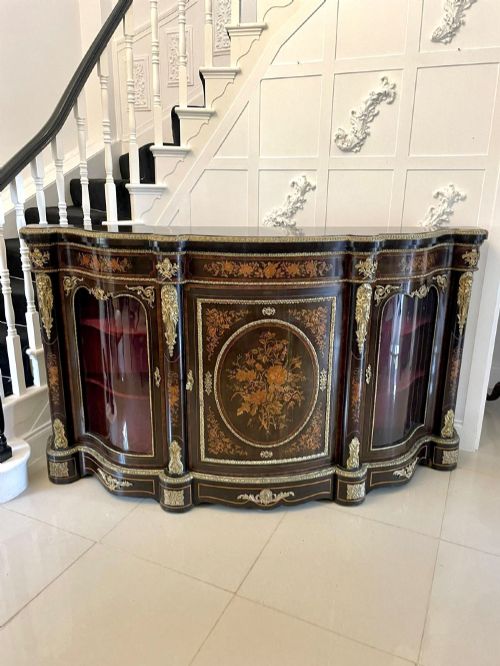
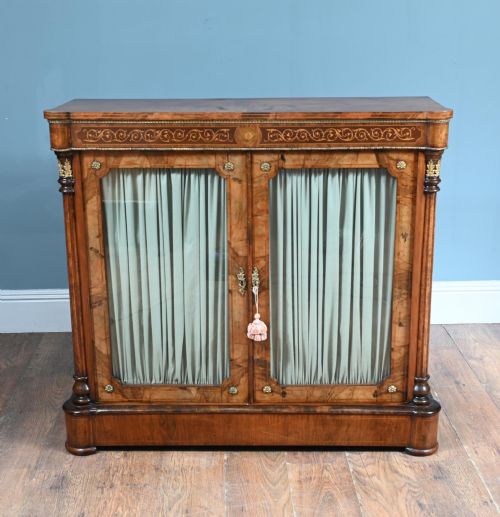
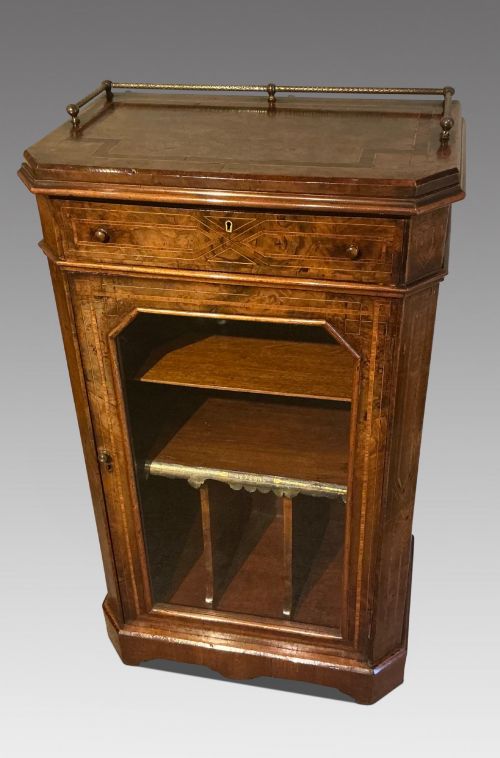
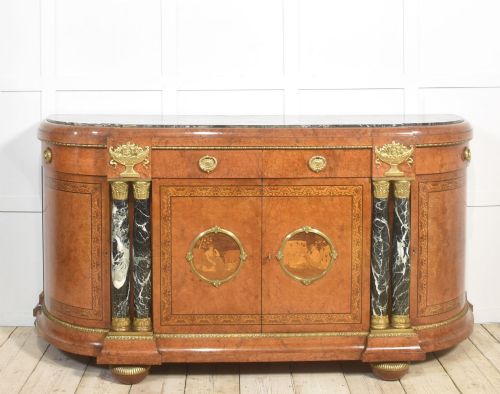
A brass marquetry credenza stands as a substantial piece for formal rooms, appearing alongside side cabinets and pier cabinets in nineteenth-century styles. The items on this page combine timber carcasses with inlaid metalwork and glass panels for display and storage.
Makers working in Victorian, Regency and French Napoleon III styles produce these credenzas with serpentine fronts or breakfront layouts. Walnut, rosewood and ebonised wood form the primary structures, often paired with marble tops and glazed doors.
Materials and Construction
Craftsmen inset thin ribbons of brass into timber veneers, creating botanical and geometric patterns across the surface. Ormolu mounts cast in bronze provide structural highlights and frame the doors and corners.
Ebonised wood and tortoiseshell serve as dark backgrounds that make the brass inlay gleam under ambient light. Marble slabs top many of the French and Victorian cabinets, adding weight and a cool tactile surface.
Brass Marquetry Credenza Retail Price Guide 2026
Typical asking prices for brass marquetry credenza among the pieces listed under this phrase on Sellingantiques today, from the lower quarter to the upper quarter. They describe what is for sale here now, not the wider market.
Makers occasionally hid small velvet-lined compartments inside these cabinets, presumably for secret love letters or visiting cards.
Judging Quality and Execution
The precision of the brass inlay reveals the hand of the maker, where tight joints between metal and wood indicate careful execution. Richness of timber grain in the burr walnut or rosewood sets finer examples apart from plain counterparts.
The quality of the cast ormolu mounts determines the overall dignity of the piece, with crisp chasing separating standard production from exceptional work. Structural integrity in the serpentine curves and door hinges sustains the utility of the cabinet.
Louis Constantin Le Gaigneur·Hewetsons London·Edwards and Roberts·Howard And Sons
The Brass Marquetry Credenza Glossary
- Boulle
- Marquetry technique utilising brass and tortoiseshell inlaid together in elaborate scrollwork patterns. This method originated in seventeenth-century France and returned to popularity during the nineteenth century.
- Ormolu
- Gilded bronze mounts applied to furniture for decorative enrichment and corner protection. The technique involves coating cast bronze with a mercury and gold amalgam before heating.
- Marquetry
- Decorative patterns formed by fitting together contrasting veneers of wood, metal or shell onto a structural carcass. This craft requires meticulous cutting and gluing to achieve seamless surfaces.
- Pier Cabinet
- A narrow display cabinet designed to stand against the wall space between windows. These pieces often feature glass doors and velvet-lined interiors for porcelain or small objects.
- Serpentine
- A furniture front or top shaped with a curving contour that convexly bulges in the centre and concavely recedes at the sides. This form demands advanced woodworking skill to fit doors and mouldings.
Brass Marquetry Credenza: Frequently Asked Questions
How do I date a credenza?
Examine the timber species, construction joints and secondary woods inside the carcass to determine the period. Nineteenth-century pieces often display machine-sawn backboards and specific revival styling like Napoleon III or Sheraton Revival.
Compare the brass inlay techniques and hardware with dated examples from the same workshop. Maker stamps on the drawer linings or brass locks provide definitive chronological markers.
Where should I place a credenza?
Position the cabinet against a principal wall in a dining room or drawing room where its length and reflective brass work catch the light. Keep the piece away from direct sunlight and heat sources to protect the delicate wood veneers and tortoiseshell.
Allow sufficient clearance around doors so they open fully without bumping into adjacent furniture. Ensure the floor is level, particularly with marble-topped cabinets that require stable weight distribution.
How do I clean brass inlay?
Dust the surface regularly with a soft, dry lint-free cloth to prevent grit from scratching the polished wood and metal. Avoid using harsh commercial metal cleaners that might stain the surrounding veneer or dissolve shellac finishes.
Consult a professional conservator if the brass lifting requires securing or if the timber finish needs attention. Gentle application of microcrystalline wax maintains the sheen on both wood and metal.