
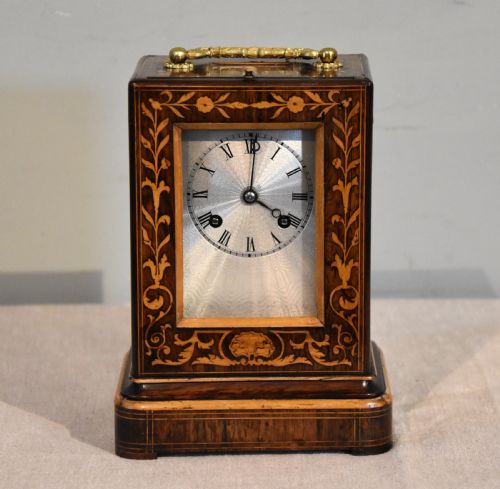
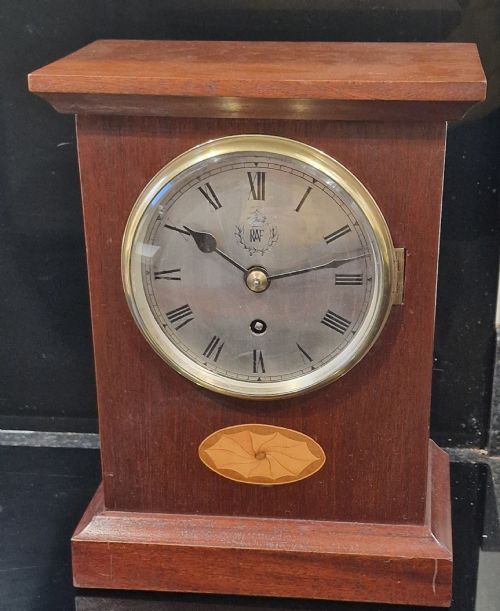

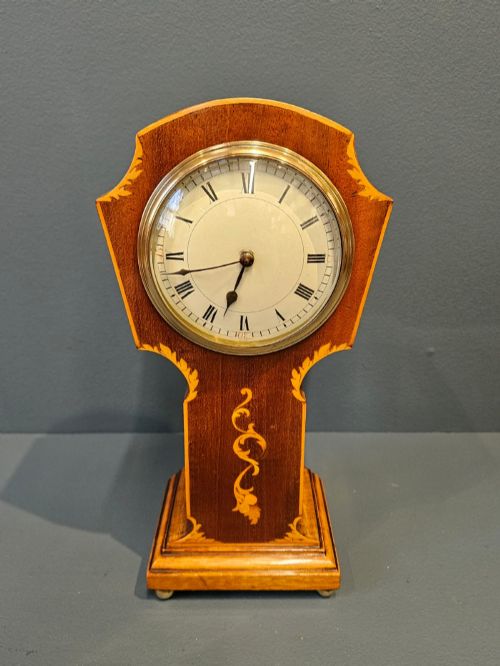
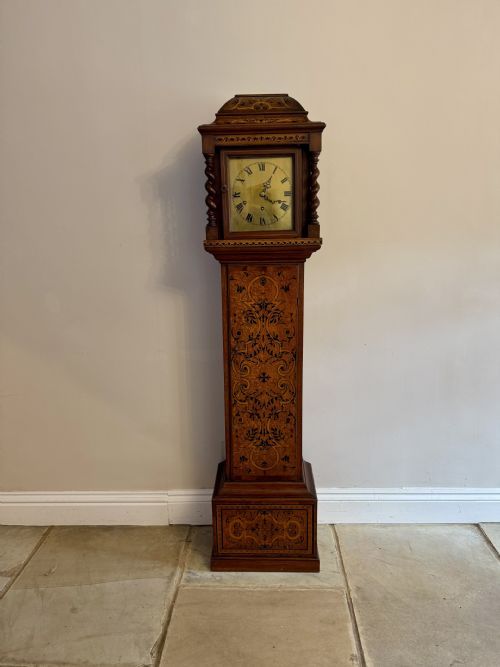
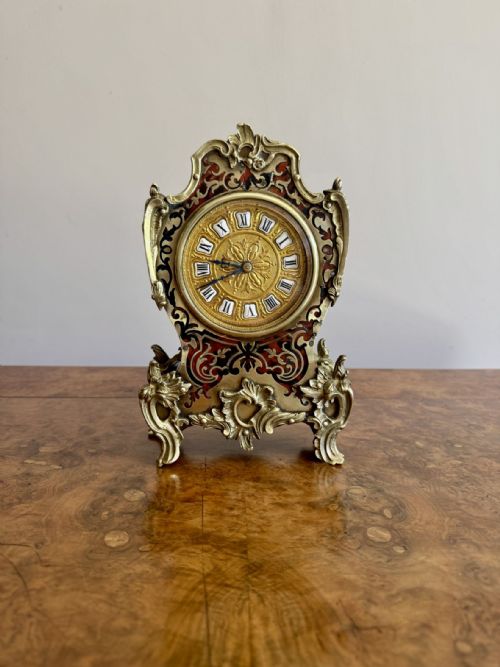


Brass Marquetry Clock
A brass marquetry clock brings together precision horology and cabinetwork, offering the warmth of timber inlaid with gleaming metal.
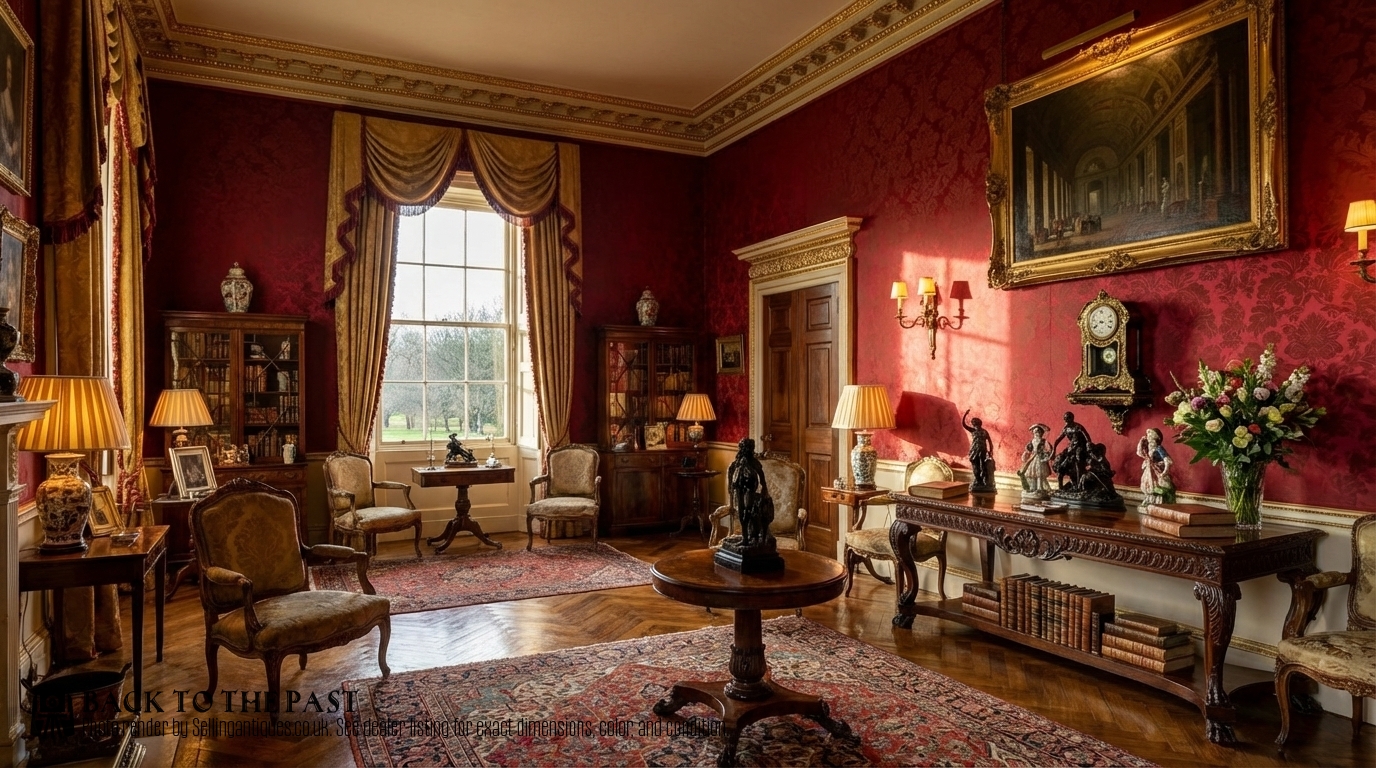
Brass Marquetry Clock
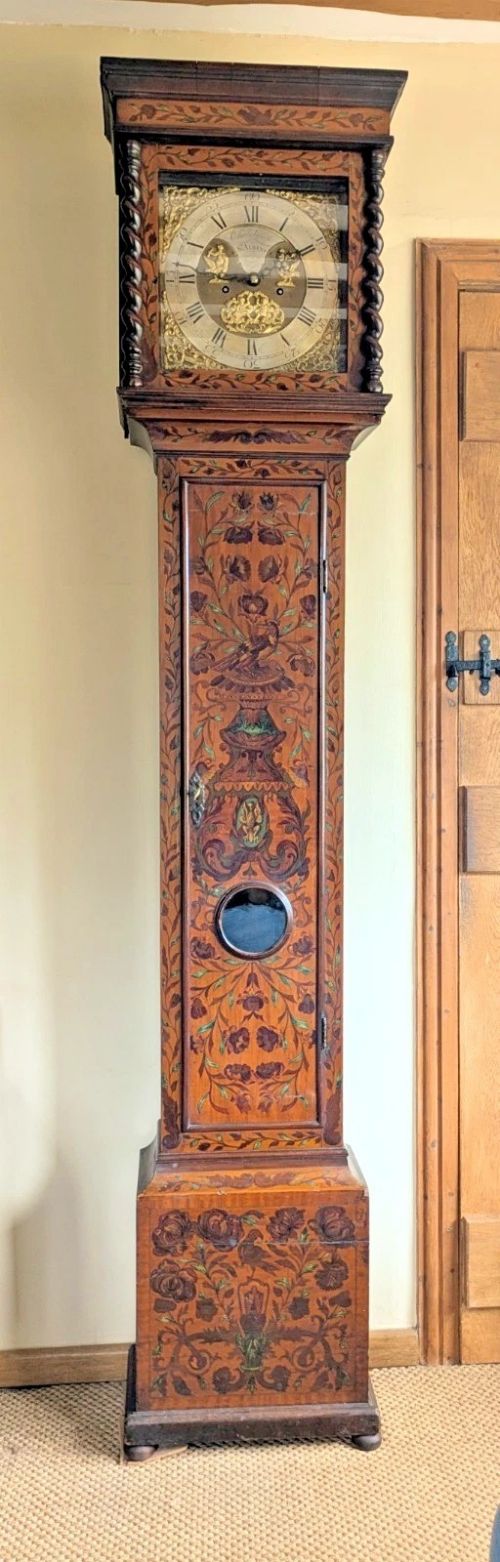
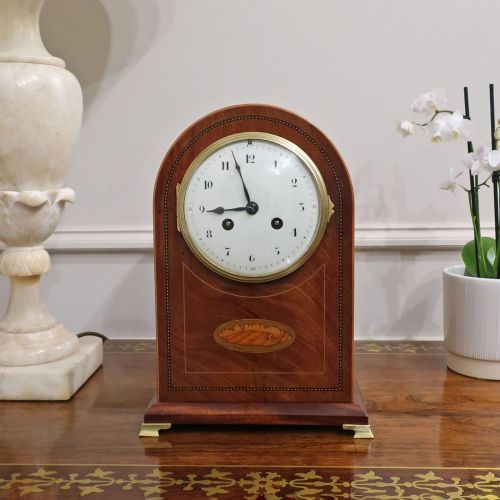
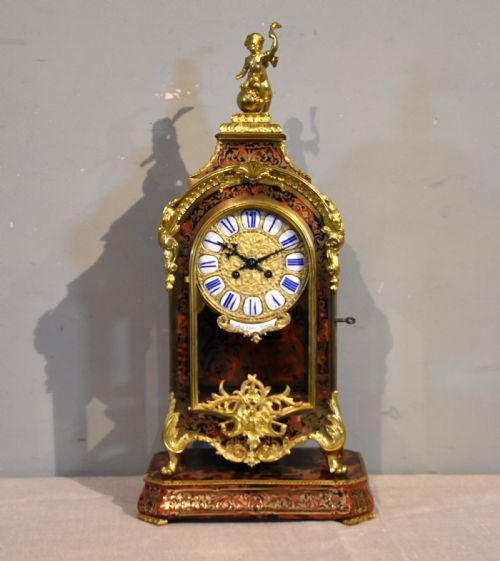
A brass marquetry clock stands as an intricate union of timekeeping and decorative woodworking, ranging from compact mantel pieces to tall longcase clocks. When searching for a brass marquetry clock, buyers encounter examples stretching from the seventeenth century through the Edwardian era, with French Boulle styles and English inlaid mahogany or walnut forms appearing frequently.
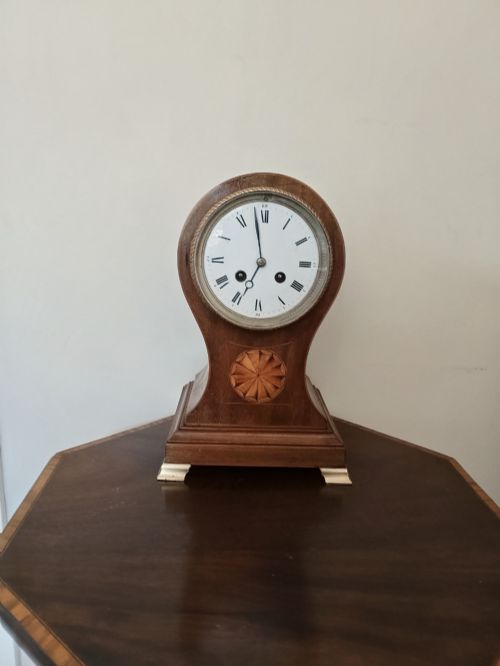
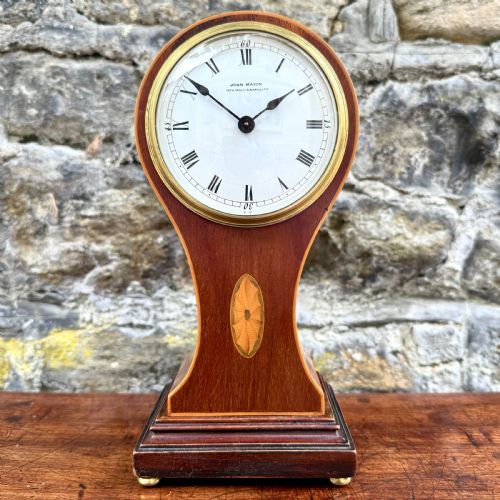
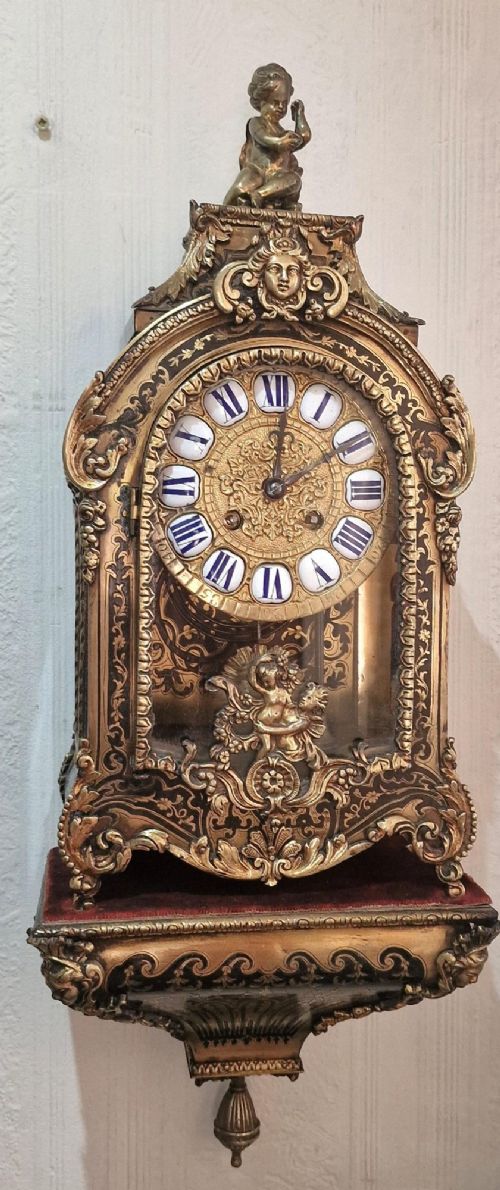
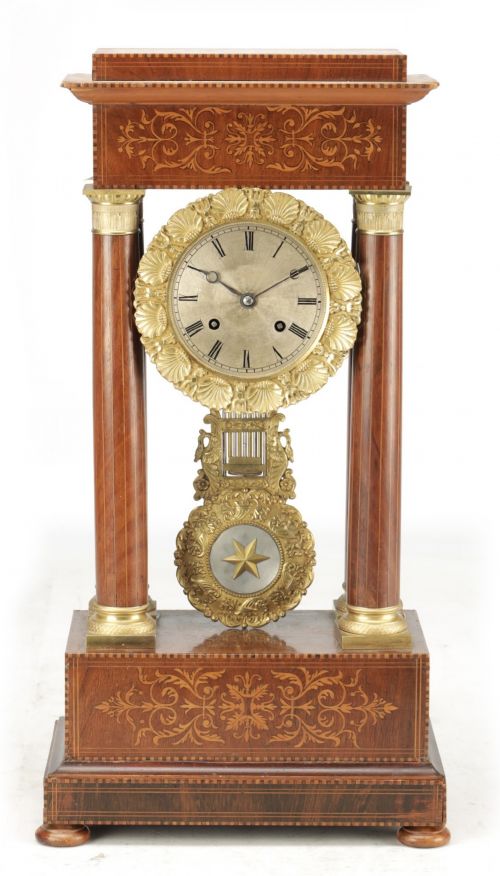
The assortment includes bracket clocks, portico clocks, and wall clocks alongside traditional grandfather and grandmother clocks. French nineteenth-century mantel clocks with tortoiseshell and brass work sit alongside Edwardian mahogany pieces inlaid with delicate floral motifs.
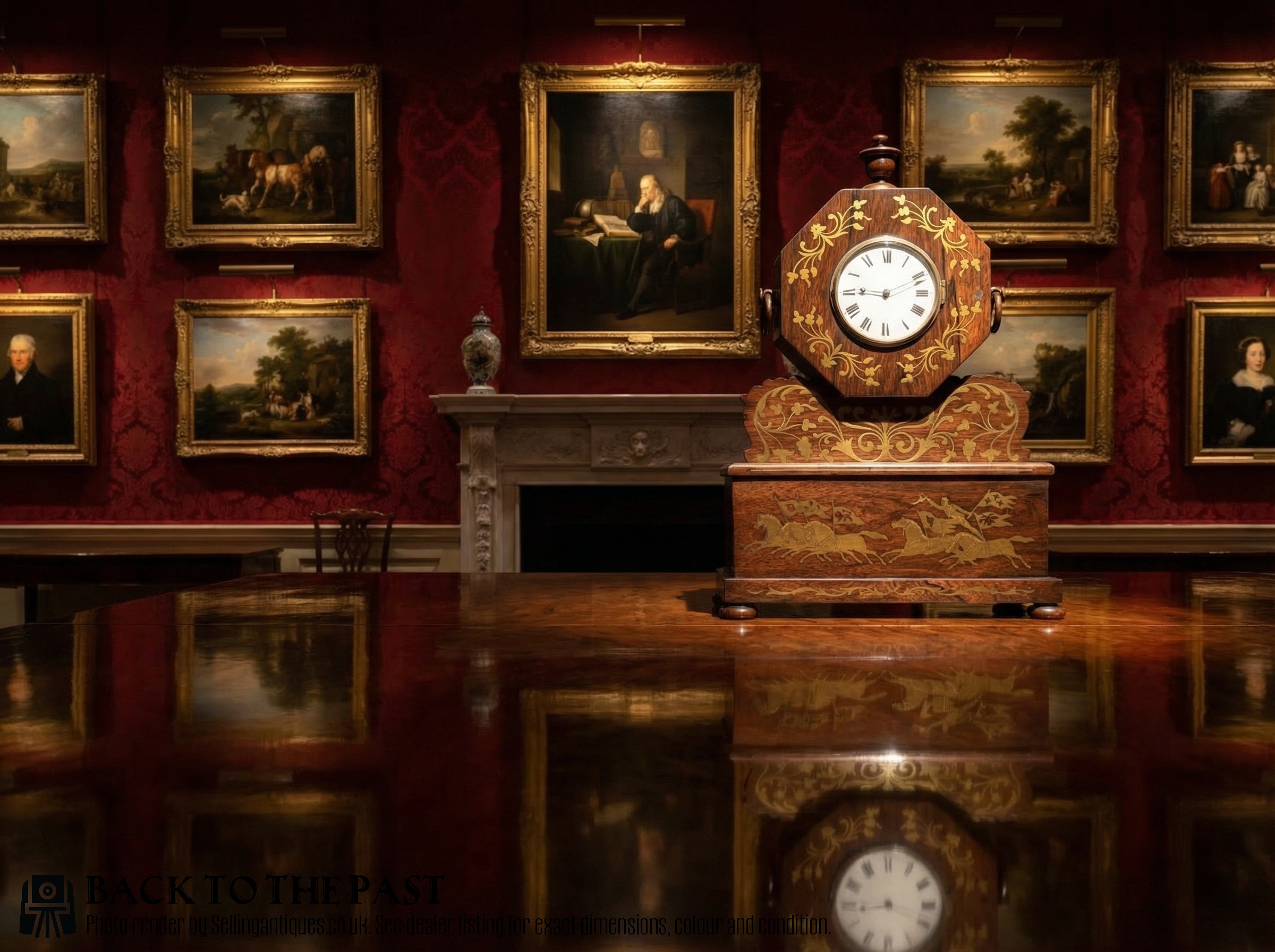
Materials and construction
Maker's workshops built these timepieces using robust carcases of oak, mahogany, walnut, or ebonised wood, onto which veneers of rosewood, satinwood, or tortoiseshell were applied. Craftsmen then embedded fine brass wire, ormolu mounts, and cut brass marquetry into the surfaces, often combining mother-of-pearl and lemon wood to create contrasting patterns.
Dial construction involved silvered brass, enamel, or engraved brass plates, powered by movements ranging from simple eight-day mechanisms to fusee movements and chiming gear trains. Cabinets frequently included glass panels to showcase the pendulum or movement, accompanied by cast ormolu feet, bezels, and finials.
Brass Marquetry Clock Retail Price Guide 2026
Typical asking prices for brass marquetry clock among the pieces listed under this phrase on Sellingantiques today, from the lower quarter to the upper quarter. They describe what is for sale here now, not the wider market.
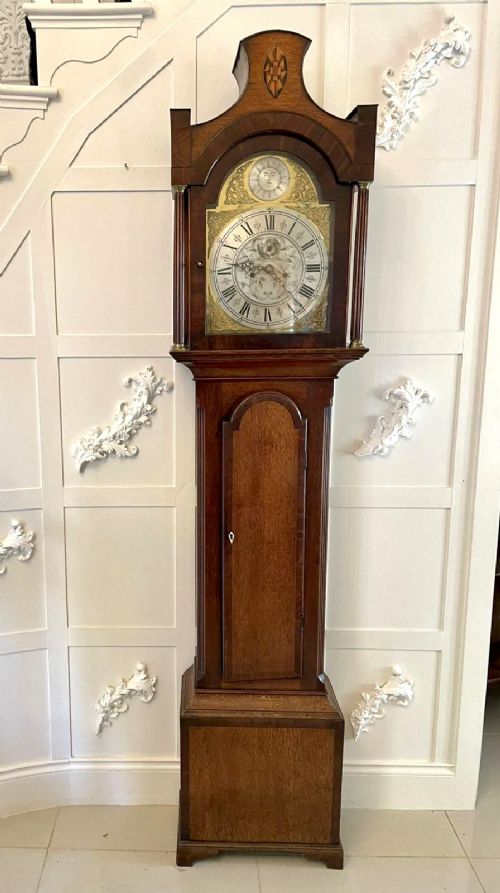
Listings feature longcase clocks spanning from the seventeenth century through the nineteenth century.
Distinctions in quality
The standard of a brass marquetry clock depends largely on the crispness of the cabinetwork and the depth of the metal inlay. Superior examples display tightly fitted brass and tortoiseshell with minimal gaps in the marquetry, whereas lesser pieces show wider kerf lines or simple surface painting in place of true inlay.
Charles Louch St Albans·Henri Marc of Paris·Henry Massy·Nathaniel Pyne·W Burton·David Morice of Auchtermuchty·Thomas A Paris·Paul Philip Barraud·Samuel Marti
The Brass Marquetry Clock Glossary
- Boulle
- A form of marquetry developed in France, using tortoiseshell and brass inlaid together so that two contrasting cabinets can be created from one cutting.
- Fusee
- A conical pulley connected to the mainspring by a cord or chain, designed to equalise the torque as the spring unwinds.
- Ormolu
- Gilded bronze used for decorative mounts, feet, and bezels on nineteenth-century clock cases.
- Marquetry
- Decorative veneer work forming pictures or geometric patterns by assembling pieces of wood, metal, or shell onto a carcase.
- Portico clock
- A mantel clock styled like a classical temple with supporting columns, popular during the nineteenth century.
Brass Marquetry Clock: Frequently Asked Questions
How do longcase and grandmother clocks differ?
Longcase clocks stand tall, typically measuring six to eight feet, and originated in the seventeenth and eighteenth centuries with eight-day movements.
Grandmother clocks are smaller, scaled-down versions usually dating from the Edwardian period or early twentieth century.
Where should I place a marquetry clock?
These clocks suit prominent locations such as mantelpieces, entrance halls, or drawing rooms where steady temperature and low humidity protect the delicate wood and metal veneers.
Wall clocks and bracket clocks require secure fixing to load-bearing walls to support their heavy movements and timber cases.
How do I wind an antique clock?
Winding requires a matching key inserted into the dial holes, turning gently until resistance is felt without over-winding the spring or weight.
Most eight-day movements need attention once a week, while single fusee or thirty-hour models follow different schedules.