



Brass Mahogany Bench
These brass mahogany bench pieces combine rich timber frames with metallic detail, offering both sturdy seating and period character to anchor a traditional room.
Brass Mahogany Bench
When you search for a brass mahogany bench, you are looking at substantial seating pieces built from dense tropical hardwood and finished with metal accents. The listings here primarily comprise footstools, long stools, ottomans, and window seats originating from periods such as the Regency, Victorian, and Edwardian eras.
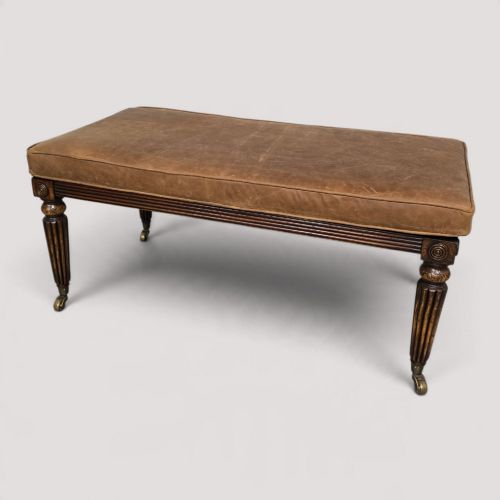
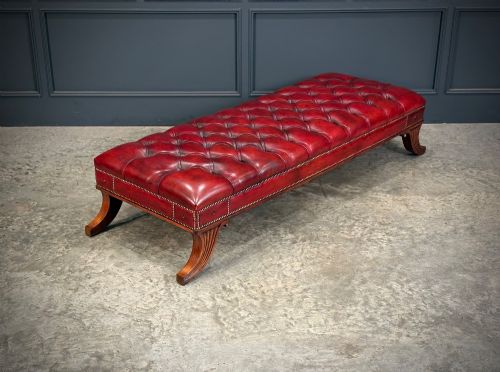
Most examples you will meet on this page lean towards long benches or deep buttoned footstools, often elevated on brass castors or supported by fluted and cabriole legs. These forms serve practical household duties while displaying the darker grain and substantial proportions typical of traditional English cabinetmaking.
Makers and workshops across the eighteenth and nineteenth centuries adapted these sturdy frames for varied domestic uses, ranging from campaign day beds to country house ottomans. The selection reflects diverse iterations including George III styling and William IV forms, each pairing durable timber with upholstered elements.
Assessing quality and craftsmanship
Quality in these seating forms rests on the integrity of the timber frame and the precision of the joinery beneath the upholstery. Finer examples display crisp carving on the cabriole or fluted legs and substantial weight in the underlying mahogany structure.
The choice of secondary materials, from heavy leather hides to quality brass castors, separates standard production from superior pieces. Preservation of the original timber patina and the execution of deep buttoning further distinguish the upper tier of the range.
Brass Mahogany Bench Retail Price Guide 2026
Typical asking prices for brass mahogany bench among the pieces listed under this phrase on Sellingantiques today, from the lower quarter to the upper quarter. They describe what is for sale here now, not the wider market.
Materials recorded across the inventory include mahogany, brass, leather, damask, cane, wool, and fabric.
Jas Shoolbred
The Brass Mahogany Bench Glossary
- Mahogany
- A durable, reddish-brown tropical hardwood favoured by cabinetmakers for its strength and fine grain. It provides the solid structural frame for the majority of these benches and stools.
- Castor
- A small wheel fitted to the legs of furniture to allow easy movement across floor surfaces. Many nineteenth-century stools and ottomans incorporate brass versions.
- Buttoned
- An upholstery technique where indentations are formed in the padding by pulling thread through to the frame, creating a padded, geometric surface. This is common on Victorian leather ottomans.
- Ottoman
- A low, upholstered seat or footstool without a back or arms. Larger examples function as central coffee tables or generous resting places in country house settings.
- Regency
- An English design period spanning the early nineteenth century characterised by classical revival motifs and refined proportions. Pieces from this era often feature fluted legs and disciplined lines.
Brass Mahogany Bench: Frequently Asked Questions
What is a brass mahogany bench?
A brass mahogany bench is a traditional seating form constructed from dark tropical hardwood and accented with metallic castors, studs, or decorative mounts. These pieces encompass long stools, window seats, and ottomans designed for domestic use.
Such items bridge the gap between functional furniture and decorative woodwork, utilising dense timber frames that withstand generations of daily use.
Where were these pieces used?
Historically, these seating forms populated grand hallways, drawing rooms, and bedrooms across English country houses and town residences. Long benches and window seats fit neatly into transitional spaces or beneath glazing.
Footstools and ottomans served living areas as movable rests, while day beds provided resting spots in private chambers or studies.
How do I style a mahogany bench?
Placing a mahogany bench at the foot of a bed or beneath a hallway window introduces period weight and practical seating to a room. The dark timber anchors lighter interiors and pairs well with traditional textiles.
Leather-topped or buttoned variants work effectively as alternative coffee tables in sitting rooms when paired with a sturdy tray.
How do I tell Victorian pieces apart?
Victorian pieces often display heavier proportions, deep buttoned leather, and robust brass castors compared to the lighter, more restrained lines of earlier Georgian or Regency examples. Cabriole legs and rich upholstery are frequent indicators of this mid to late nineteenth-century output.
Examining the turning on the legs and the density of the mahogany helps separate nineteenth-century production from twentieth-century revivals.