





James Shoolbred Seat
A James Shoolbred seat brings solid 19th-century cabinet-making and firm joinery into any room.
James Shoolbred Seat
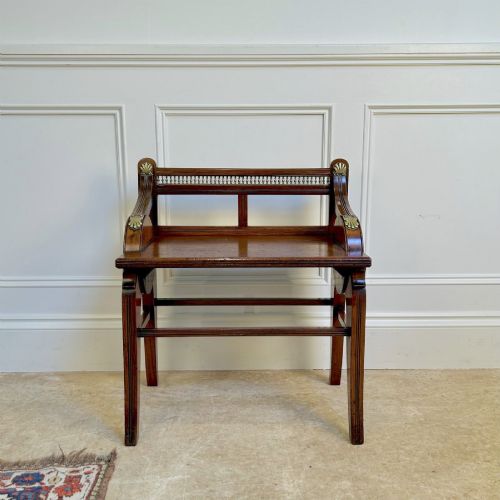
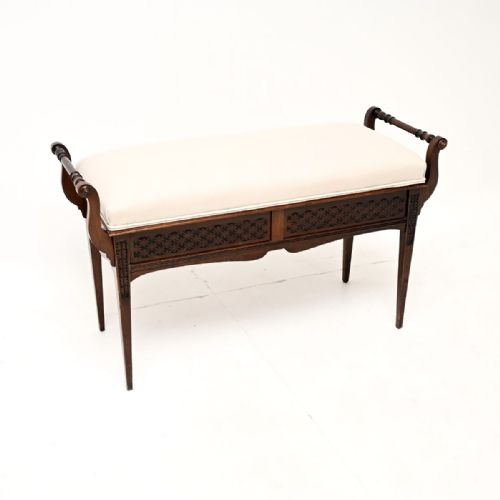
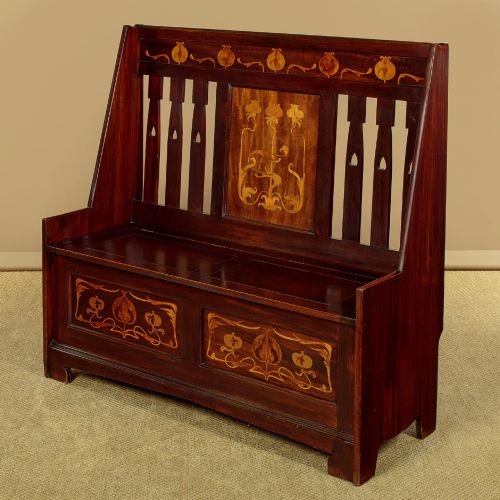
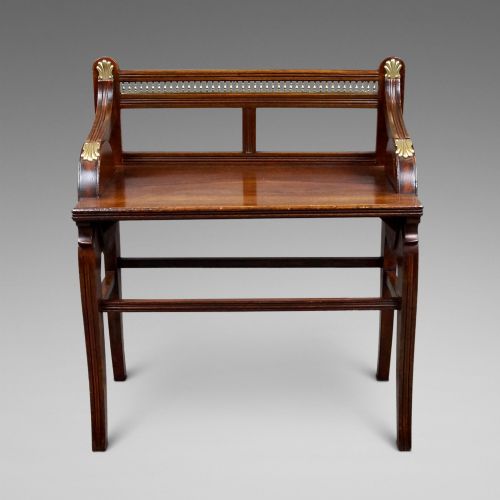
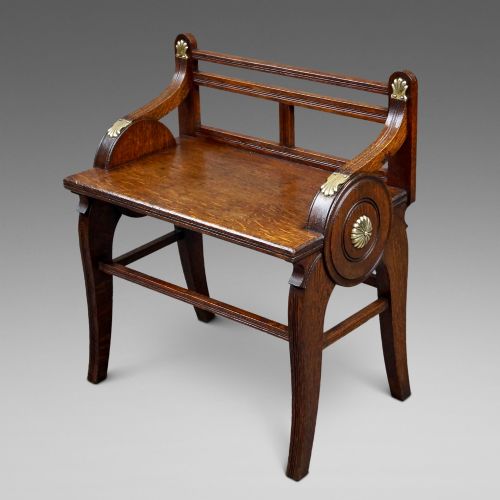
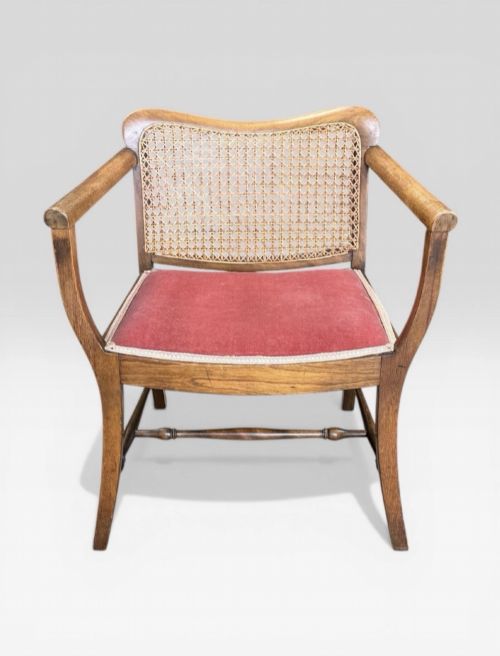
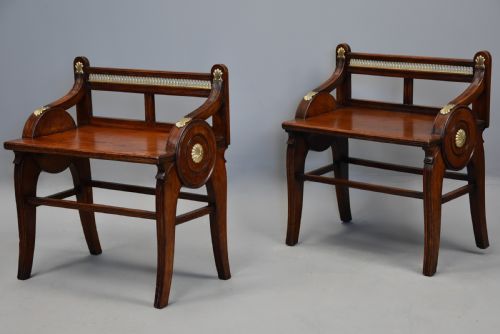
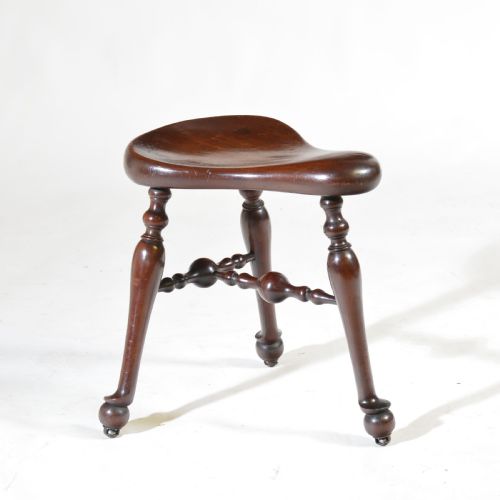
A James Shoolbred seat covers practical forms such as benches, armchairs, stools, piano stools, hall benches, and window seats originating from the 19th century up to the 1920s. Buyers searching for a james shoolbred seat encounter pieces shaped by Victorian, Arts & Crafts, Victorian Aesthetic Movement, Edwardian, and Edwardian Neoclassical styles.
The selection on this page relies heavily on the firm's output in mahogany, oak, and walnut, alongside cane, boxwood inlay, and brass mountings. Forms range from domestic window seats and saddle stools to large sets of dining chairs and robust hall benches.
Materials and construction
Makers utilised dense timbers such as Cuban mahogany, walnut, and oak to build the foundational frames of these seats. Joinery is straightforward and robust, designed to withstand daily domestic use in hallways, music rooms, and reception spaces.
Detailing often includes boxwood inlay, applied brass mounts, and woven cane panels. Upholstery relies on traditional textiles, velvet, and cotton, occasionally paired with secondary maker covers such as those from Howard and Sons.
James Shoolbred Seat Retail Price Guide 2026
Typical asking prices for james shoolbred seat among the pieces listed under this phrase on Sellingantiques today, from the lower quarter to the upper quarter. They describe what is for sale here now, not the wider market.
Cock-fighting stools retain their peculiar name long after the blood sport vanished, surviving quietly as low bedroom perches.
Assessing the work
Quality rests on the selection of timber and the crispness of any inlaid boxwood or brass mounts. Plain mahogany and oak utility benches sit at one end, while substantial sets of dining chairs or marked armchairs with elaborate cane work represent a higher standard of production.
The integrity of the original frame and the retention of maker stamps directly affect the standing of an individual piece. Retaining original polished surfaces and sound structural joinery separates a standard piece from a finer example.
James Shoolbred and Co·Howard and Sons
The James Shoolbred Seat Glossary
- Bergere chair
- An enclosed armchair with cane panels forming the back and sides. This French-inspired form appeared frequently in late 19th-century British workshops.
- Boxwood inlay
- Contrasting pale wood inserted into recesses of a darker timber to form linear or geometric patterns. It provides subtle decoration on cabinet-made frames.
- Cock-fighting stool
- A low stool with a padded backrest designed originally for spectators of traditional sports. Later examples function as low occasional seating.
- Hall bench
- A sturdy wooden seat placed in an entranceway, often featuring panelled backs and storage beneath the lid. These pieces manage heavy wear near a doorway.
James Shoolbred Seat: Frequently Asked Questions
How do I identify a James Shoolbred seat?
Look for maker stamps, paper labels, or branded marks stamped directly into the wood of the frame, usually found on the underside or inside the rails.
Construction methods and timber choices consistent with late 19th-century London cabinet-making also point towards the firm's workshop output.
Where should I place a window seat?
Window seats suit low sills in bay windows, long corridors, or narrow bedroom spaces where deep furniture would block movement.
Their low profile preserves natural light while offering practical surface seating.
What is a piano stool used for?
Piano stools provide adjustable or fixed seating for musicians at a keyboard, often featuring revolving tops for height control.
They also serve as compact occasional seats in smaller rooms.
How do I care for polished mahogany?
Dust mahogany frames regularly with a soft, dry cloth to prevent surface grit from building up on the polish.
Keep wooden seats away from direct heat sources and strong sunlight to prevent the timber from drying out.