
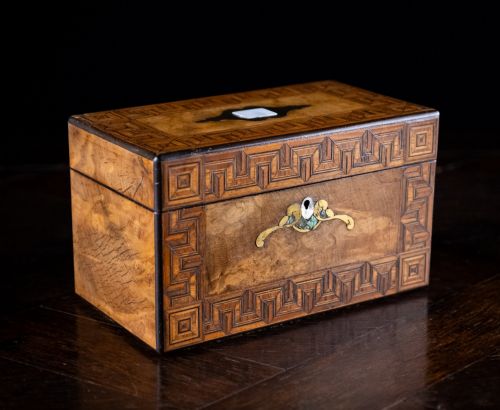


Brass Inlay Tea Chest
A brass inlay tea chest is a refined wooden box crafted for storing expensive loose leaf tea, combining exotic timber with precise metalwork.
Brass Inlay Tea Chest
A brass inlay tea chest is a sophisticated storage box designed during the Georgian, Regency and Victorian eras to protect precious dried leaves under lock and key. Buyers searching this phrase meet handsome rectangular and sarcophagus-shaped containers fashioned from rich timbers like rosewood, mahogany and walnut.
The most common examples on this page date from the Regency period, frequently exhibiting striking brass stringing and floral motifs set against dark rosewood surfaces. Alongside standard caddies, one encounters grander tea-poys standing upon their own dedicated supports, offering larger proportions and internal compartments.
Earlier Georgian examples favour figured mahogany and walnut with subtle stringing, whilst later Victorian pieces incorporate marquetry, mother of pearl and exotic coromandel. Each variant reflects the changing domestic rituals of tea drinking and the evolving decorative preferences of nineteenth-century cabinet makers.
Materials and Construction
Cabinet makers constructed these chests using dense foundation timbers such as mahogany, walnut and rosewood, often applying delicate veneers to display rich grain patterns. Artisans then channelled the timber surface to embed thin strips and geometric brass inlay, securing the metal flush with the surrounding wood.
Interiors typically feature lidded internal caddies or canisters fashioned from metal or matching wood, alongside spaces for sugar mixing bowls. Locks, escutcheons and carrying handles cast in brass complete the construction, combining utility with ornamental detail.
Some nineteenth-century tea caddies include hidden secret drawers operated by pressing secret wooden springs beneath the internal canisters.
Distinctions in Quality
Quality rests upon the precision of the brass inlay work and the choice of primary timber veneers. Sharply defined brass stringing integrated seamlessly into figured rosewood or mahogany signifies superior workshop execution.
The complexity of the interior arrangement also distinguishes finer pieces, particularly those retaining original internal canisters, glass bowls and functioning locks with matching keys. Well-balanced proportions and harmonious decorative contrasts separate standard containers from exceptional examples.
The Brass Inlay Tea Chest Glossary
- Tea caddy
- A small box or chest designed for storing loose tea leaves securely. The term evolved from catty, a traditional unit of weight used in the tea trade.
- Teapoy
- A larger tea chest mounted upon a central pillar or tall stand rather than resting on a table. These freestanding pieces often include internal mixing bowls.
- Sarcophagus
- A distinct coffin-like chest shape with a domed lid popular during the Regency period. This architectural form gave tea caddies a monumental and sculptural presence.
- Stringing
- Thin inlay lines of contrasting wood or metal set flush into the surface of a piece. It outlines panels and geometric borders on fine cabinet work.
- Boulle
- An elaborate marquetry technique using tortoiseshell and brass, named after the French furniture maker André-Charles Boulle. It adds rich surface texture to select nineteenth-century pieces.
Brass Inlay Tea Chest: Frequently Asked Questions
How were tea chests used?
Tea was an expensive commodity in the eighteenth and nineteenth centuries, kept locked away by the head of the household. The contents were measured out carefully for each social gathering using internal canisters.
Servants prepared the brew in the drawing room, and keeping the leaves locked prevented theft whilst maintaining the aroma of the dry leaves away from damp air.
What is a teapoy?
A teapoy is a larger version of a tea caddy that stands on a pillar and base rather than sitting on a table. They often incorporate internal compartments for multiple tea varieties and a sugar basin.
These pieces functioned as decorative furniture items in drawing rooms, allowing hosts to dispense tea without leaving their seat.
How do I date a tea chest?
Dating relies upon observing the silhouette, timber choices and inlay motifs used across different decorative periods. Georgian pieces often display simpler mahogany or walnut construction with understated stringing.
Regency examples frequently combine rosewood with bold brass inlay and sarcophagus shapes, whilst Victorian items introduce mother of pearl, coromandel and richer marquetry.
Are original keys common?
Original working keys are uncommon because locks were small and easily misplaced over centuries of domestic use. Many chests retain their decorative escutcheons even if the internal locking mechanism no longer operates with a key.
Finding a piece with a functioning lock and matching key adds considerable appeal for collectors.