


Brass Inlay Slope Box
A brass inlay slope box is a portable writing desk designed for travel, offering secret drawers and compartments beneath a hinged writing surface.
Brass Inlay Slope Box
A brass inlay slope box is a portable desk designed for correspondence, featuring a hinged writing surface that folds down to reveal a writing slant and compartments for ink and pens. When exploring this selection, buyers encounter writing boxes and slopes originating from the Georgian, Regency, and Victorian periods.
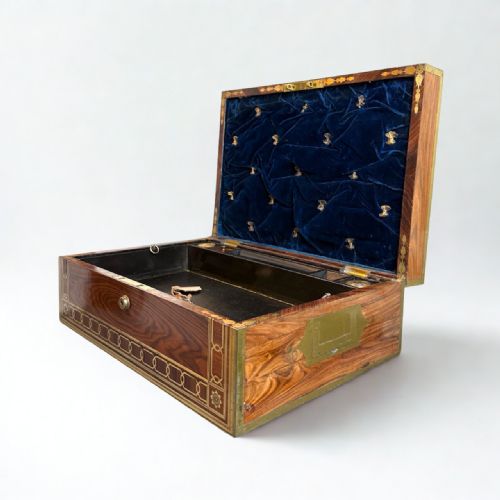
The pieces on this page span several decades of the nineteenth century, encompassing standard home writing slopes alongside robust campaign models intended for travel. Cabinetmakers constructed these boxes to serve as mobile desks, incorporating secret drawers accessed through clever mechanical releases or false partitions.
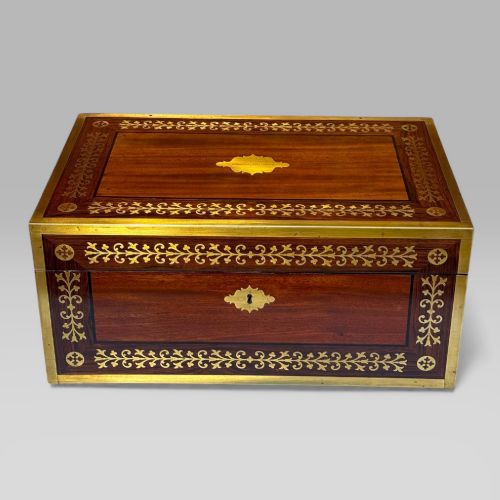
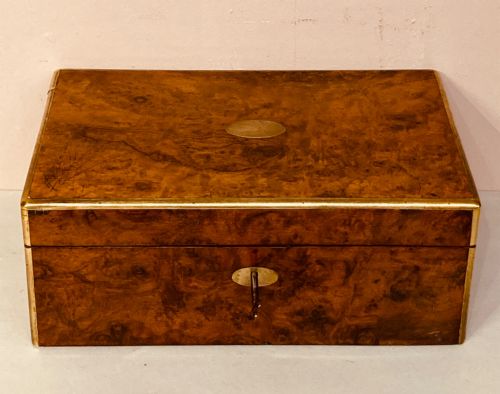
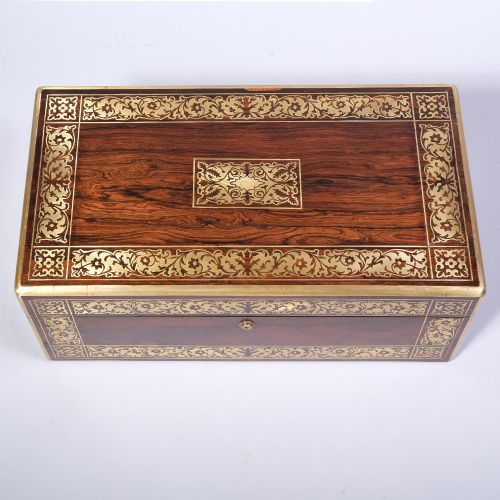
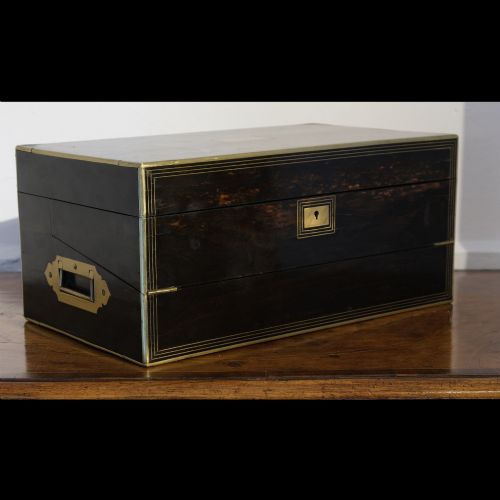
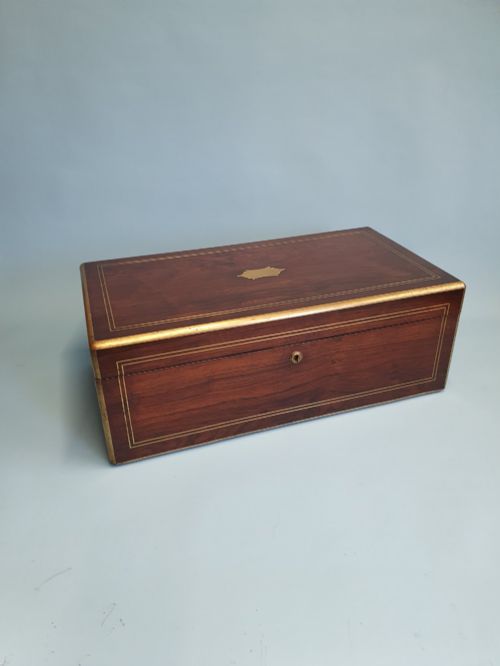
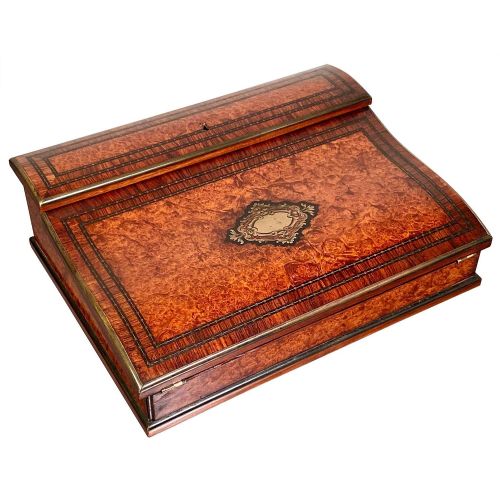
Materials range from rich rosewood and mahogany to figured burr walnut and exotic coromandel, often embellished with brass banding, corner braces, or intricate inlay work. Many examples showcase brass cartouches and escutcheons, occasionally paired with mother-of-pearl accents or candle sconces for use during night writing.
How they were made
Cabinetmakers constructed the carcasses of these writing slopes from dense tropical hardwoods like mahogany and rosewood, or veneered them with highly figured burr walnut and coromandel. These timber foundations provided the structural stability necessary to house folding writing surfaces and complex internal stationery compartments without warping over time.
Workshops utilised precise hand-cutting techniques to recess brass stringing, escutcheons, and heavy corner straps flush into the wood surfaces. Securing the outer edges with brass binding protected the corners from the rigours of travel, a method heavily utilised in military campaign boxes.
One military campaign box arrives fully equipped to burn the midnight oil with its own pair of matching candle sconces.
What varies in quality
Quality in a brass inlay slope box depends heavily on the precision of the cabinetwork and the choice of timber veneers, such as richly figured burr walnut or select coromandel. Superior examples display seamless flush-fitting brasswork where the metal inlay sits level with the surrounding wood grain.
The sophistication of the internal mechanism separates standard boxes from exceptional ones, particularly the presence of secret drawers, velvet-lined writing slants, and high-security locks by makers like Bramah. Finer boxes maintain original patination and operational integrity across all hinges, compartments, and folding surfaces.
George Austin of Dublin
The Brass Inlay Slope Box Glossary
- Writing slope
- A portable box with a slanted writing surface that opens to reveal storage for paper and pens. This form served as the primary desk for travellers and homeowners alike during the nineteenth century.
- Campaign box
- A sturdy box built for military or travel use, typically fitted with flush brass handles and protective corner braces. These pieces often feature collapsible elements and robust locks.
- Secret drawers
- Concealed compartments hidden behind false partitions or triggered by internal spring mechanisms. They were designed to protect valuables and private correspondence.
- Bramah lock
- A high-security barrel lock invented by Joseph Bramah, commonly found on superior nineteenth-century boxes. It requires a specialised tubular key to operate.
- Escutcheon
- A protective metal plate surrounding a keyhole, usually fashioned from brass in these pieces. It prevents the wood around the lock from splitting during use.
Brass Inlay Slope Box: Frequently Asked Questions
What is a brass inlay slope box?
A brass inlay slope box is a portable nineteenth-century writing desk featuring a hinged lid that opens into a slanted writing surface. These boxes were essential accessories for correspondence before the widespread availability of fitted home study furniture.
Inside, the boxes provide partitioned spaces for inkwells, nibs, and stationery, often accompanied by hidden compartments for secure storage. The exterior wood is typically decorated with brass banding or intricate inlay patterns.
How were writing slopes used?
Owners placed these portable desks on dining tables, commodes, or laps to write letters while travelling or moving between rooms. The sloped writing surface provided an ergonomic angle for handwriting with dip pens.
When closed, the box secured all writing equipment and private papers within a single locked enclosure. Military officers and gentlemen travellers relied on campaign versions during extended journeys.
How do I tell Georgian from Victorian slopes?
Georgian and Regency writing slopes often showcase simpler lines with straightforward mahogany or rosewood timbers and restrained brass stringing. They frequently date from the early nineteenth century and prioritize functional elegance.
Victorian examples frequently utilise highly figured burr walnut or coromandel, occasionally incorporating more elaborate brass binding, mother-of-pearl, or mechanical secret drawers. The construction tends to be heavier, reflecting mid-nineteenth-century taste for ornate desk accessories.
What are secret drawers?
Secret drawers are hidden compartments built into the interior framework of writing boxes to store valuables and confidential documents. They are usually accessed by removing the pen tray or operating a concealed wooden spring latch.
Finding these hidden compartments is part of the appeal of nineteenth-century desk boxes. They demonstrate the ingenuity of period cabinetmakers.