
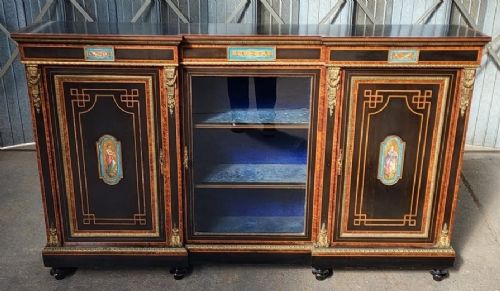
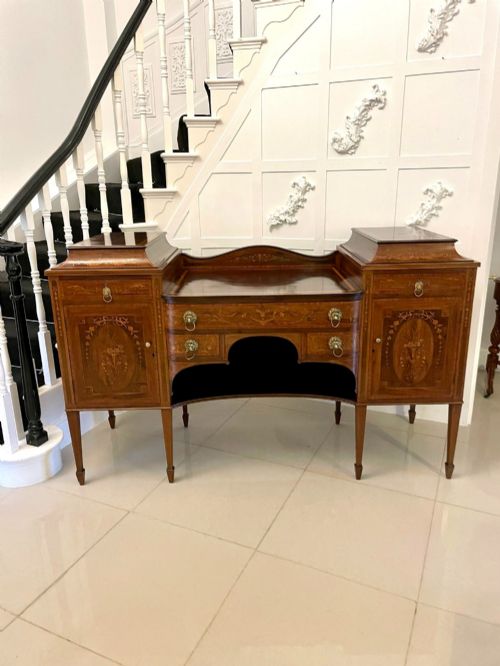
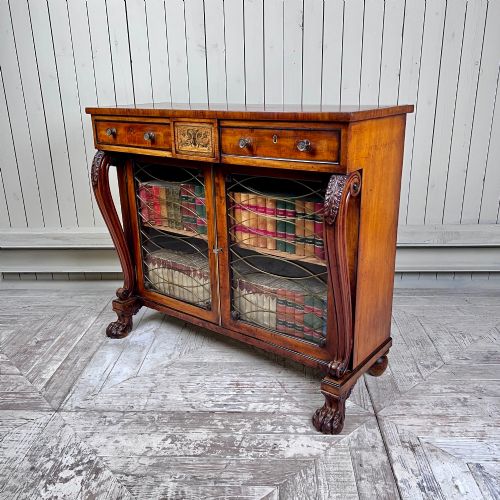
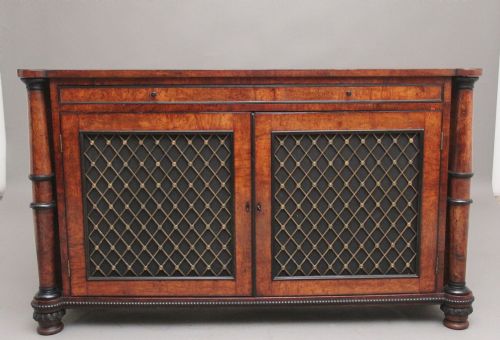
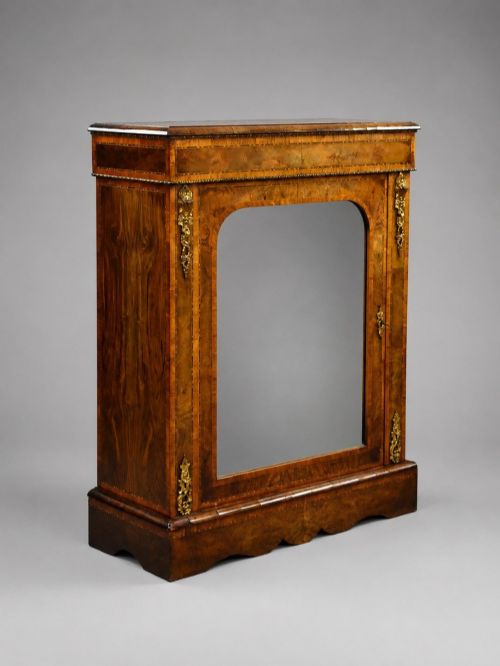
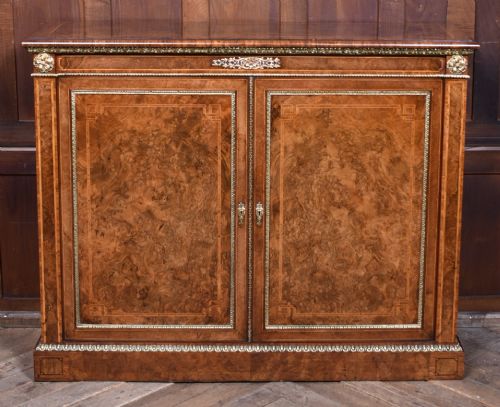

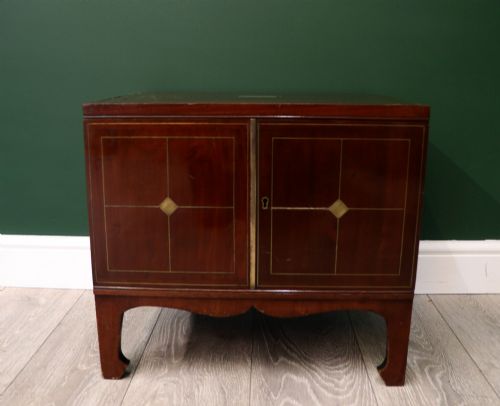
Brass Inlay Sideboard
A brass inlay sideboard brings together figured timbers and precise metalwork, offering both practical storage and a striking focal point for a dining room.
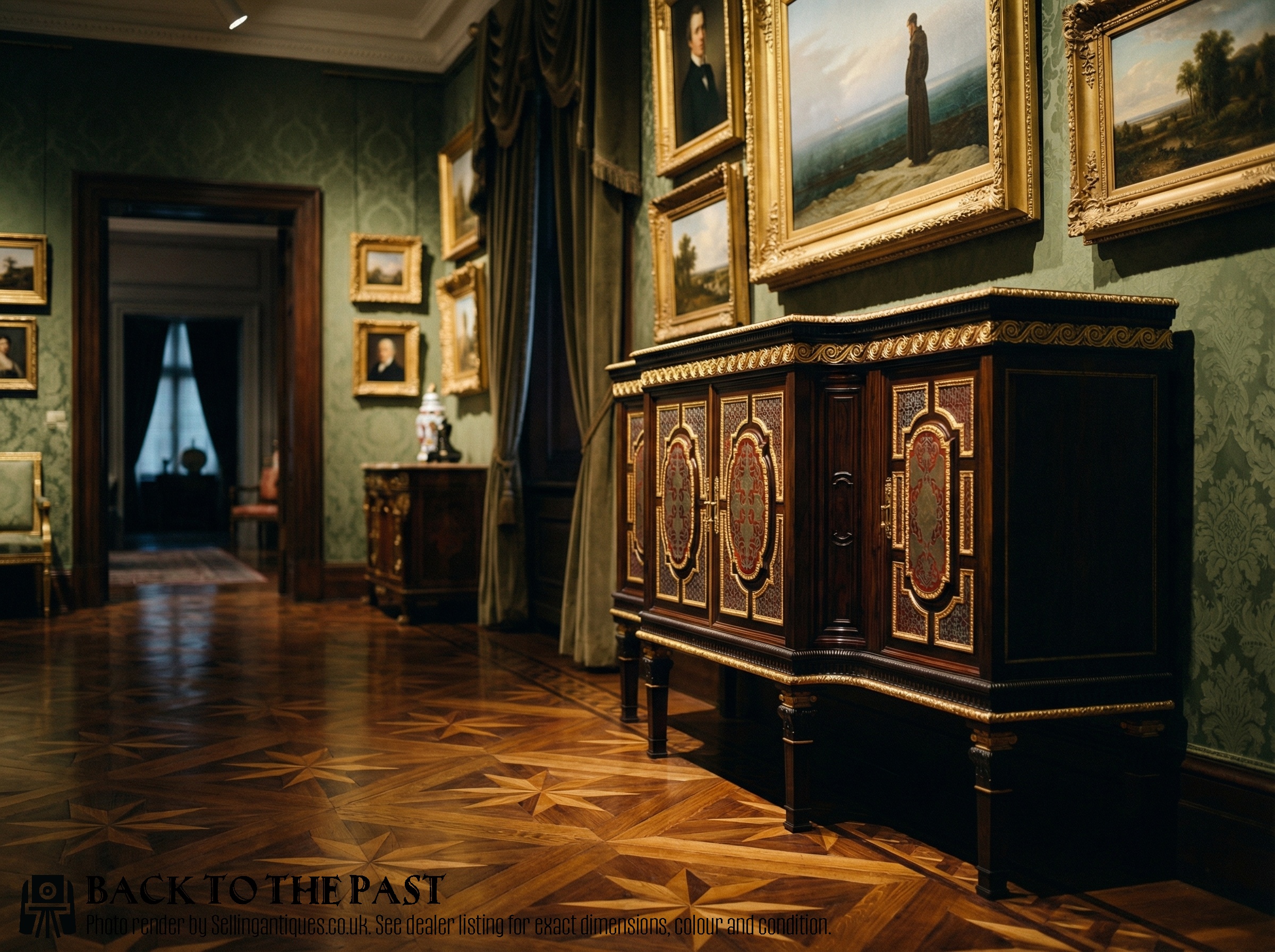
Brass Inlay Sideboard
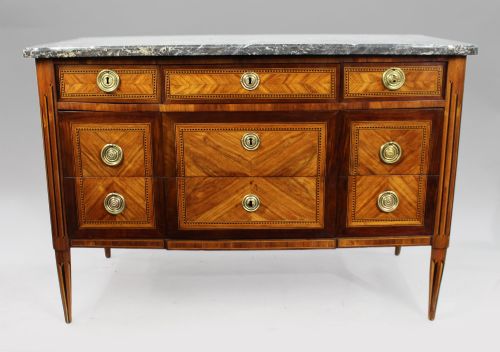
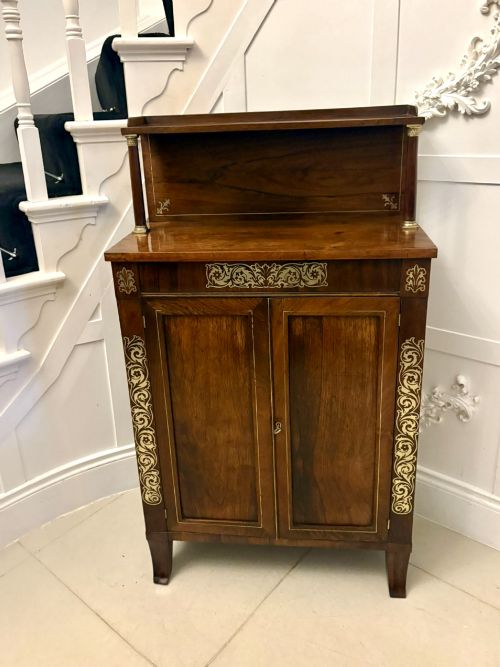
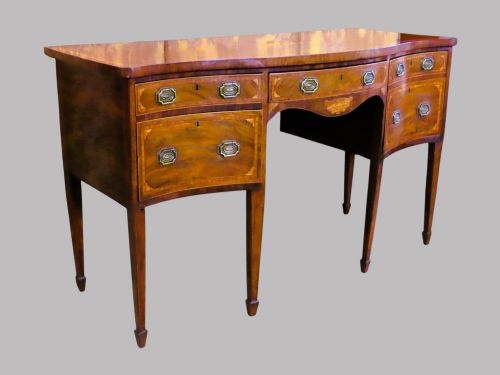
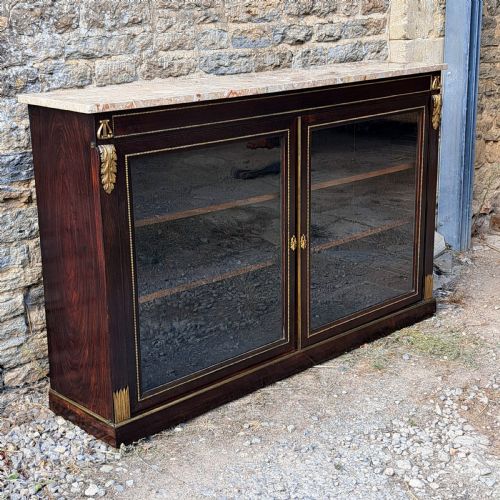
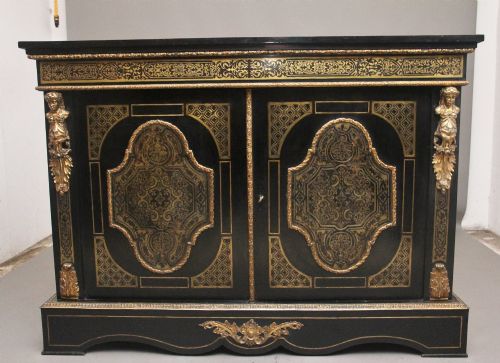
When you search for a brass inlay sideboard, you encounter formal dining room furniture designed to serve, display and store tableware across several centuries. The pieces available range from elegant Regency and Georgian examples to Victorian and Edwardian interpretations.
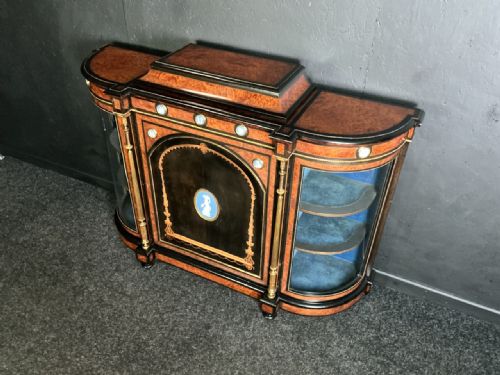
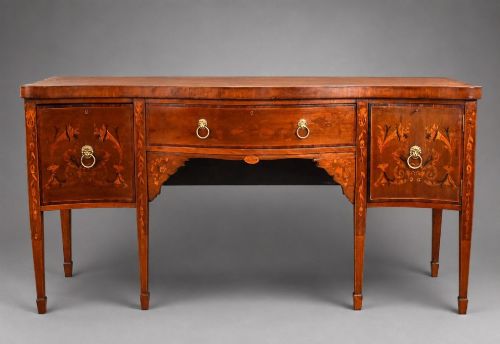
Mahogany and rosewood serve as the primary foundations for these pieces, often enhanced with contrasting boxwood stringing alongside the distinctive metal detailing. You will frequently find forms such as breakfront sideboards, chiffoniers and side cabinets fulfilling this exact description.
The aesthetic spans strict classical symmetry to ornate marquetry and revival styles, reflecting the changing tastes of British and continental cabinet makers. Each period brings its own characteristic proportion, from the low linear grace of the Regency to the robust presence of the Victorian era.
Materials and construction methods
Cabinet makers relied heavily on dense tropical hardwoods like mahogany and rosewood, applying fine veneers over stable secondary timbers to create expansive flat surfaces. Brass was cut into delicate lines and decorative motifs, then painstakingly set flush into channels carved directly into the wood.
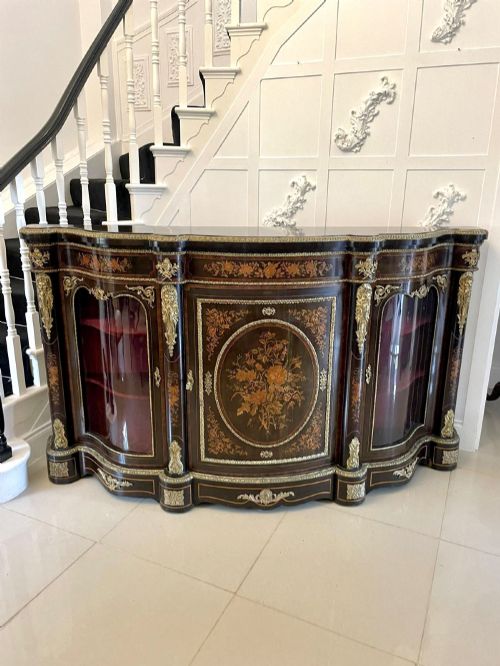
Marquetry and parquetry techniques often accompanied the metalwork, incorporating lighter woods such as boxwood to build complex geometric or floral patterns. Ormolu mounts and cast brass galleries frequently completed the hardware scheme, secured with traditional hand-cut screws and wooden joinery.
Many a Regency sideboard likely harboured a well-hidden cellarette drawer designed specifically to keep wine bottles cool and safe from thirsty footmen.
Distinctions in craftsmanship
The caliber of a piece rests upon the precision of the metal inlay and the quality of the underlying timber's grain pattern. Superior examples display seamless integration where the brass sits perfectly flush with the wood, showing no gaps or filler along the delicate curves.
Hand-cut dovetailing in the drawer construction and the weight of the original brass hardware separate workshop pieces from later mass production. The crispness of carved details and the depth of the French polished finish further define the upper tier of the range.
Hewetsons London·Collinson and Lock London·Harrods
The Brass Inlay Sideboard Glossary
- Inlay
- A technique where materials such as brass or contrasting wood are embedded into depressions carved into the surface of a solid timber or veneer.
- Chiffonier
- A compact low sideboard or cabinet featuring shelves or a raised gallery, popular during the Regency and Victorian periods.
- Breakfront
- A piece of furniture whose central section projects forward from the flanking outer cabinets.
- Ormolu
- Gilt bronze ornamentation cast and chased by hand, applied to furniture as mounts, feet, or gallery rails.
- Marquetry
- Elaborate decorative veneer work arranged in pictorial or geometric patterns using various coloured woods.
- Boulle
- A style of ornate marquetry using tortoiseshell and brass, named after the famous French cabinet maker.
Brass Inlay Sideboard: Frequently Asked Questions
How do I clean a brass inlay sideboard?
Dust the timber regularly with a soft, dry cloth to prevent grit from scratching the polished surface. Apply a traditional beeswax sparingly to nourish the wood without allowing polish to build up around the metal edges.
Clean the brass elements gently with a dry microfiber cloth rather than harsh liquid cleaners, which can stain the surrounding wood veneer. Take care to avoid abrasive materials that might dislodge the delicate inlay work.
Where should I place my sideboard?
Position the piece against a flat interior wall in a dining room, hallway or spacious drawing room where it can function as a serving surface. Keep the furniture away from direct sunlight and heat sources to prevent the wood from drying out and the veneer from lifting.
Ensure there is adequate clearance around doors and drawers for unhindered daily use. A stable indoor climate protects both the timber substrate and the delicate metal components from expanding or contracting.
How do I distinguish Regency from Victorian pieces?
Regency pieces typically exhibit restrained classical lines, architectural proportions, and delicate brass stringing inspired by ancient Greek and Roman forms. Rosewood and mahogany predominate, often complemented by brass gallery rails and simpler geometric inlays.
Victorian pieces lean toward heavier proportions, darker ebonised finishes, and more exuberant ornamentation such as floral marquetry and ormolu mounts. They frequently incorporate display cabinets and complex breakfront configurations that reflect industrial manufacturing advances.
What is the best way to store items inside?
Line the interior drawers with clean felt or baize to protect silver, linens, and delicate tableware from scratches. Distribute heavy items evenly across the lower shelves to maintain the overall balance of the cabinet structure.
Avoid overloading delicate antique shelving systems, as older timbers can sag under excessive weight over time. Keep the interior ventilated to prevent musty odours from accumulating within enclosed spaces.