
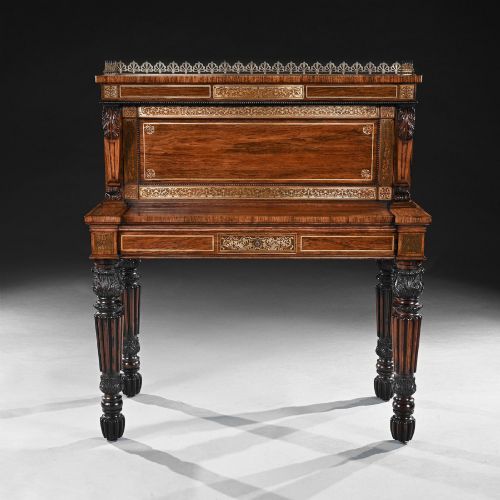


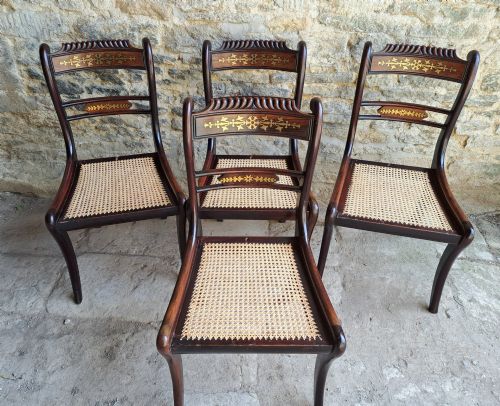
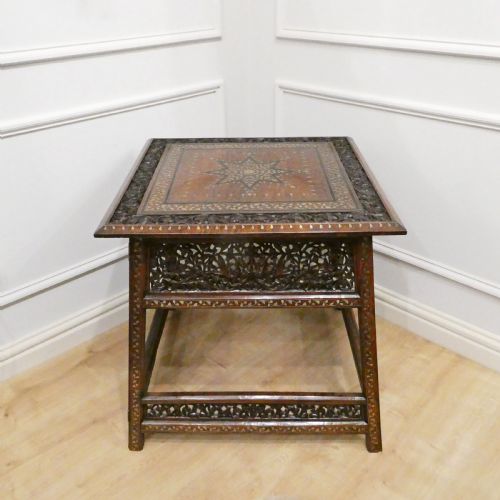
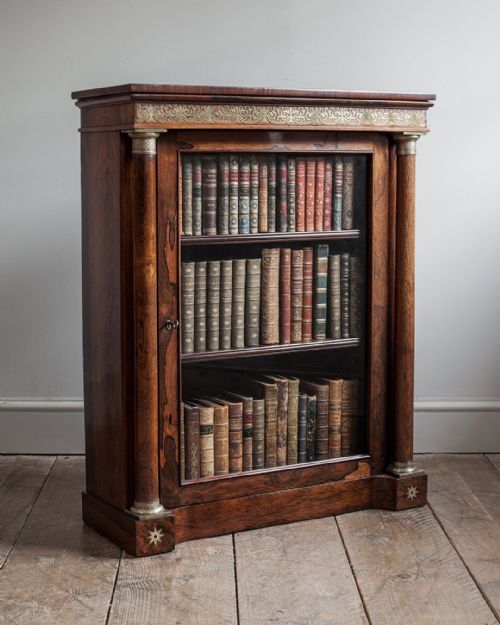
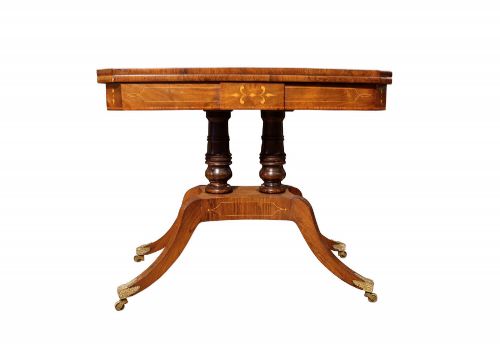
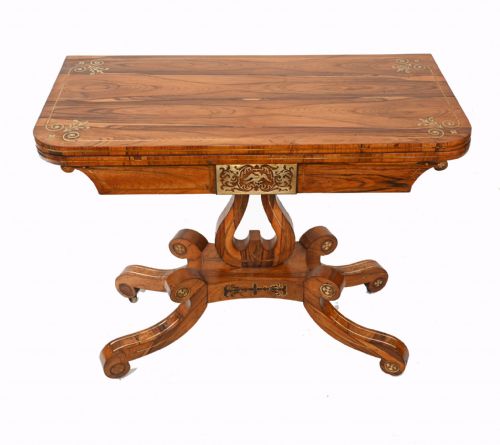
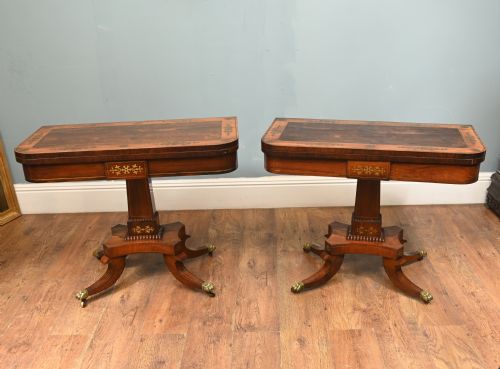


Brass Inlay Rosewood Furniture
Brass inlay rosewood furniture brings together dark timber and bright metal work, uniting Regency craft with the richness of exotic grain.
Brass Inlay Rosewood Furniture
Brass inlay rosewood furniture comprises tables, cabinets and seating originating mostly from the Regency period, along with later examples stretching into the nineteenth century. Card tables, dining chairs and centre tables form the main part of the selection, accompanied by occasional tables and side cabinets.
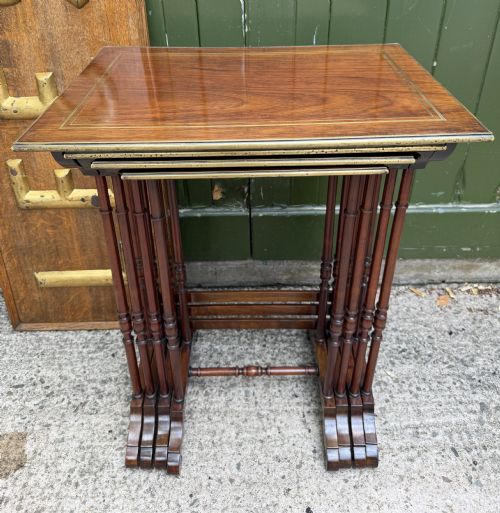
Makers working in the Regency style utilised dense tropical timber as a dark ground for precise metal stringing and brass mounts. Pieces range from formal library and writing tables to specialised items like quartetto nesting tables and music stands, representing elite English cabinet-making of the early nineteenth century.
How they were made
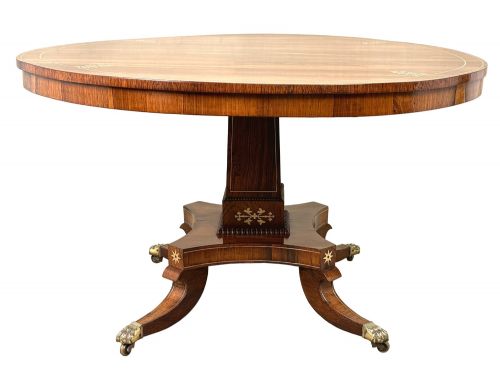
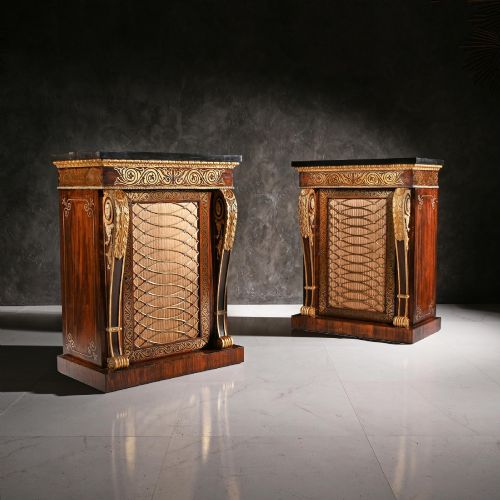
Cabinet-makers constructed carcasses using solid rosewood and selected veneers, often enhanced with brass inlay cut into intricate linear patterns and floral motifs. Ormolu mounts, gilt details and brass sabots completed the decorative scheme on tables and side cabinets.
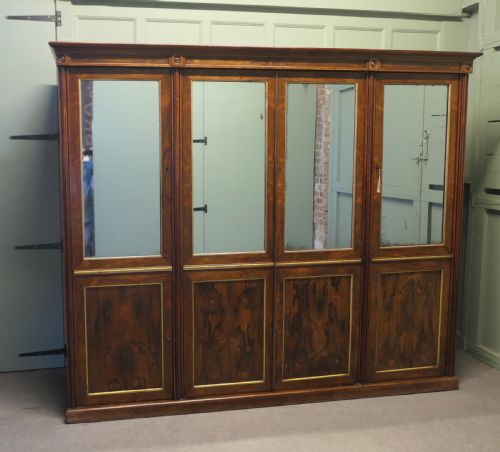
Secondary elements include glass doors on bookcases, marble tops on commodes and upholstered panels on seating. Workshops employed precision hand-cut brass stringing set flush into the timber surface.
Card tables conceal velvet-lined secrets beneath their folded tops, built for nineteenth-century evenings of chance.
What varies in quality
The refinement of the brass inlay work separates standard items from exceptional pieces, particularly where the metal meets the timber grain with absolute precision. The complexity of the brass designs and the quality of the rosewood veneer figure dictate the standing of a piece.
Attribution to documented workshops or makers elevates certain items, as does the survival of original brass castors, sabots and mounts. Structural integrity in complex forms like card tables and sofa tables also marks out superior examples.
Gillows Oxford Street Workshop·George Bullock·Louis Constantin Le Gaigneur·Donald Ross
The Brass Inlay Rosewood Furniture Glossary
- Rosewood
- A dense, heavily grained tropical timber prized for its dark purple-brown colour and rich figuring. It serves as the primary ground for brass inlay across Regency furniture.
- Ormolu
- Gilded bronze or brass applied as decorative mounts, feet or handles on cabinets and tables. This technique adds metallic brilliance alongside brass stringing.
- Sabot
- A metal shoe or sleeve fitted to the foot of a table or cabinet leg for protection and decoration. Brass sabots frequently appear on Regency rosewood card and centre tables.
- Quartetto
- A set of four graduating nesting tables designed to slide one beneath another. Examples in rosewood with brass inlay date to the early nineteenth century.
Brass Inlay Rosewood Furniture: Frequently Asked Questions
What periods are represented?
The selection spans the Georgian and Regency eras through the nineteenth century, including later Victorian and 1920s pieces.
Regency examples dominate the inventory, accompanied by Anglo-Indian and French styles.
How do I care for rosewood?
Keep timber furniture away from direct sunlight and sudden temperature changes to protect the wood and brass inlay.
Dust with a soft dry cloth and avoid harsh chemical polishes.
Where were these pieces made?
English workshops produced the majority of these items, particularly during the Regency period.
Other pieces originate from French and Anglo-Indian makers, including specialist tables from Hoshiarpur.
How are card tables used?
Card tables feature folding tops designed to open for games or serve as console tables against a wall.
Many contain concealed wells for cards and counters beneath the top.