

Brass Inlay Bureau
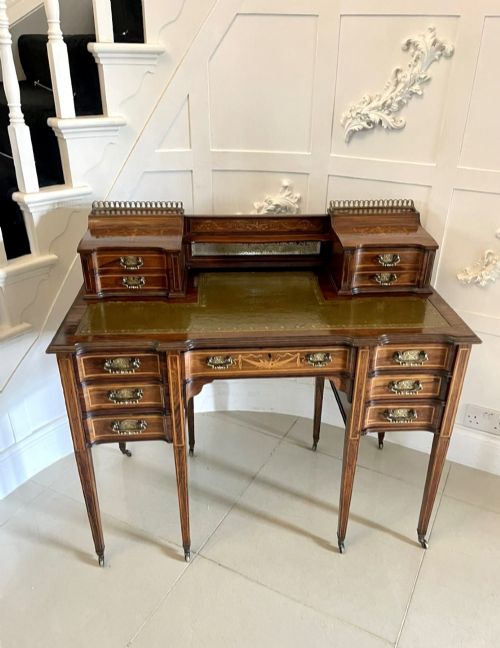
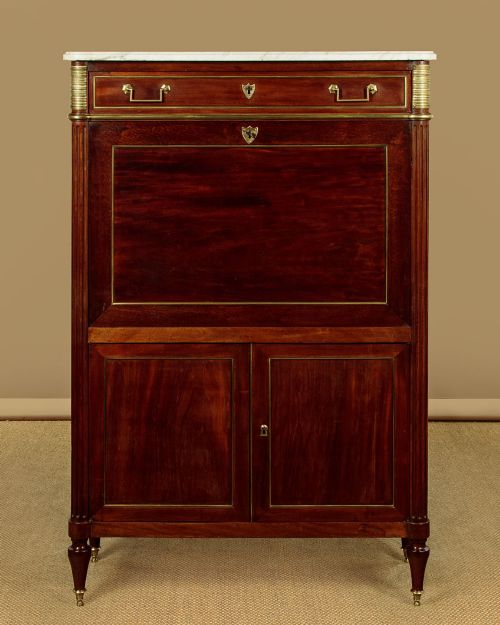
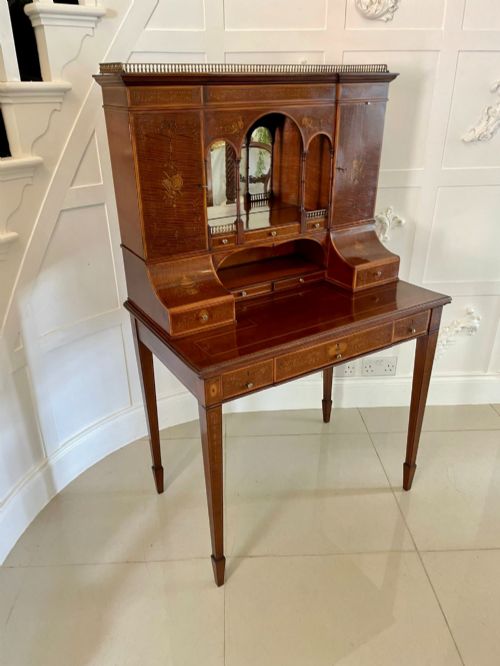
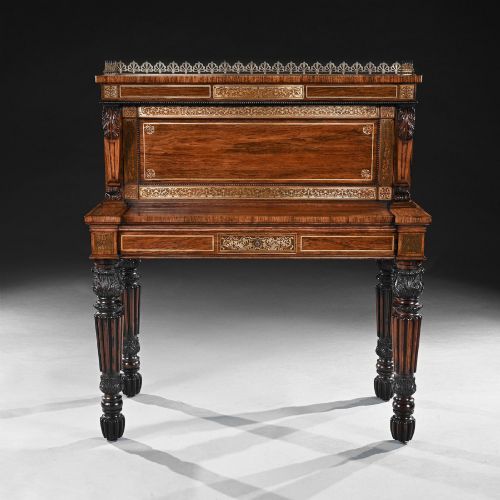
These brass inlay bureau pieces are fitted writing furniture carrying brilliant metal ornament, prized for their utility and refined surfaces.
Brass Inlay Bureau
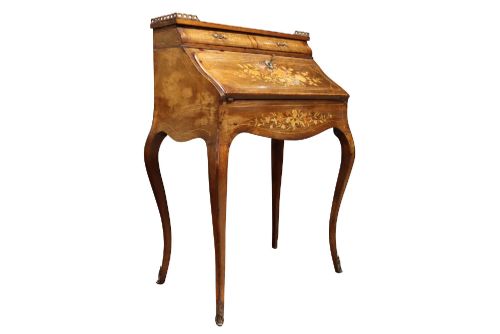
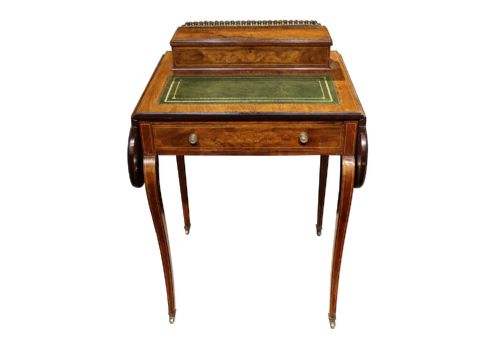
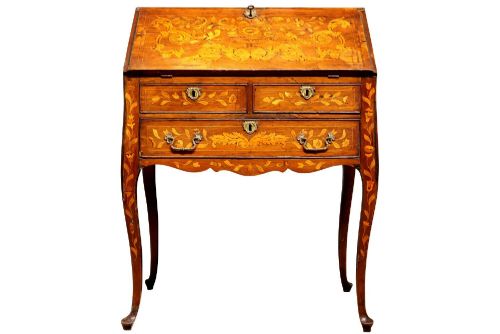
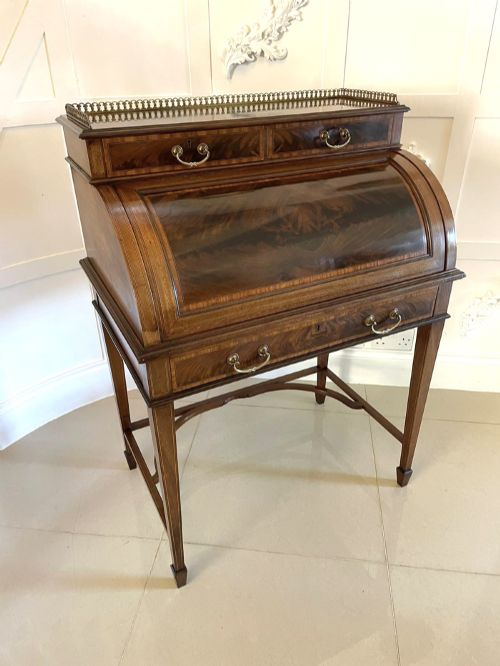
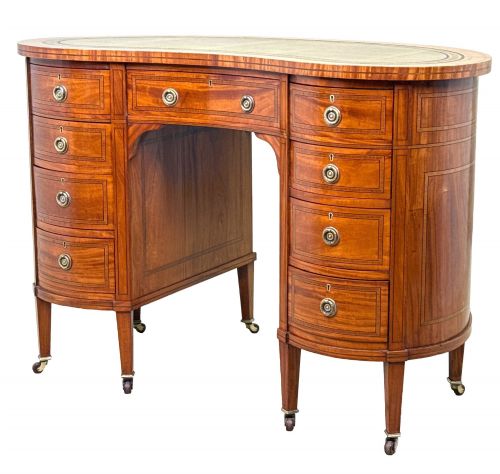
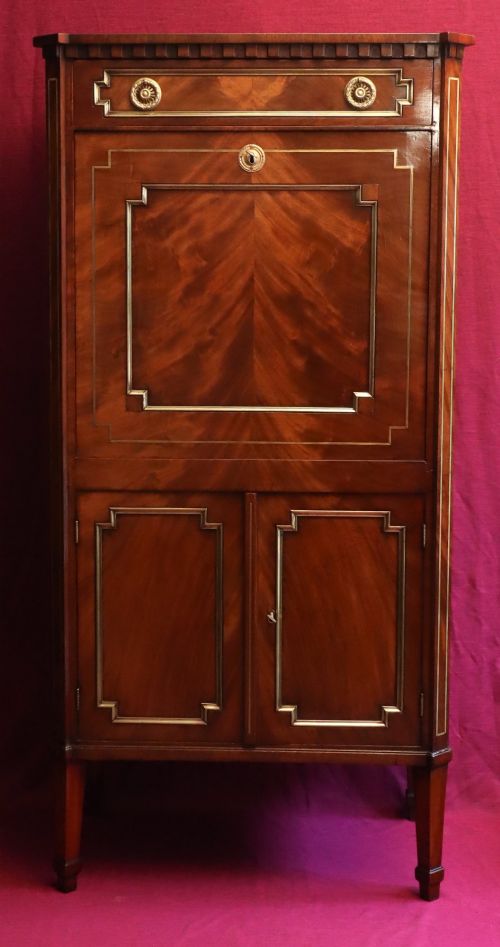
A brass inlay bureau combines a writing surface with concealed compartments and drawers, designed for correspondence and paperwork. When you search for this phrase, you encounter forms ranging from drop-front writing cabinets to cylinder desks and sophisticated lady's writing tables.
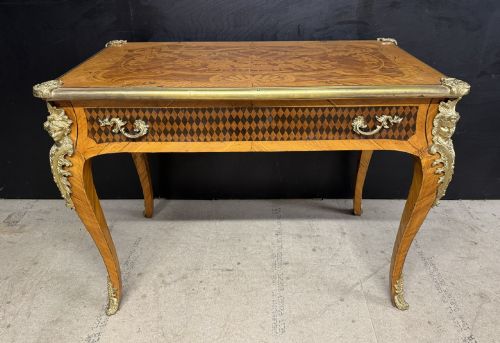
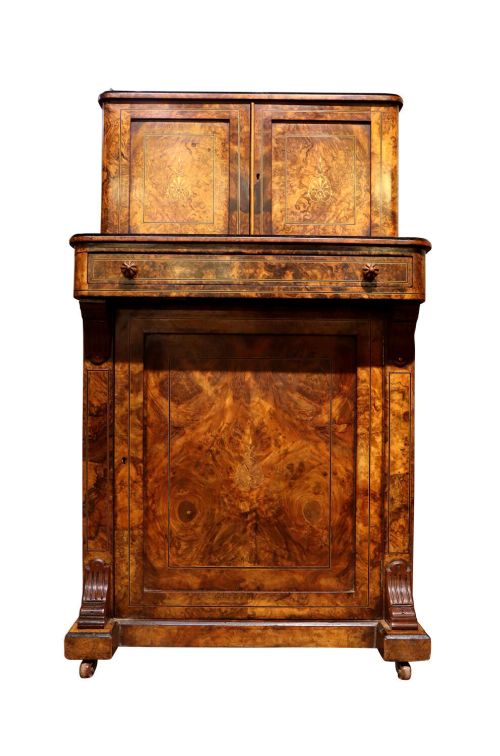
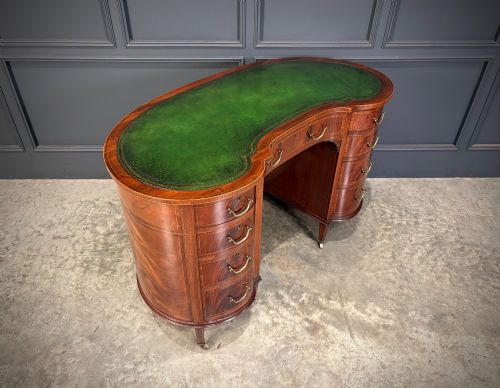
The pieces on this page span the 19th Century, Victorian, Edwardian, and Regency periods, alongside earlier Georgian examples and French designs like the bureau plat and bonheur-du-jour. Makers such as Maple & Co. and Gillows appear among the listings alongside pieces finished with intricate marquetry and parquetry.
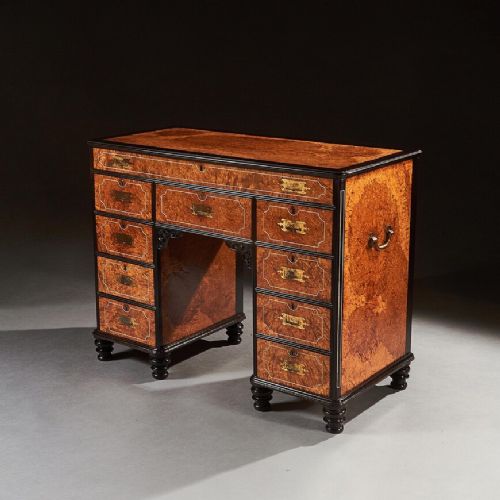
Domestic walnut, mahogany, and rosewood serve as primary woods, often contrasted with satinwood, amboyna, or ebonised surfaces. Brass inlay winds through these timbers in geometric ribbons and floral motifs, catching the light across writing desks and bureau de dame examples.
How they were made
Cabinetmakers constructed carcass frames from dense primary timbers like mahogany, walnut, and rosewood, applying fine veneers of satinwood or amboyna to curved and flat surfaces alike. Brass was carefully hand-sawn and fitted into precise channels routed into the timber grain.
Makers integrated cast or chased ormolu and gilt bronze mounts alongside linear brass stringing, securing each element flush with the polished wood. Interiors often featured fitted compartments, small pigeonholes, and leather writing inserts glued to secondary pine or oak foundations.
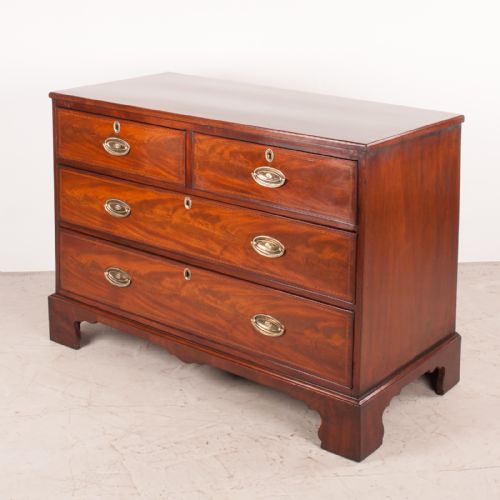
Listings feature mahogany, rosewood, walnut, and satinwood, paired with brass inlay across desks, chests of drawers, and centre tables.
What varies in quality
The precision of the brass inlay separates ordinary work from master craftsmanship, visible where metal meets timber without visible gaps or excessive filler. Crispness in the floral marquetry and the tightness of veneer joints indicate whether a workshop invested time in meticulous assembly.
Hardware choice and internal secondary wood quality dictate the grade of a piece, with solid mahogany linings and original brass ring handles outranking later replacements. The fluency of secondary carving, such as crossbanding on drawer fronts and ormolu mounts, defines the upper tier of the range.
Maple and Co·Gillows·Donald Ross·Mawer and Stephenson·Edwards and Roberts
The Brass Inlay Bureau Glossary
- Bureau
- A writing desk with a sloping flap that opens to reveal fitted drawers and pigeonholes. It often stands on bracket feet or a chest base.
- Ormolu
- Gilt bronze ornamentation applied to furniture mounts and borders. This decorative technique brings a metallic gold finish to French and English pieces.
- Marquetry
- The art of forming decorative patterns by fitting together thin veneers of various woods and materials. It creates pictorial scenes or floral motifs across tabletops and fall-fronts.
- Cylinder desk
- A writing desk featuring a rolling half-cylinder shutter that conceals the writing surface and interior pigeonholes when closed.
- Parquetry
- A geometric mosaic of wood pieces used for decorative floors and furniture surfaces. It relies on repeating angular shapes like cubes or chequers.
Brass Inlay Bureau: Frequently Asked Questions
How do I use a brass inlay bureau?
Open the fall-front or roll the cylinder shutter to access the internal writing surface and pigeonholes. Store writing materials in the small drawers provided within the fitted interior.
Keep the leather writing insert conditioned and avoid placing heavy objects on the folding flap when fully extended. Close the writing surface after use to protect your papers and conceal the interior.
What periods do these pieces date from?
The listings span the late 18th century through to the Edwardian era, encompassing Georgian, Regency, and Victorian aesthetics. Mid-Victorian examples sit alongside 19th-century French Louis XV style and Napoleon III pieces.
Design influences shift from Georgian mahogany restraint to ornate Victorian marquetry and Edwardian satinwood elegance. Each period brings distinct timber choices and characteristic brass inlay patterns.
How do I clean brass inlay?
Dust the surface regularly with a soft, dry cloth to prevent dirt from settling into the channels around the brass. Avoid harsh metal polishes that can stain the surrounding timber veneer.
Apply a quality beeswax to nourish the wood and maintain a gentle sheen across both the timber and metal elements. Consult a professional restorer if the brass stringing begins to lift from its housing.
Where should I place a freestanding bureau?
Position your desk away from direct sunlight and heating vents to prevent the timber veneers and brass inlay from drying out and warping. Freestanding models are finished on all sides, making them suitable for the centre of a room rather than pushed against a wall.
Ensure the room maintains stable humidity levels to protect the delicate internal mechanism and secondary woods. Allow adequate space around the piece for drawers to open fully and chairs to pull out.