



Brass Inlaid Shelf Clock
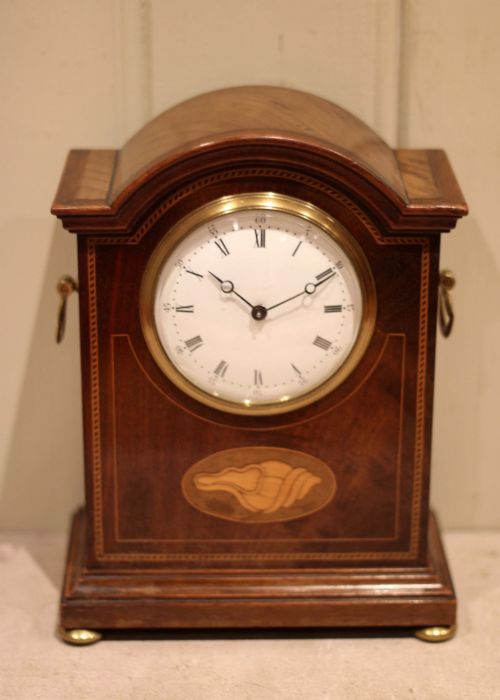
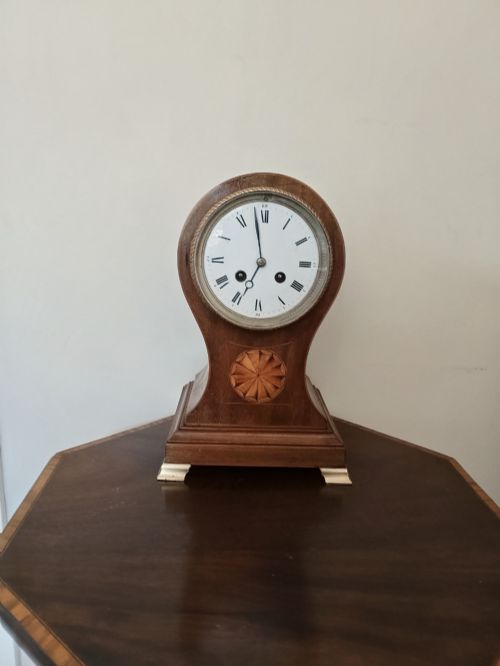
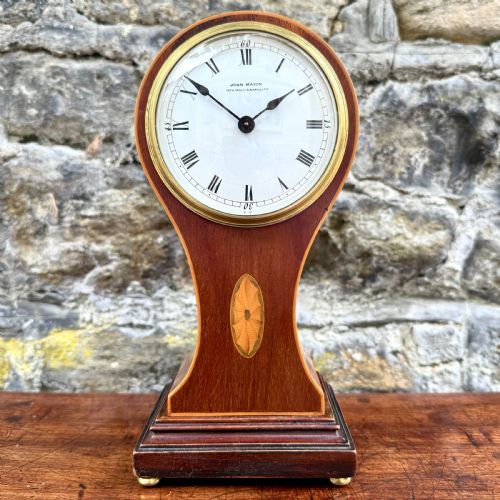
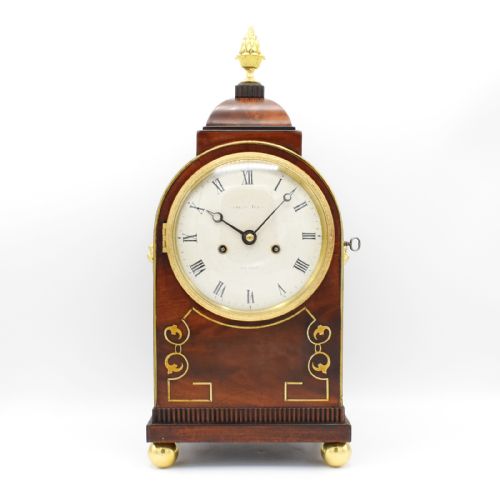
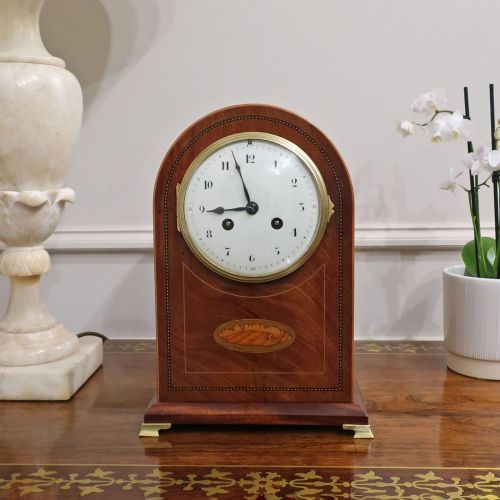
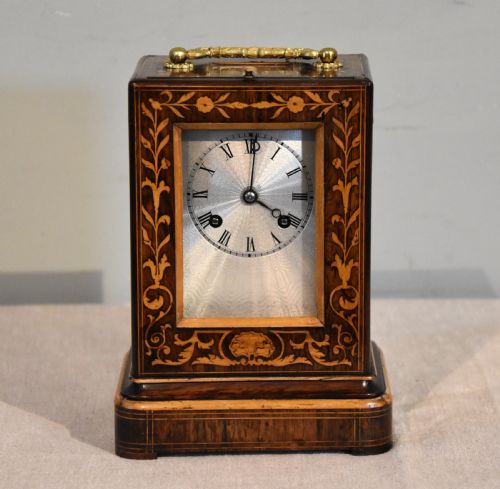
A brass inlaid shelf clock brings warm timber and bright metalwork together on a mantelpiece.
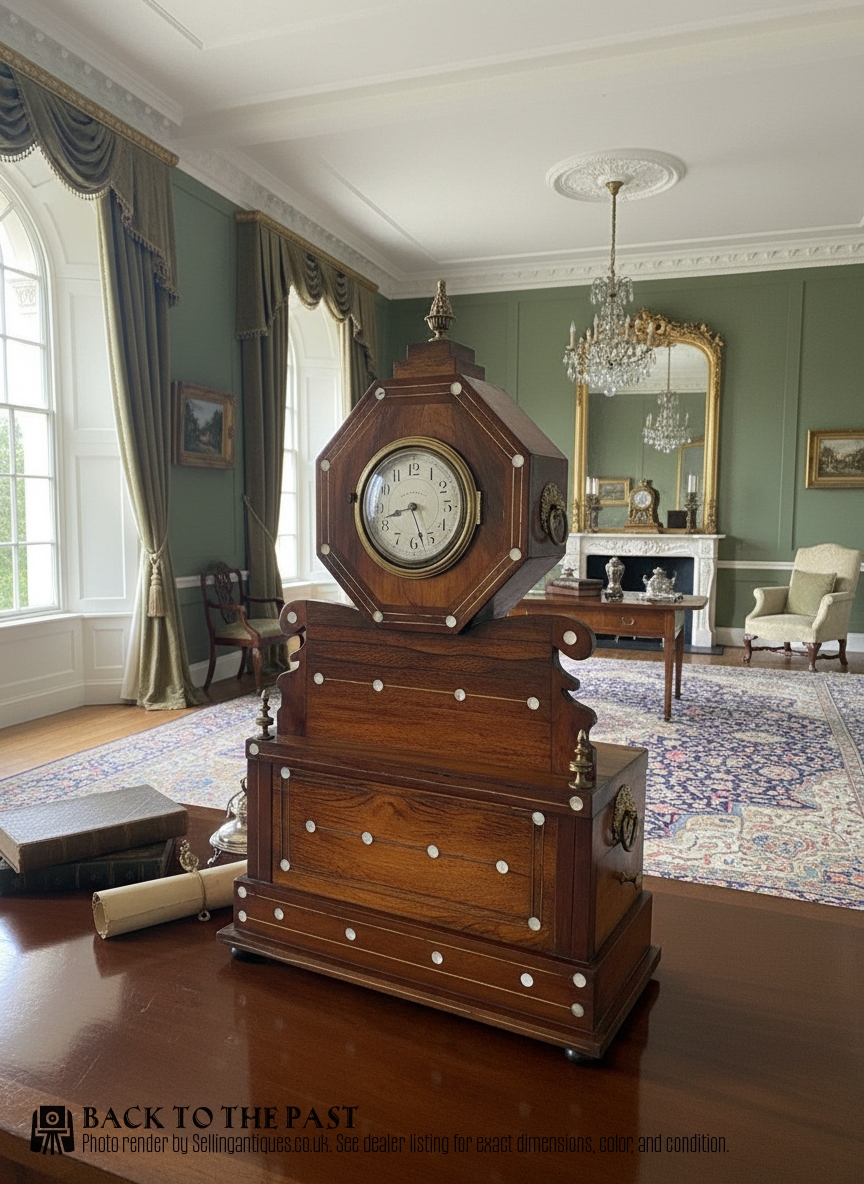
Brass Inlaid Shelf Clock
A brass inlaid shelf clock is a portable timepiece designed to stand on a mantelpiece, bracket, or table rather than hang upon a wall. When you search for this phrase, you encounter a variety of mantle clocks, bracket clocks, and table clocks spanning the nineteenth and early twentieth centuries.
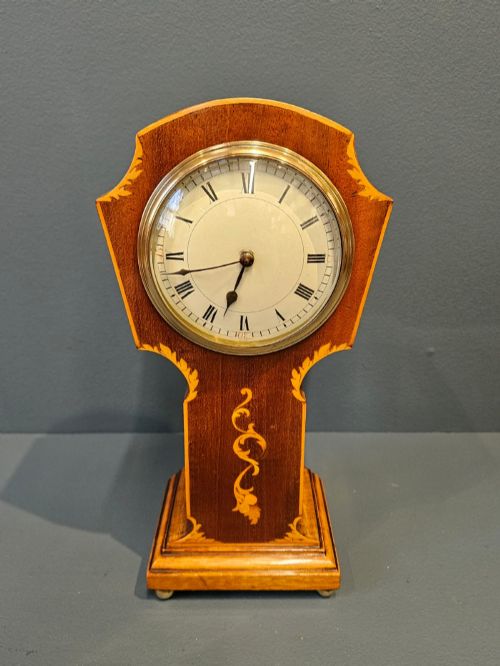
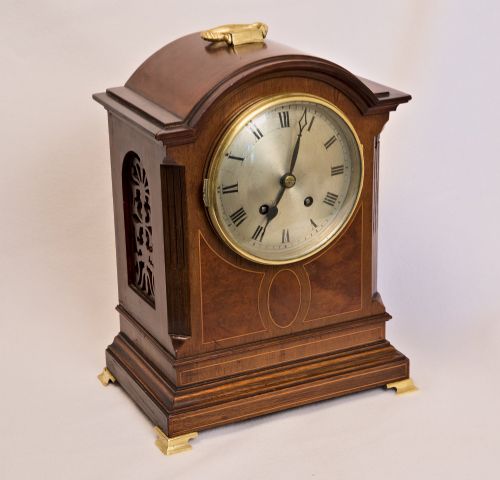
The most common examples you meet on this page are Edwardian and nineteenth-century pieces housed in rich wooden cases. These range from balloon and pagoda shapes to traditional bracket clock forms made in England and France.
Makers represented in the current selection include Charles Pratt London, John Bull of Bedford, Seller of Reading, Baby and Jannings, Thomas A Paris, Barrett London, Junghans, Paul Garnier, and Henry Marc. Their work appears across Georgian, Regency, Victorian, and Edwardian periods.
Materials and construction methods
Cases rely heavily on timbers such as mahogany and rosewood, often enhanced with contrasting stringing or marquetry in boxwood and satinwood. Some examples employ sienna or black marble instead of wood, creating a heavier architectural presence.
Brass provides the glowing inlay lines, dial bezels, and decorative mounts that catch the light against dark timber. Enamel forms the traditional dial faces where crisp numbers indicate the hours.
Movements span eight-day mechanisms, fusee gear trains, and bell-striking systems housed securely within the timber or marble enclosures.
Listings feature mahogany, rosewood, boxwood, satinwood, and sienna marble cases.
Distinctions in quality
Quality rests in the precision of the cabinetwork and the crispness of the brass inlay against the polished grain of the wood or marble. Superior pieces display harmonious proportions and careful attention to secondary timbers.
The sophistication of the movement and the reputation of the maker elevate a timepiece above standard production. Signed dials and well-finished mechanical components distinguish the finest bracket and mantel clocks.
Charles Pratt London·John Bull of Bedford·Seller of Reading·Baby and Jannings·Thomas A Paris·Barrett London·Junghans·Paul Garnier·Henry Marc
The Brass Inlaid Shelf Clock Glossary
- Bracket clock
- A portable table or mantel clock originating from an era when such timepieces sat upon a dedicated wall bracket to project sound. They often feature robust mechanical movements and architectural wooden cases.
- Fusee
- A conical pulley inside a clock that equalises the declining power of the mainspring as it unwinds. This mechanism helps the clock maintain consistent timekeeping.
- Marquetry
- Decorative veneer work formed by fitting together small pieces of different coloured wood, boxwood, and other materials to create pictorial or geometric designs.
- Timepiece
- A clock that tells the time without incorporating a striking mechanism to chime the hours. These simpler movements focus purely on the passage of hours and minutes.
- Bezel
- The metal ring that holds the glass protecting the dial face in place. On these clocks, it is commonly made of brass.
Brass Inlaid Shelf Clock: Frequently Asked Questions
Where should I place a shelf clock?
These clocks suit mantelpieces, side tables, and sturdy shelves where their wooden or marble cases can be viewed from the front and sides. Keep them away from direct sunlight and damp walls to protect the delicate timber veneers and internal mechanics.
Ensure the surface is completely level so the pendulum or balance wheel maintains an even beat. A stable foundation lets the mechanism run reliably without requiring constant readjustment.
How do I distinguish Regency from Edwardian styles?
Regency cases often feature dark rosewood or mahogany with bold brass inlay, reflecting classical architectural influences from the early nineteenth century. They tend to have robust bracket forms and restrained geometric ornamentation.
Edwardian pieces, built around the start of the twentieth century, frequently utilise lighter mahogany with delicate floral marquetry or inlaid poppies. Their silhouettes include lighter balloon shapes and inlaid motifs influenced by arts and crafts tastes.
What is the difference between a bracket clock and a mantel clock?
Bracket clocks historically rested on wall-mounted brackets to help project their chime through a room, featuring substantial wooden cases and complex fusee movements. The term later came to describe high-quality portable clocks with traditional architectural proportions.
Mantel clocks are generally designed to sit directly on a fireplace shelf or piece of furniture. They encompass a wider variety of materials, including marble and various inlaid woods.