
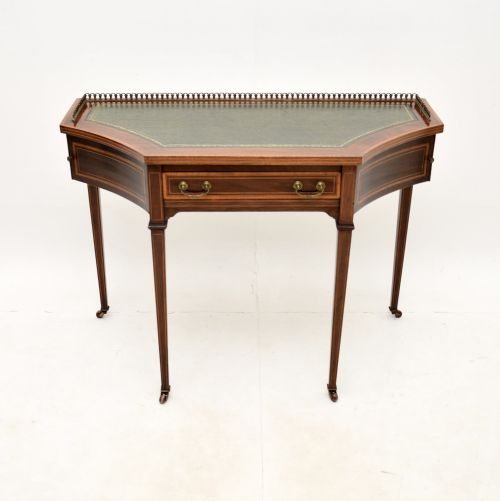
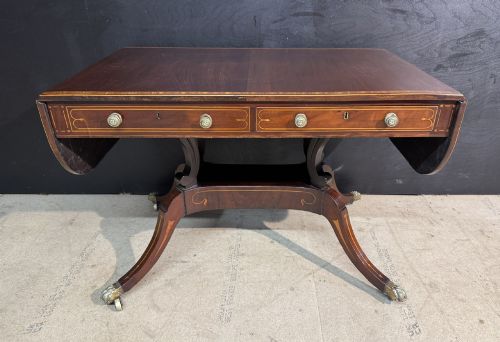
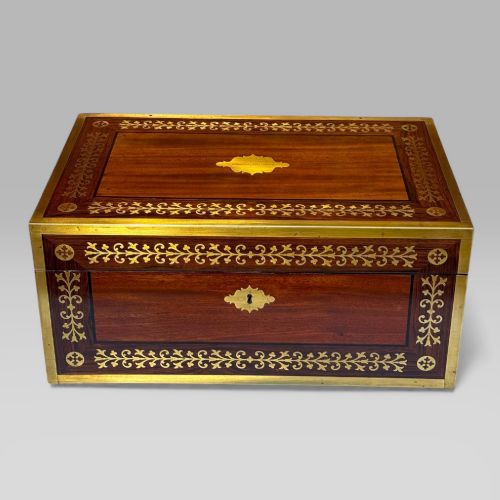
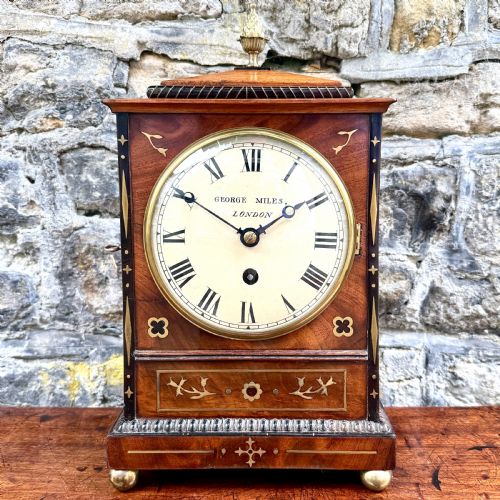
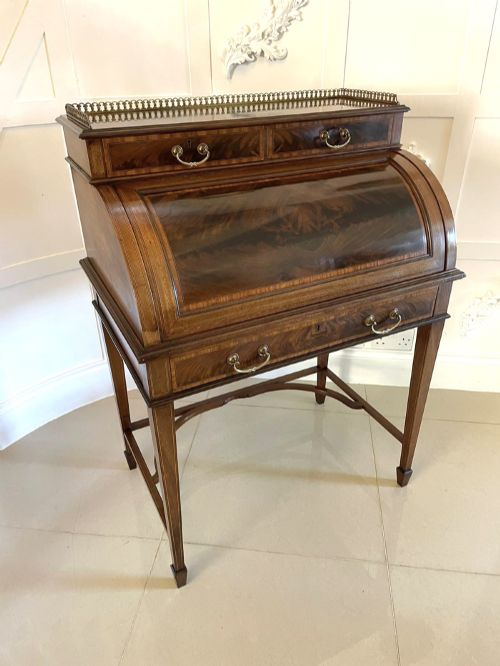
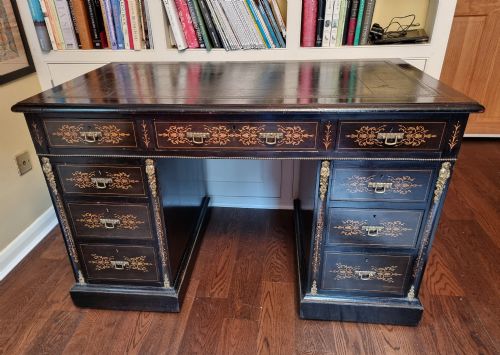
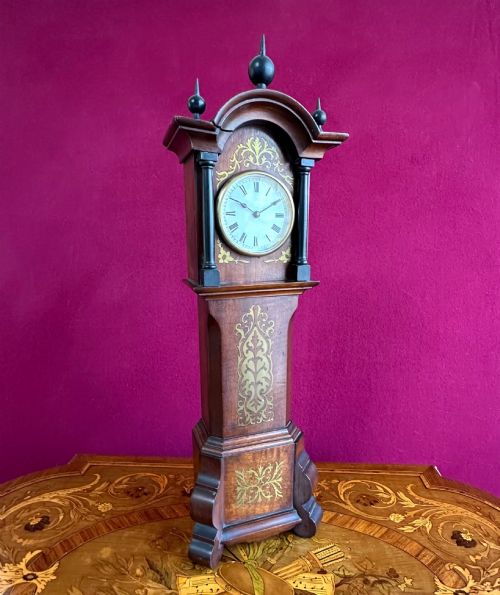
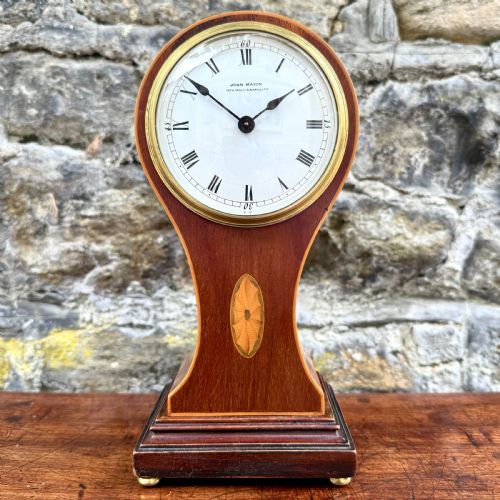
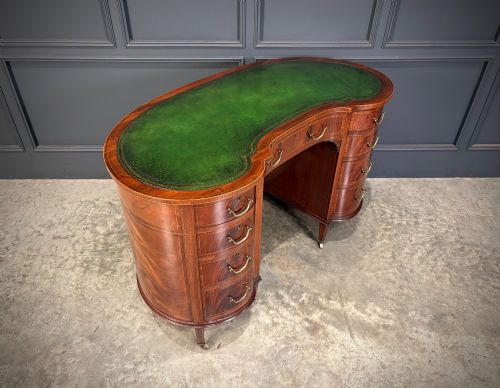
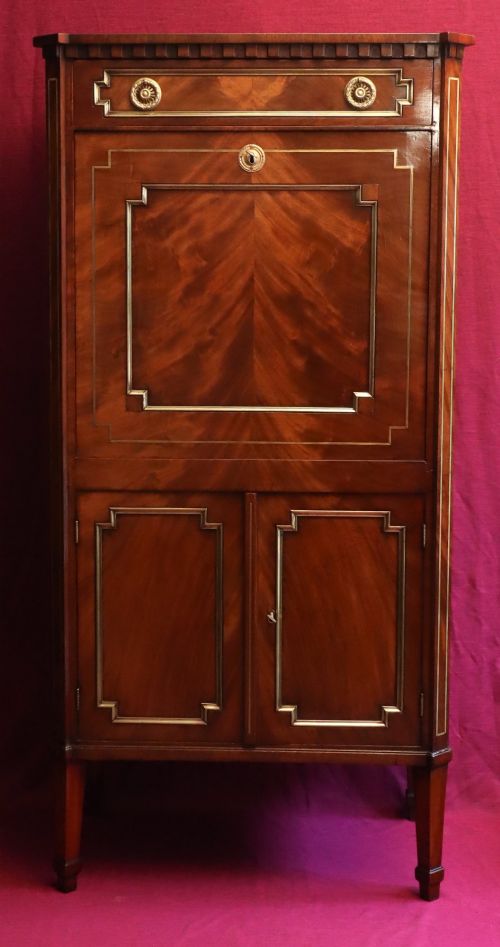
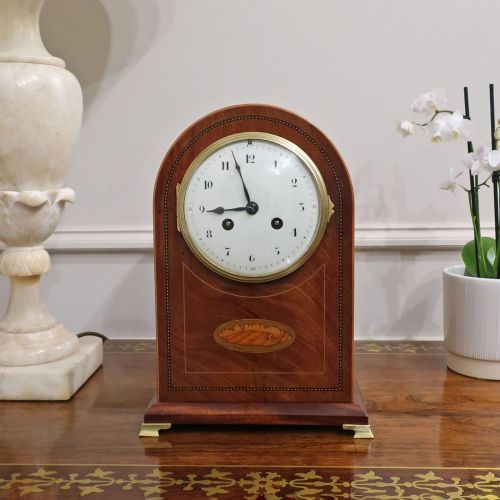

Brass Inlaid Mahogany Desk
A brass inlaid mahogany desk brings together warm timber and bright metalwork for a refined writing surface.
Brass Inlaid Mahogany Desk
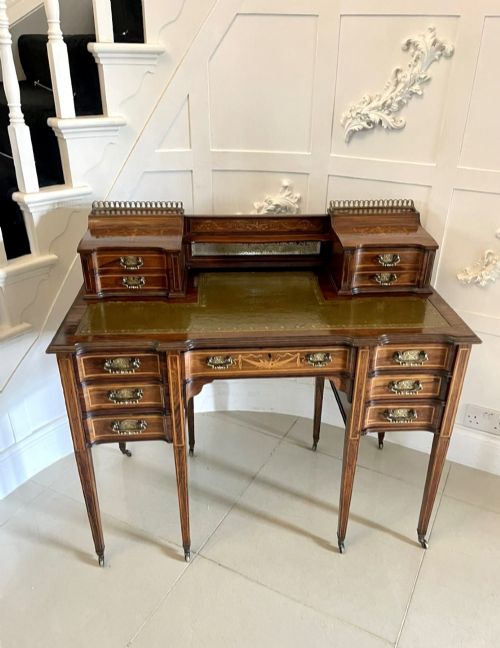
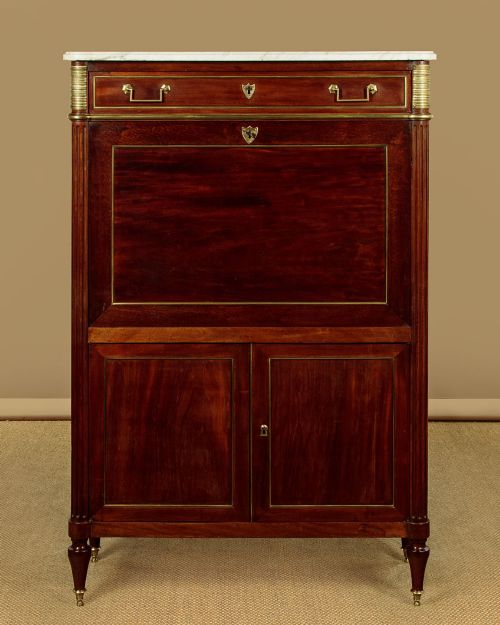
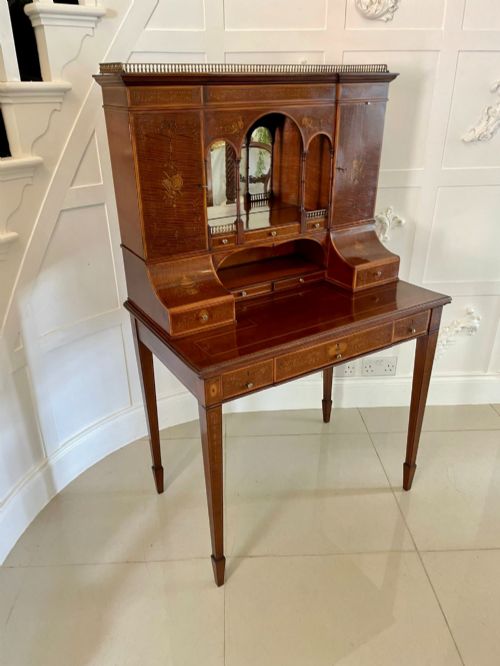
A brass inlaid mahogany desk is a fitted writing place defined by dark tropical timber and metal stringing or brass mounts. When you search for a brass inlaid mahogany desk, you encounter pieces spanning the Georgian, Regency, Victorian, and Edwardian periods.
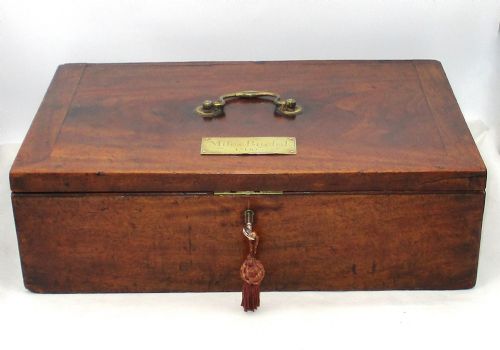
The most common forms on this page include pedestal writing desks, cylinder desks, and writing tables. Pieces range from compact campaign slope boxes to large partners desks and Carlton House shapes.
Origins stretch across English workshops and nineteenth-century French makers, reflecting changing styles from Sheraton Revival to directoire influences.
Materials and Construction
Makers built these desks using solid and veneered mahogany, frequently accented with satinwood, rosewood, or ebony. Timber surfaces were polished to show grain patterns like flame or crossbanding.
Brass was inlaid into channels cut into the wood, often forming geometric lines, scrolls, or brass banding around drawers and edges. Secondary elements include inset leather writing surfaces and brass ring handles.
Listings feature mahogany desks spanning Georgian, Regency, Victorian, and Edwardian eras alongside French nineteenth-century examples.
Assessing Quality
The standard of a brass inlaid mahogany desk depends on the precision of the metal inlay and the selection of the timber. Finely made examples show flush, tightly fitted brass work rather than gaps where the metal meets the wood.
Construction details such as dovetailed drawer linings, original brass hardware, and the depth of the mahogany grain distinguish standard production from exceptional cabinet work.
Maple & Co.·Edwards & Roberts·Dent of London·Bush of London
The Brass Inlaid Mahogany Desk Glossary
- Pedestal desk
- A large writing table with two freestanding stacks of drawers supporting the top surface.
- Carlton House desk
- A fitted writing desk with a curved superstructure of small drawers and pigeonholes running around the back and sides.
- Cylinder desk
- A writing desk featuring a rolling curved wooden shutter that conceals the writing surface and interior compartments.
- Satinwood
- A pale, dense exotic timber used primarily for contrasting inlay and stringing on darker woods.
- Crossbanding
- A border veneer laid with the grain running perpendicular to the main surface of the timber.
Brass Inlaid Mahogany Desk: Frequently Asked Questions
How do I date a brass inlaid mahogany desk?
Dating relies on stylistic clues, hardware, and construction methods. Georgian and Regency pieces typically show lighter proportions and linear brass stringing, while Victorian and Edwardian examples often feature heavier pedestals or revival marquetry.
Examine the secondary woods inside the drawers and the style of the brass handles to narrow down the decade of manufacture.
Are these desks suitable for daily computer use?
Many of these desks provide sturdy writing surfaces and sufficient drawer space for modern laptops and paperwork. Pedestal and writing table layouts offer practical knee clearance.
Leather tops require careful protection with blotters or desk pads to prevent scuffs from modern office equipment.
What is a Carlton House desk?
A Carlton House desk is an elegant writing desk featuring a curved tier of small drawers and compartments wrapping around the back and sides. This form originated in the late eighteenth century and reappeared in Edwardian and Victorian revivals.
The layout provides extensive division for letters and stationery while maintaining a compact footprint.
How should I care for the mahogany and brass?
Maintain the finish by dusting with a dry cloth and applying traditional beeswax sparingly to nourish the mahogany. Avoid placing the desk in direct sunlight or near heat sources to prevent the wood from drying out.
Brass inlay can be gently cleaned with a soft cloth, taking care not to disturb the surrounding wood veneer.